Discovery of Ahraura
Asokan Sites and Artefacts: Harry Falk
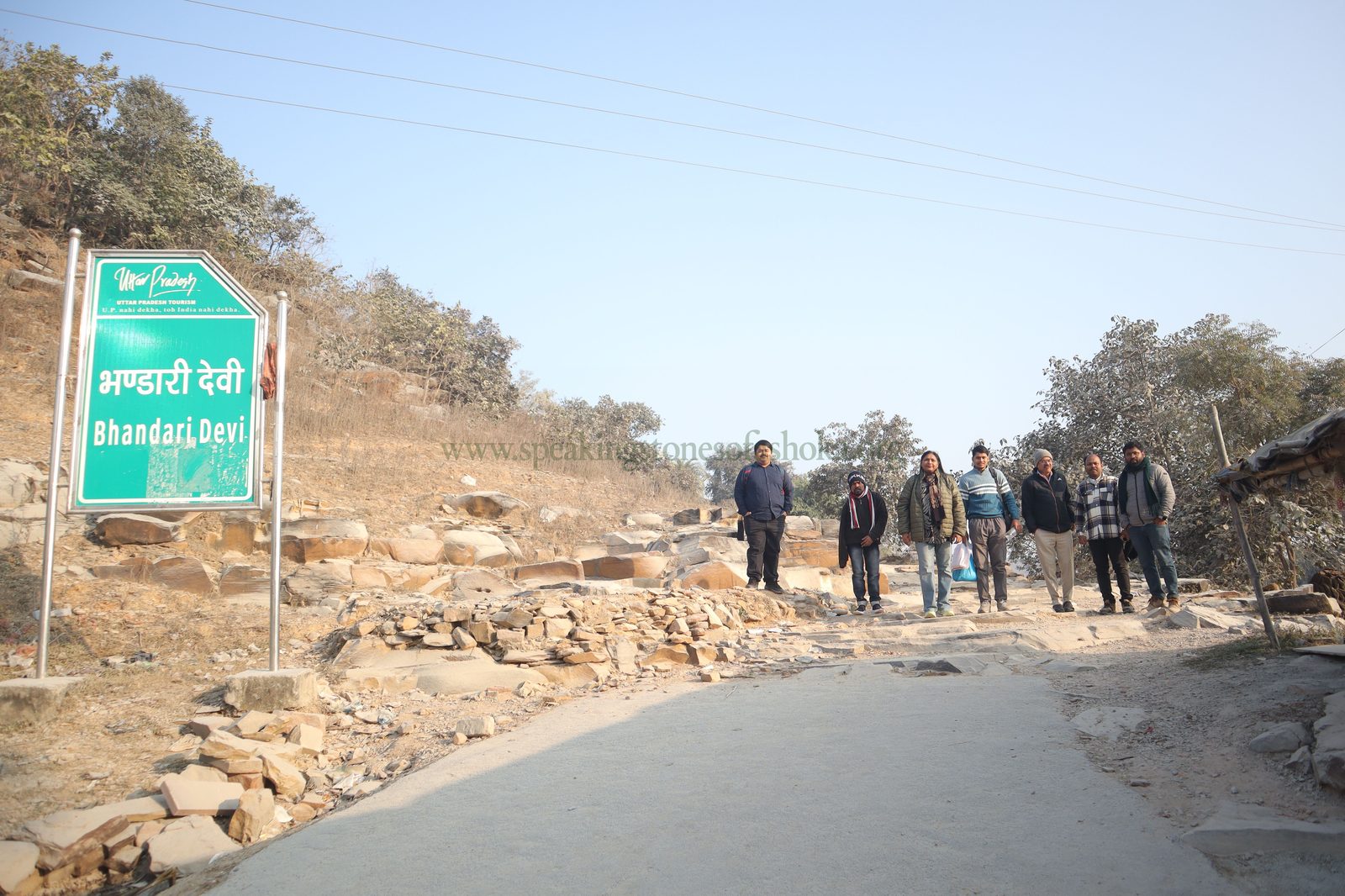
Ahraura is located Mirzapur District, Uttar Pradesh (83°02' E., 25°02' N)
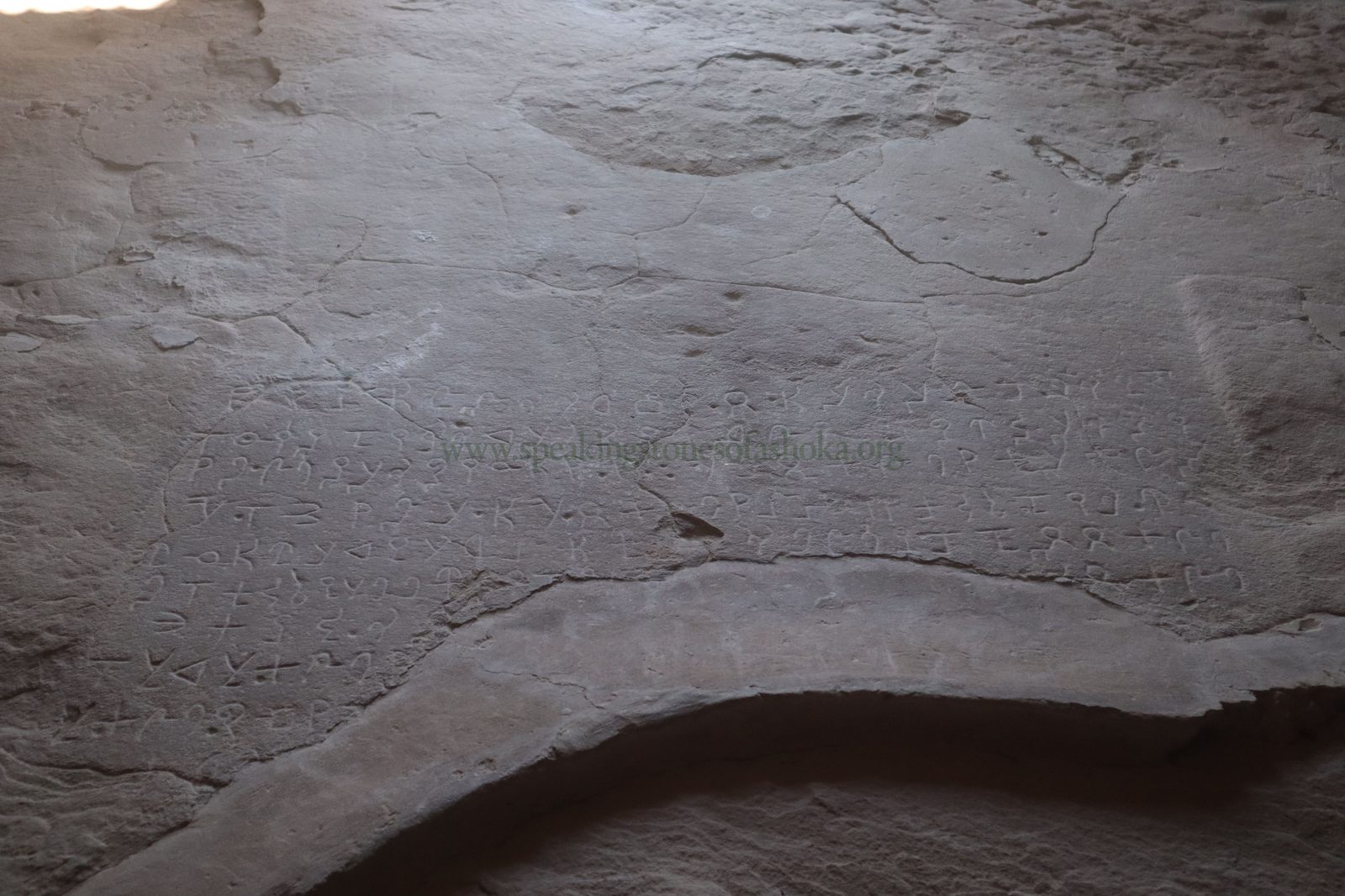
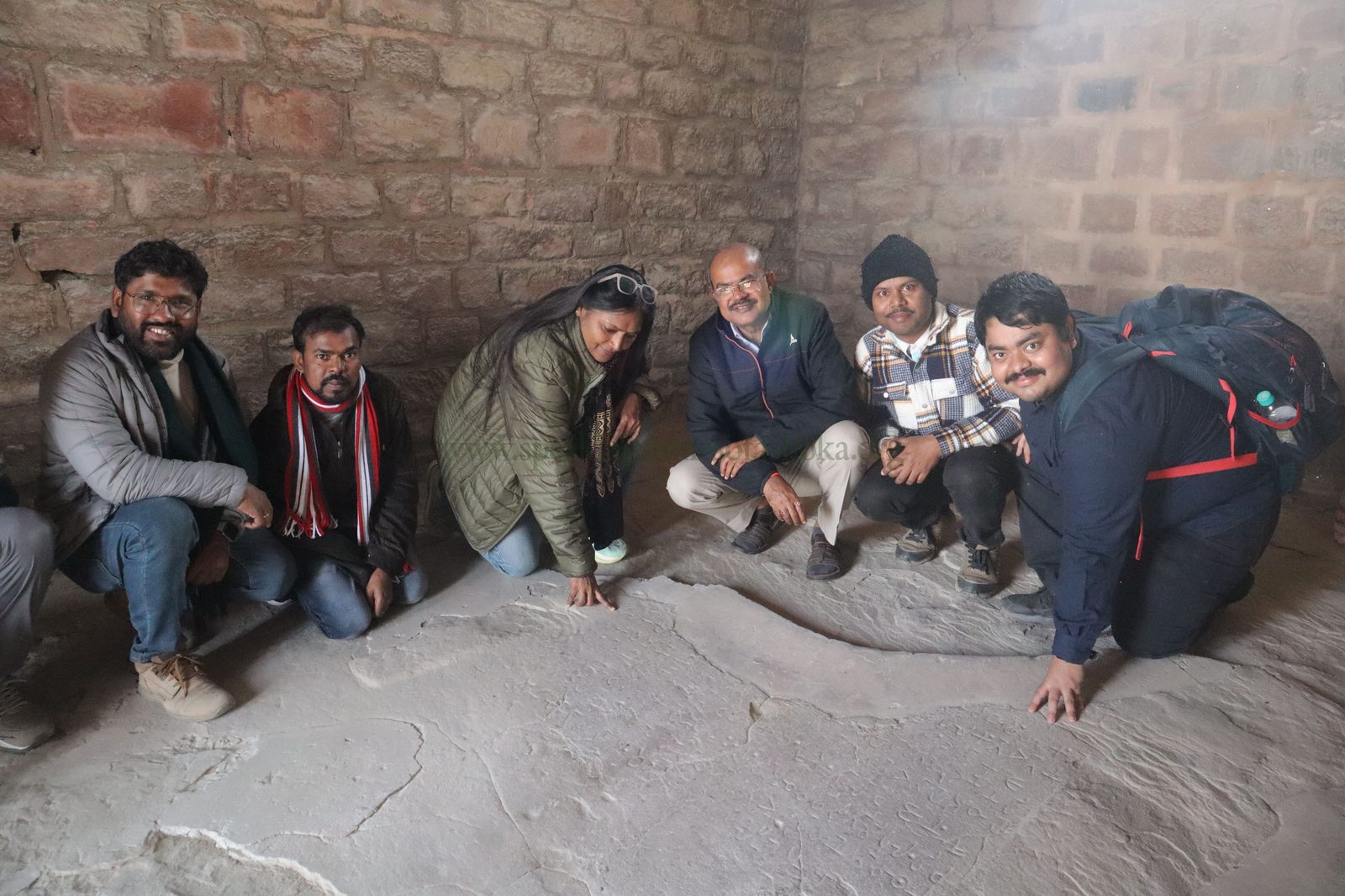
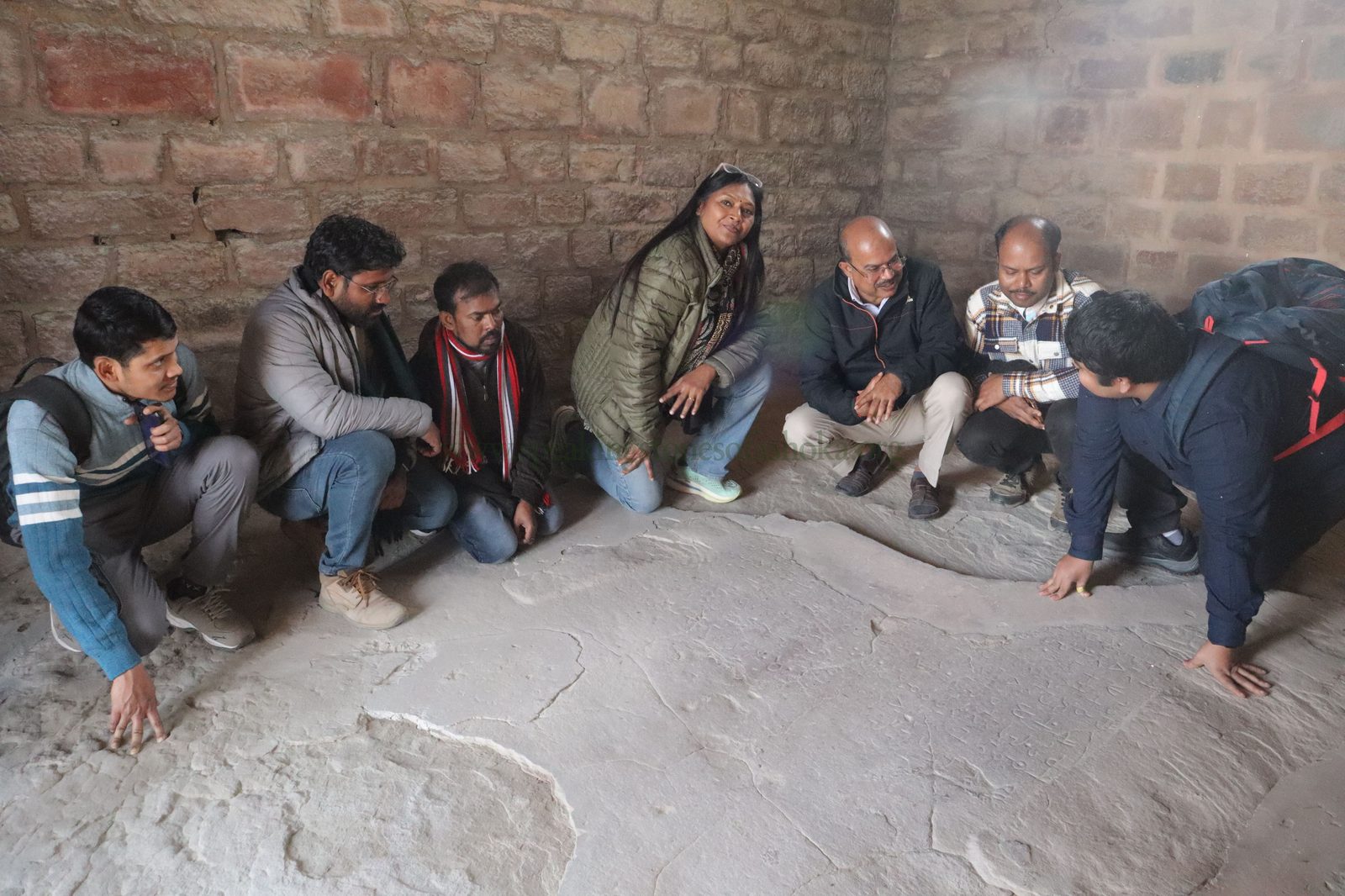
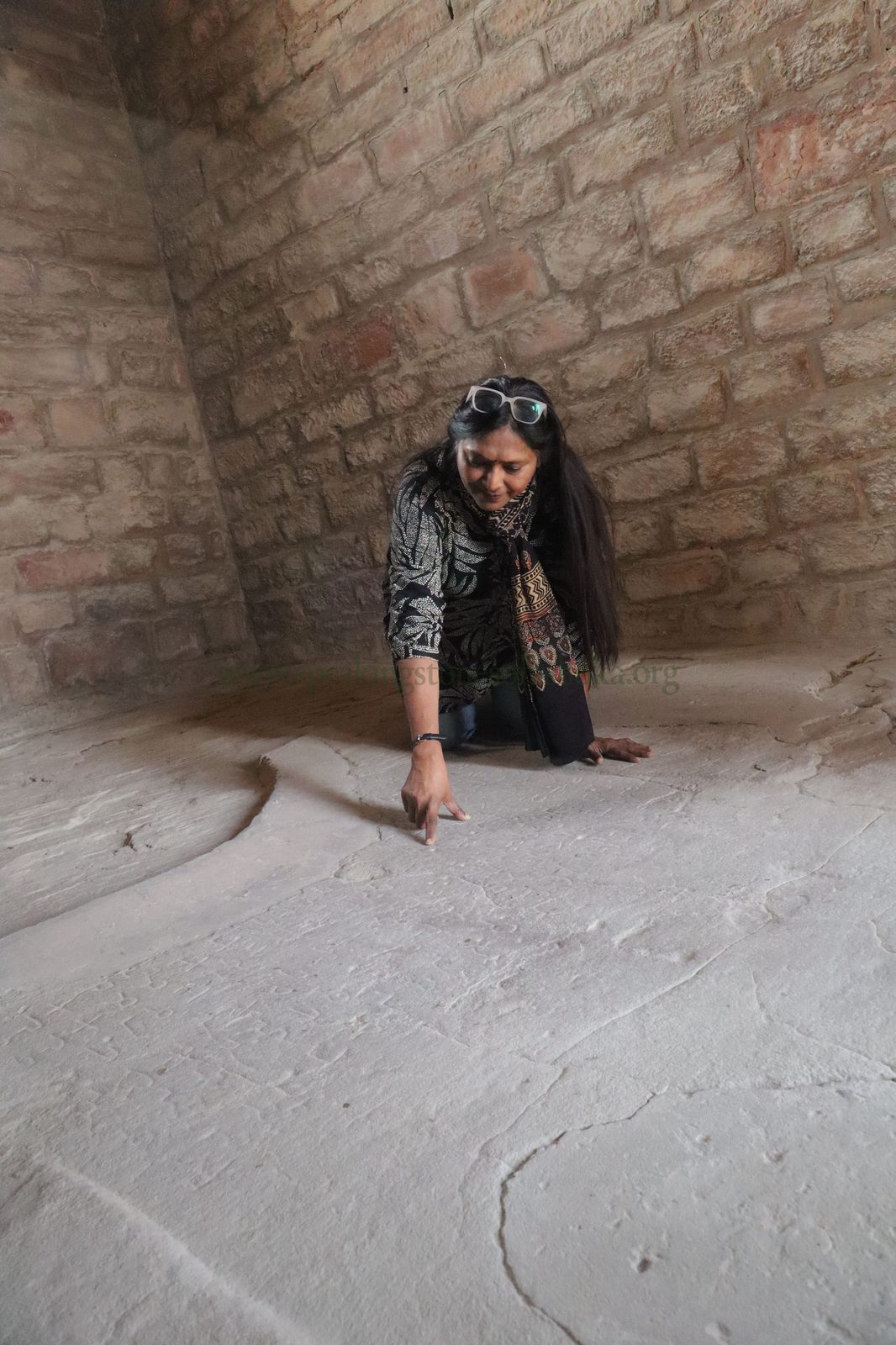
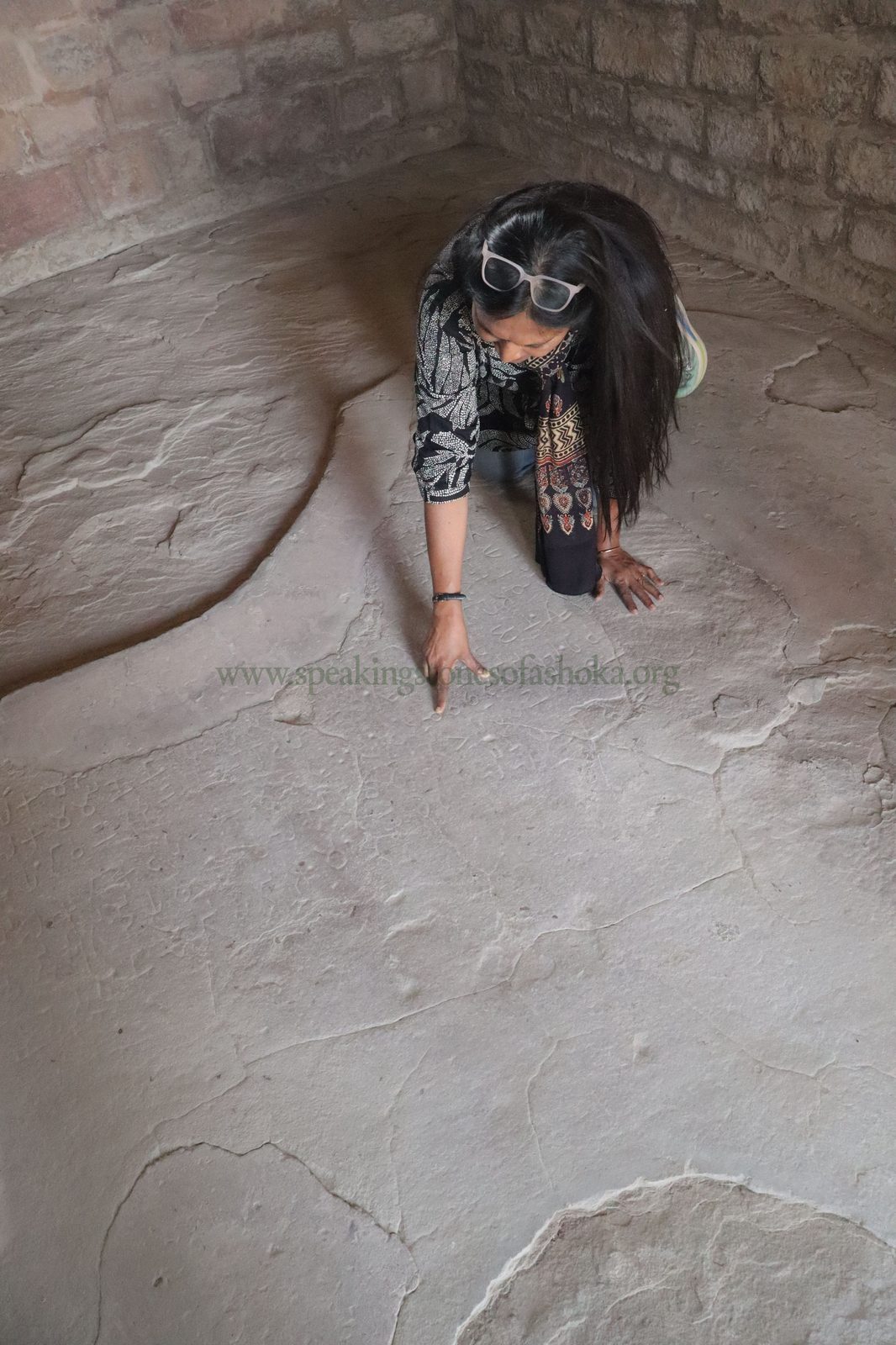
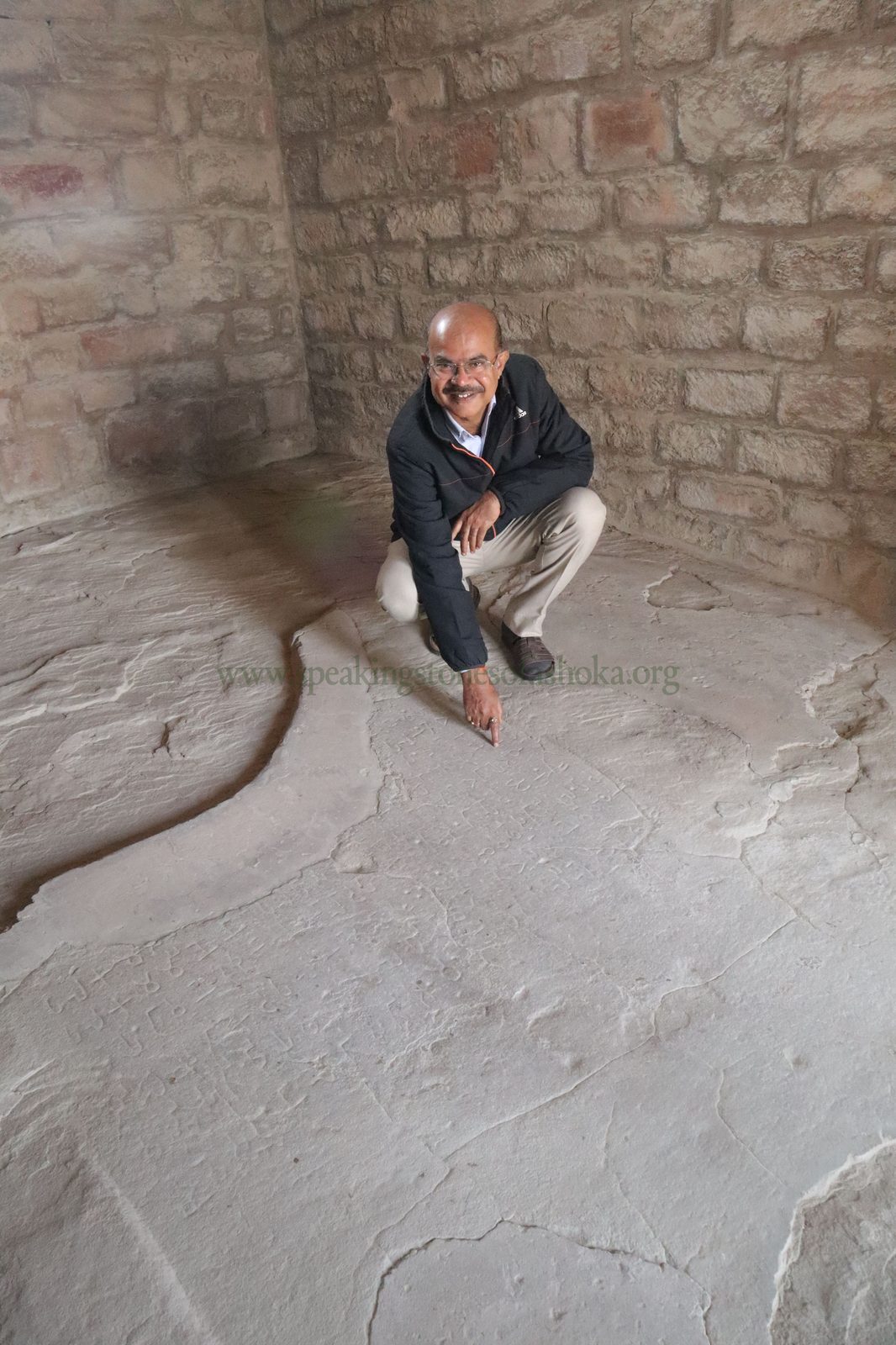
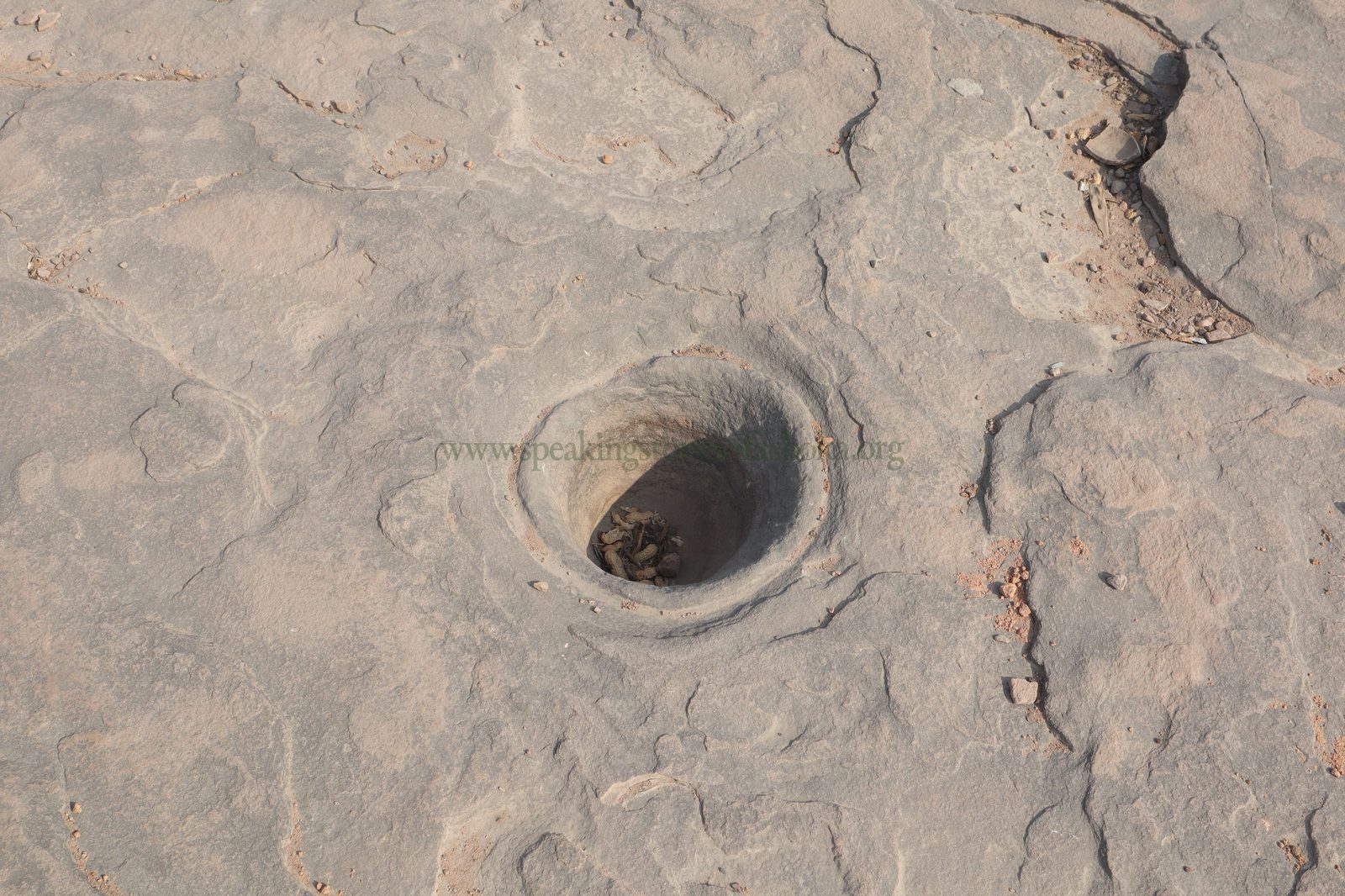
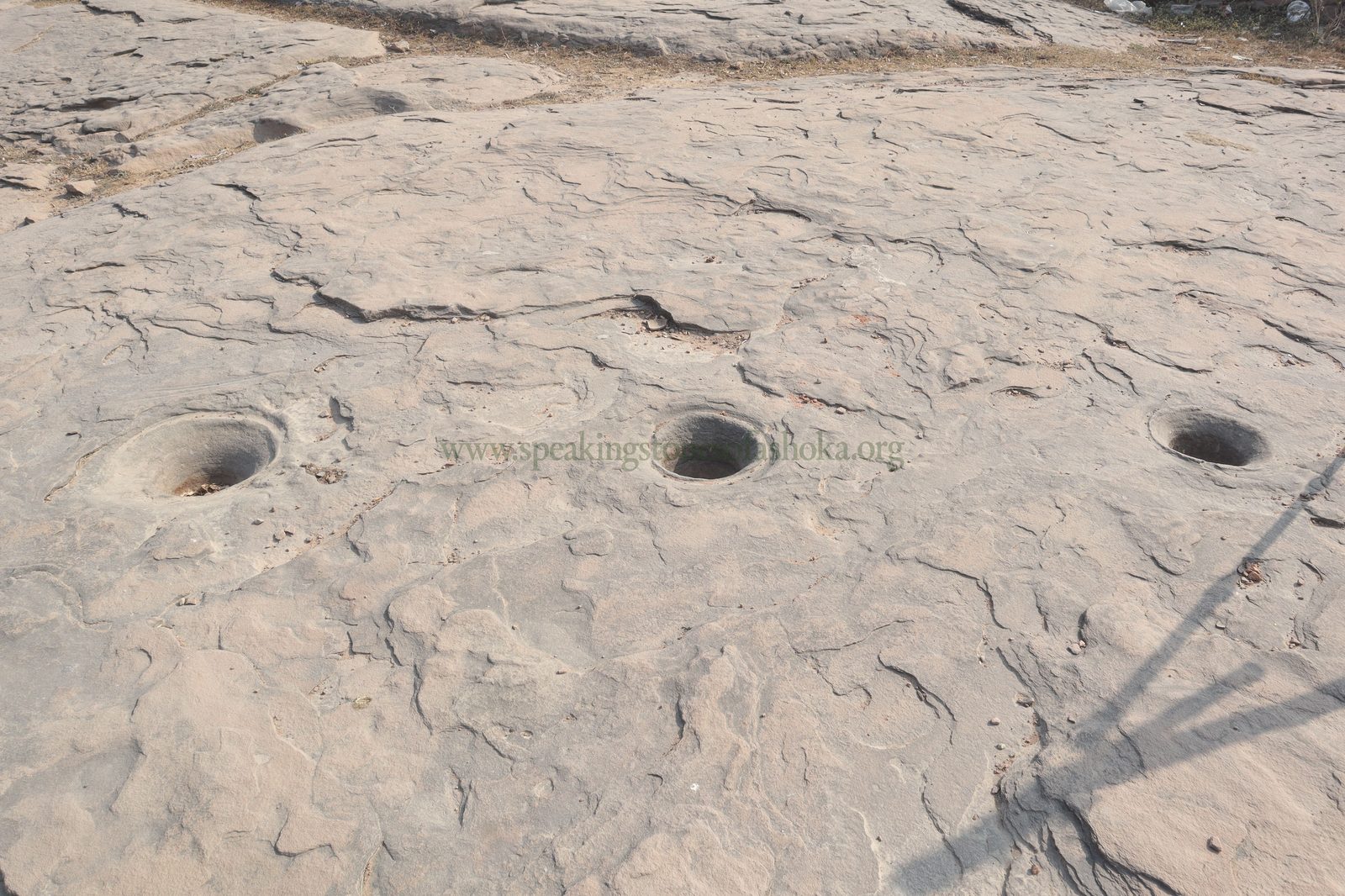
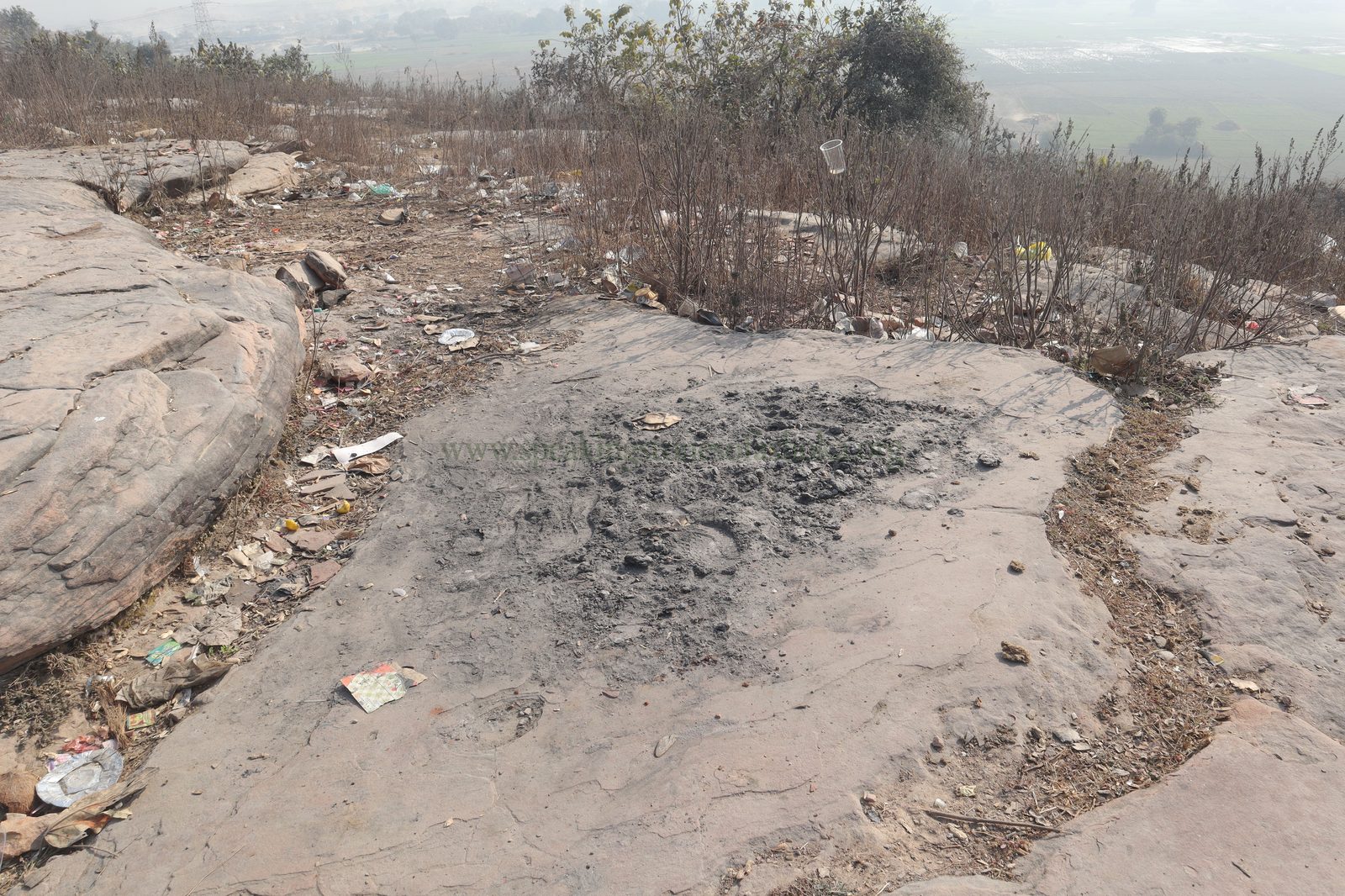
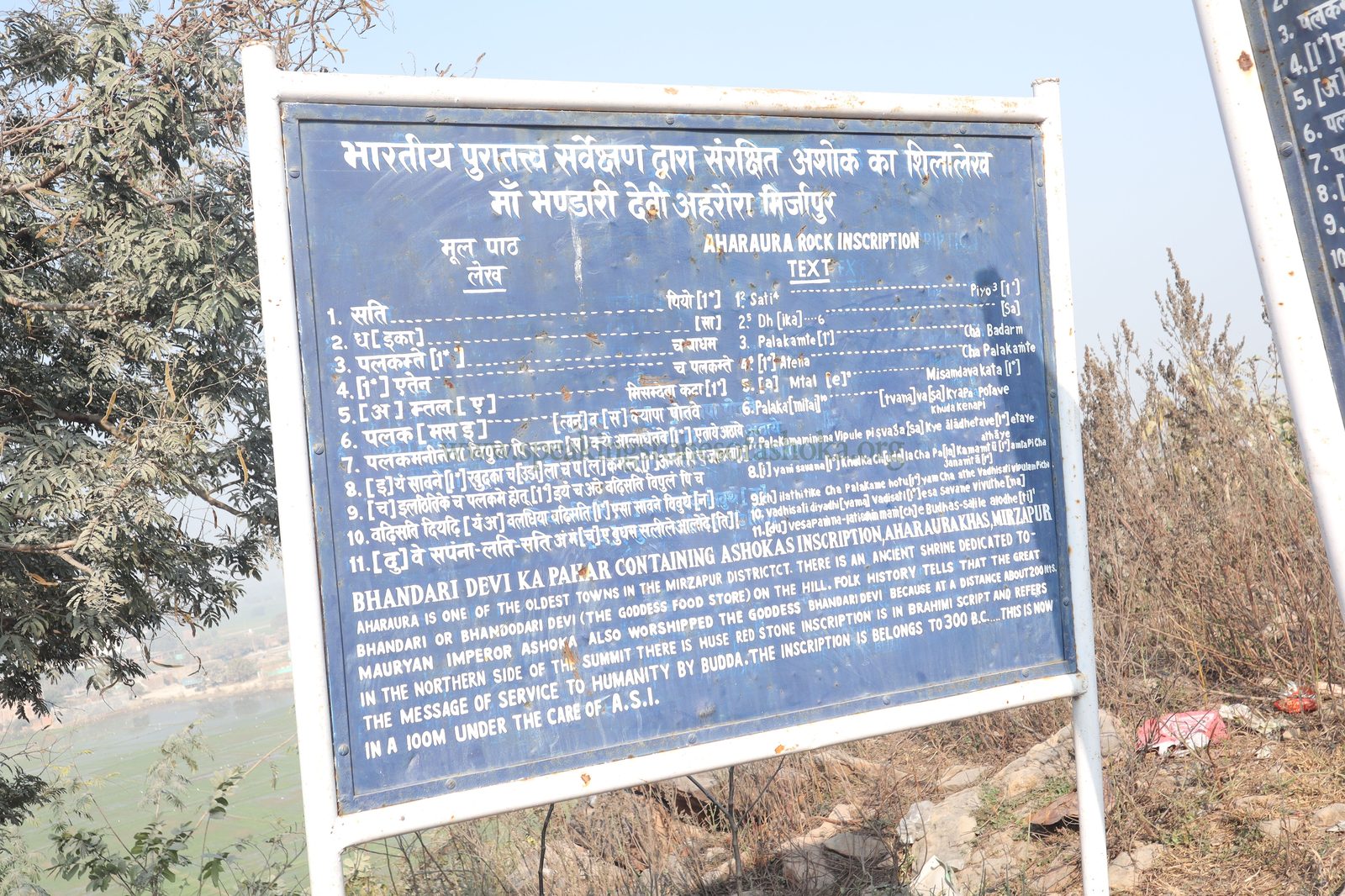
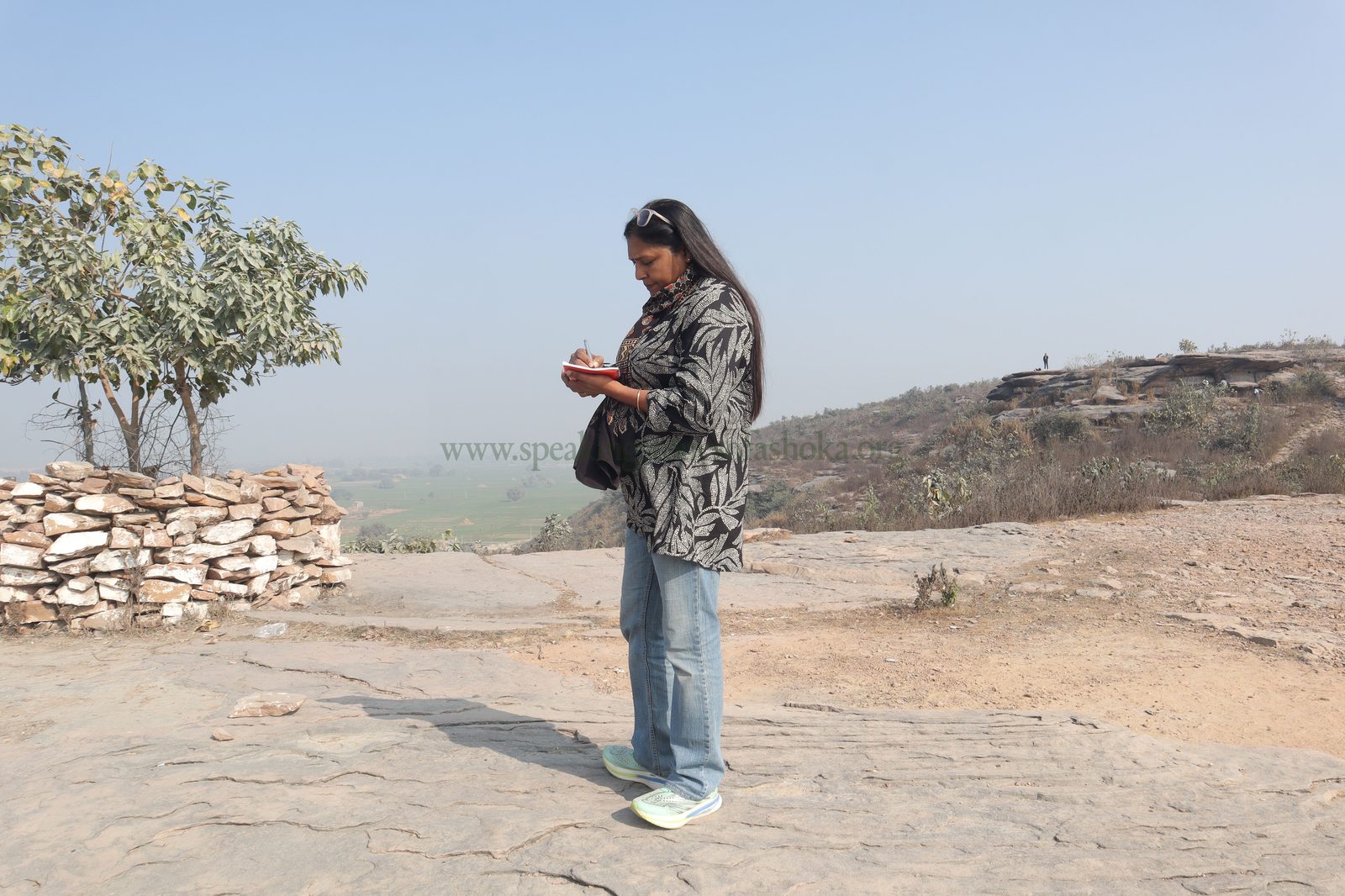
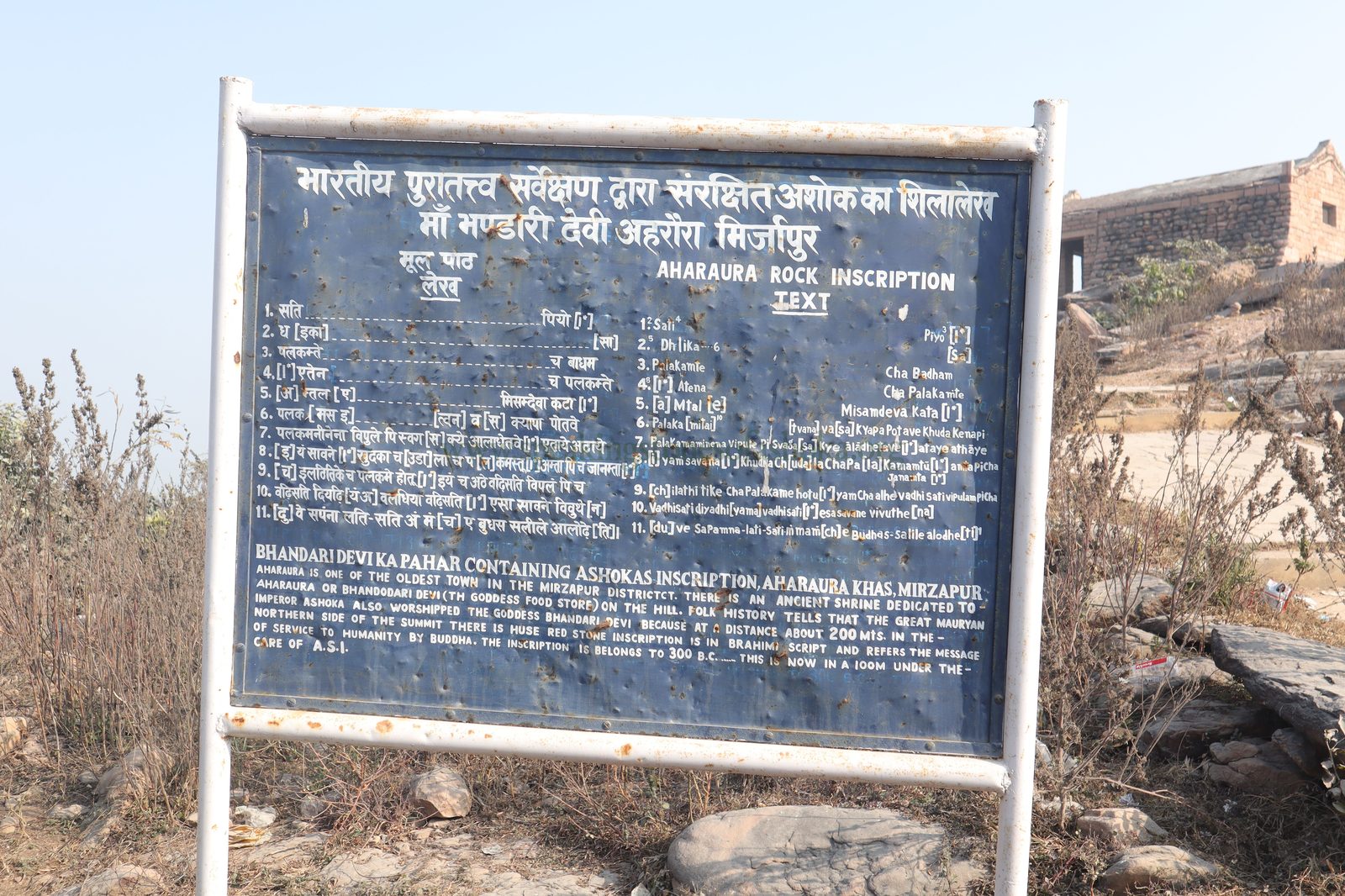
R.G. Pandey, Exploration Assistant of the ASI, Varanasi, was possibly the first to have reported the Minor Rock Edict of Ahraura inscription prior to November 1961, when news about it was spread by several newspapers in UP. After this, several parties went to the spot and consequentially claimed priority in this discovery. The sandstone boulders of the hill are at places covered by a very smooth, concrete like surface in thin layers. The edict was written on one of these layers, which peeled off in its upper part. The preserved parts were in good condition, although thousands of devotees must have walked over it. Now that the shed protects the inscription people pelt it with stones through the door.
Measurements: The surface was carefully smoothed for the inscription. The side-lines of this space are 125 cm apart (= 1.5 MY?). The upper 12 cm have been left uninscribed. The text runs for 82.5 cm in 11 lines with a width of 112.5cm never touching the side-lines. About 50 cm
of smoothed space below the text are left uninscribed.
The aksaras measure 2-5-6 cm.
Orientation: The text points at 340° N, the reader faces south.
Importance in antiquity: Chakrabarti, Tewari & Singh (1999/00: 126b) point to “the mound locally known as Ahraura-dih (Lat 25°01' N. and Long. 83°01' E.). It covers about 2 acres and is fortified by a mud wall topped by a wall made of the locally available stone slabs. The fortified complex, which shows a flattish surface on the top, is about 10 m high from the ordinary ground level, and there is a clear trace of a moat around it. This fortified enclosure with traces of occupation outside (NBPW and earlier) denotes to us an administrative centre of the Mauryan period.”
Ashoka- The Portrait of a Philosopher King: Patrick Olivelle
Minor Rock Edict I has been discovered at the following sites: Ahraura,
Bairat, Brahmagiri, Delhi, Erragudi, Gavimath, Gujarra, Jatinga-Ramesvara, Maski, Nittur, Paligundu, Panguraria, Rajula-Mandagiri, Rathanpurwa, Rupnath, Sahasram, Siddapur and Udegolam.
Ashoka-In Ancient India:Nayanjyot Lahiri:
Ashoka made grassroots contact with his people only after he became a Buddhist, there being no epigraphs showing this kind of intent for his pre-Buddhist phase. He appeared as a charged-up Buddhist ruler across a large part of his empire in the North (Bairat,Delhi, Ahraura, Ratanpurwa, and Sasaram), in the heartland of Central India (Gujjara and Rupnath), and in the Deccan where, in fact, the most frequent articulation of his persona as a royal Buddhist convert came to be set down—this message being engraved in ten separate places there.Reading it would have left no one in doubt that the emperor was now an ardent advocate of Buddhism. He declared at the outset that he had become a Sakya, meaning a Buddhist (after the Buddha’s well-known title ‘Sakyamuni’).
Ahraura rock edict: discovered in 1961; location: Mirzapur district Similar to Sasaram edict
Uttar Pradesh
Gallery