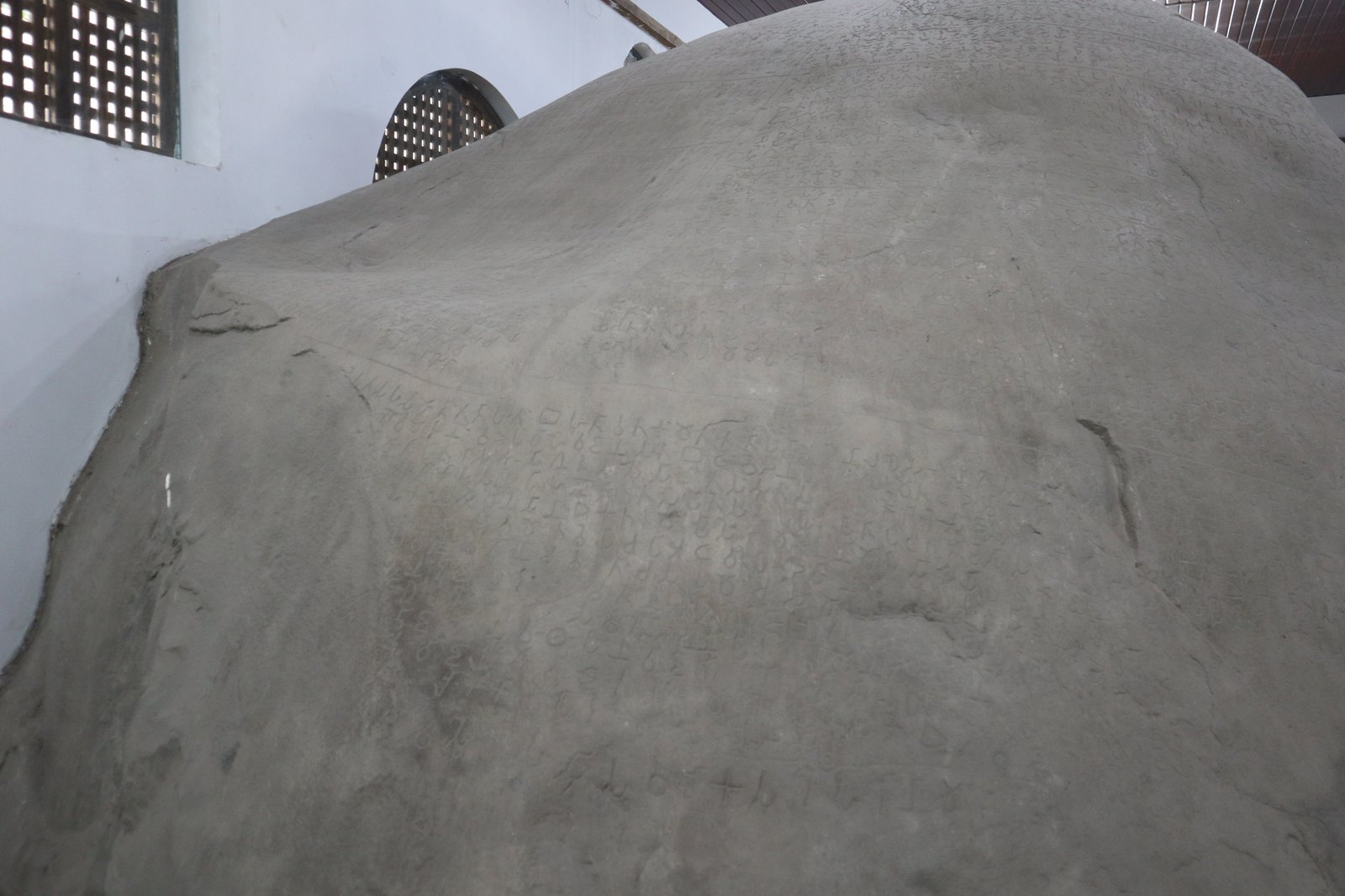
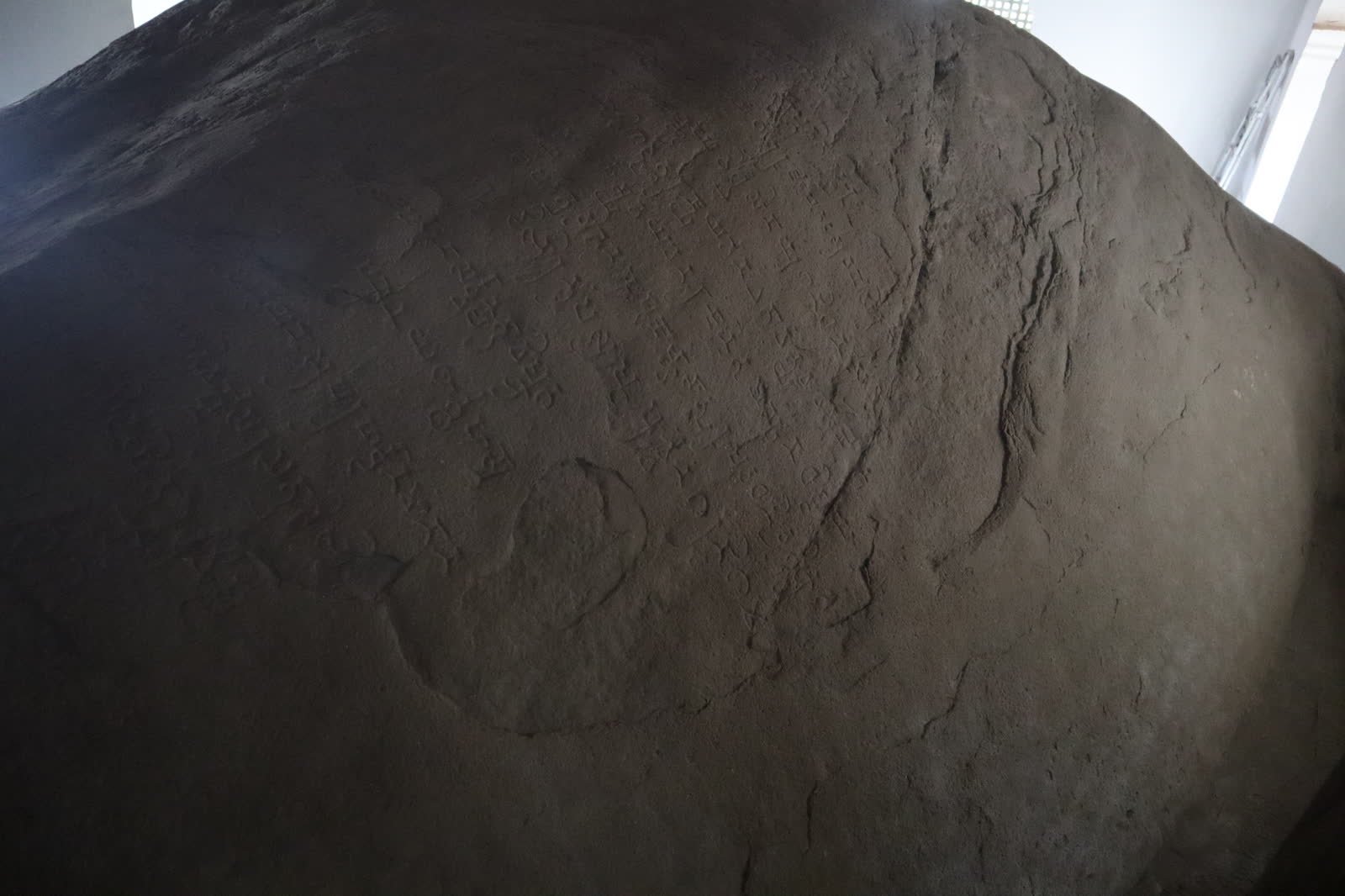
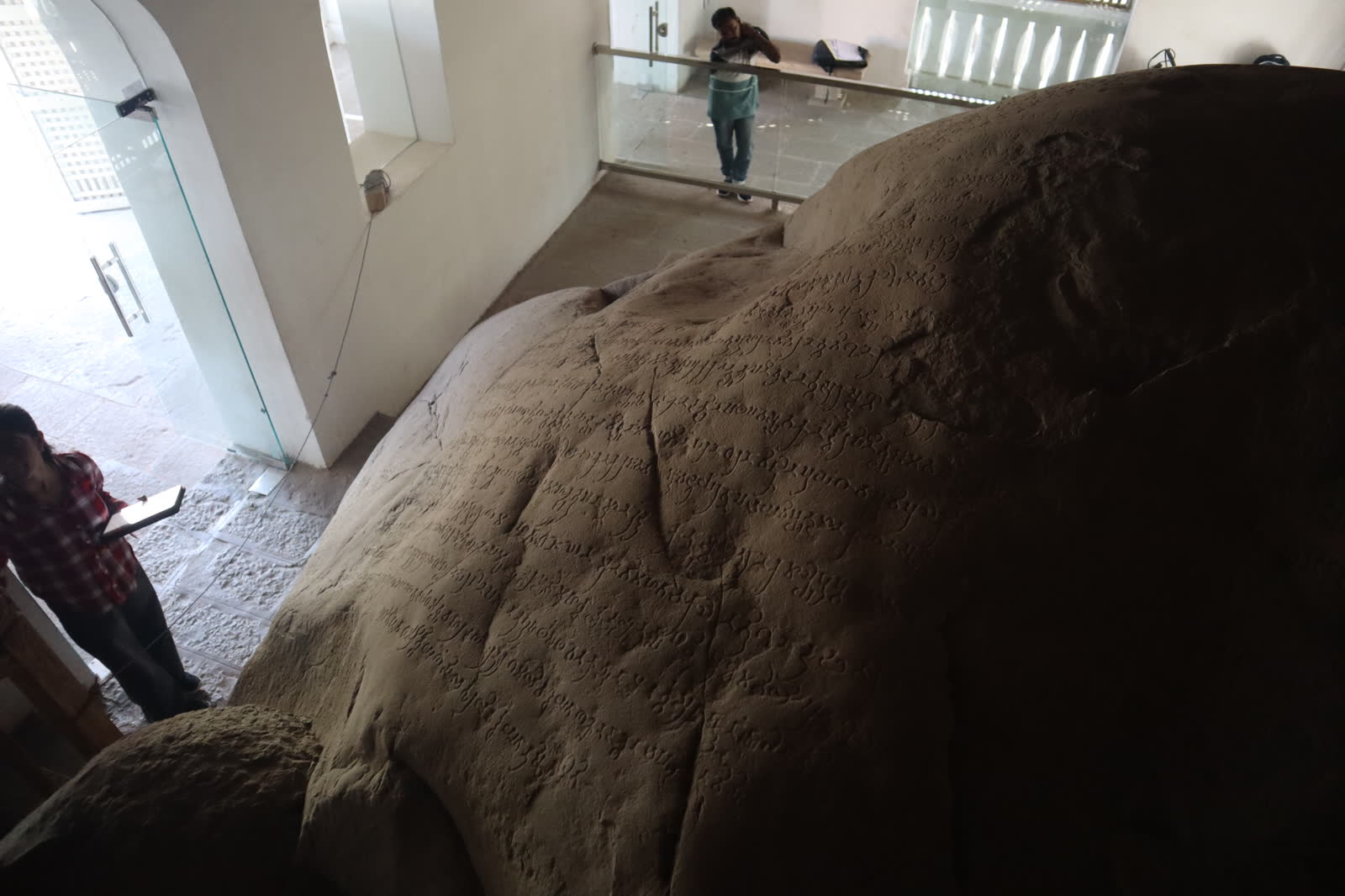
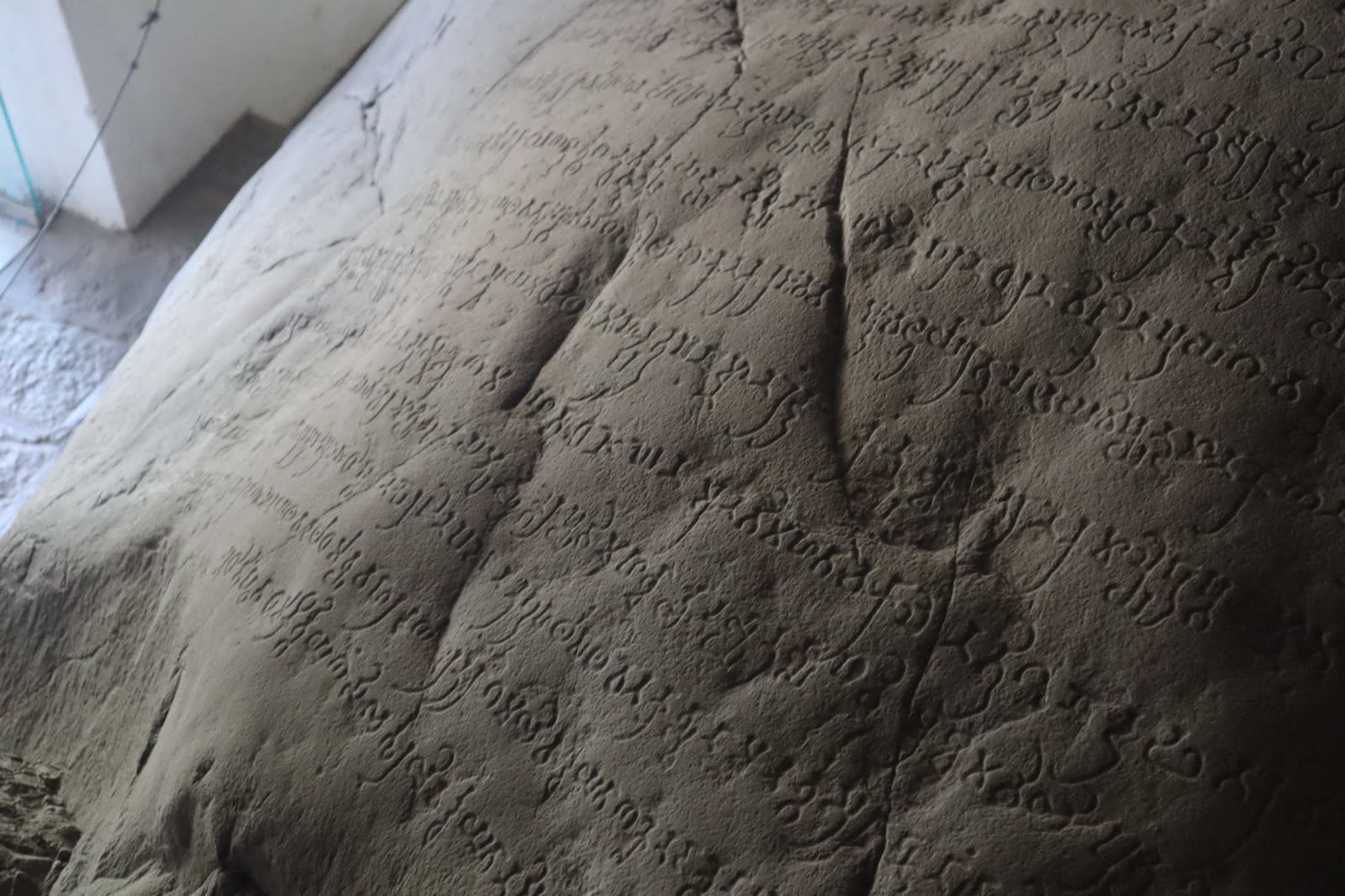
(A) King Devānaṁpriya Priyadarśin speaks thus. (B) (When I had been) anointed twelve years, the following was ordered by me. (C) Everywhere in my dominions the Yuktas, the Rājūka, and the Prādeśika shall set out on a complete tour (throughout their charges) every five years for t…
Location
Major Lieutenant-Colonel James Tod, first visited Girnār in December 1822, at that time the inscription seems to have been intact. It probably had laid buried in dense forest and might never have come to light had not a local notable made a causeway through the jungle for the ben…, Gujarat, India
Date
c. 260–250 BCE
Script
Brahmi
Language
Prakrit
Type
Major Rock Edict
Coordinates
21.5167° N, 70.4667° E
Overview
Girnar Discovery Story
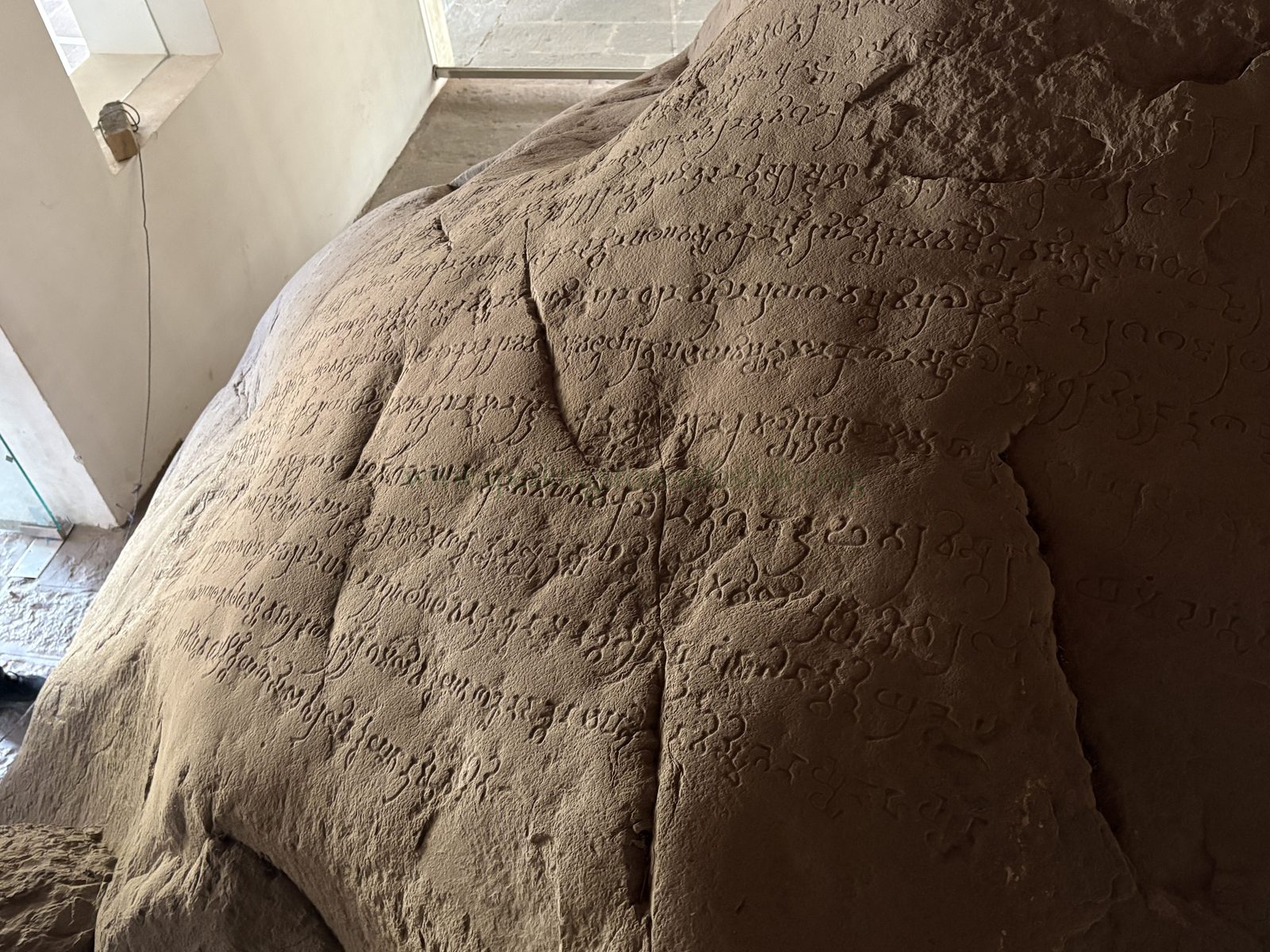
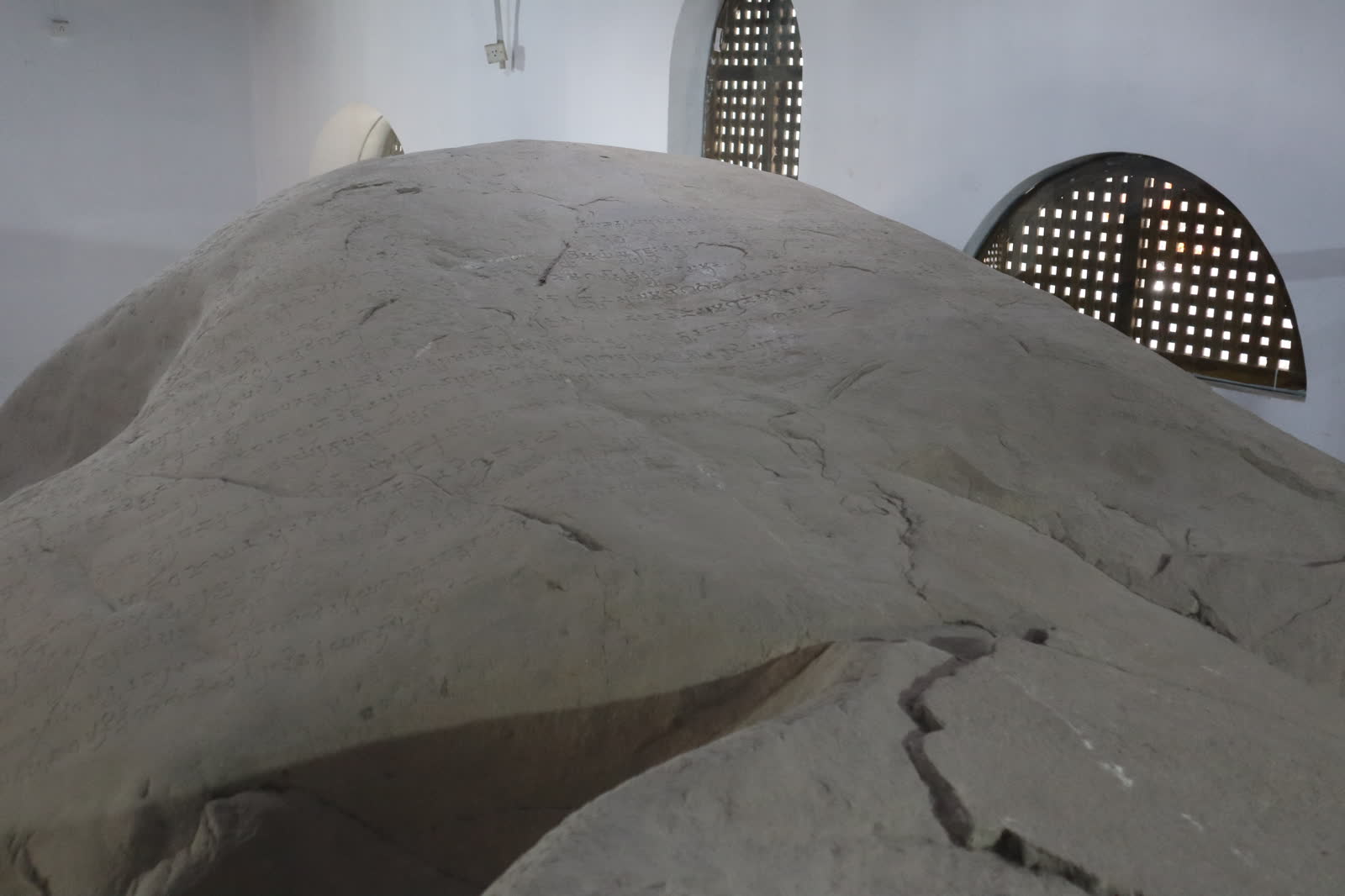
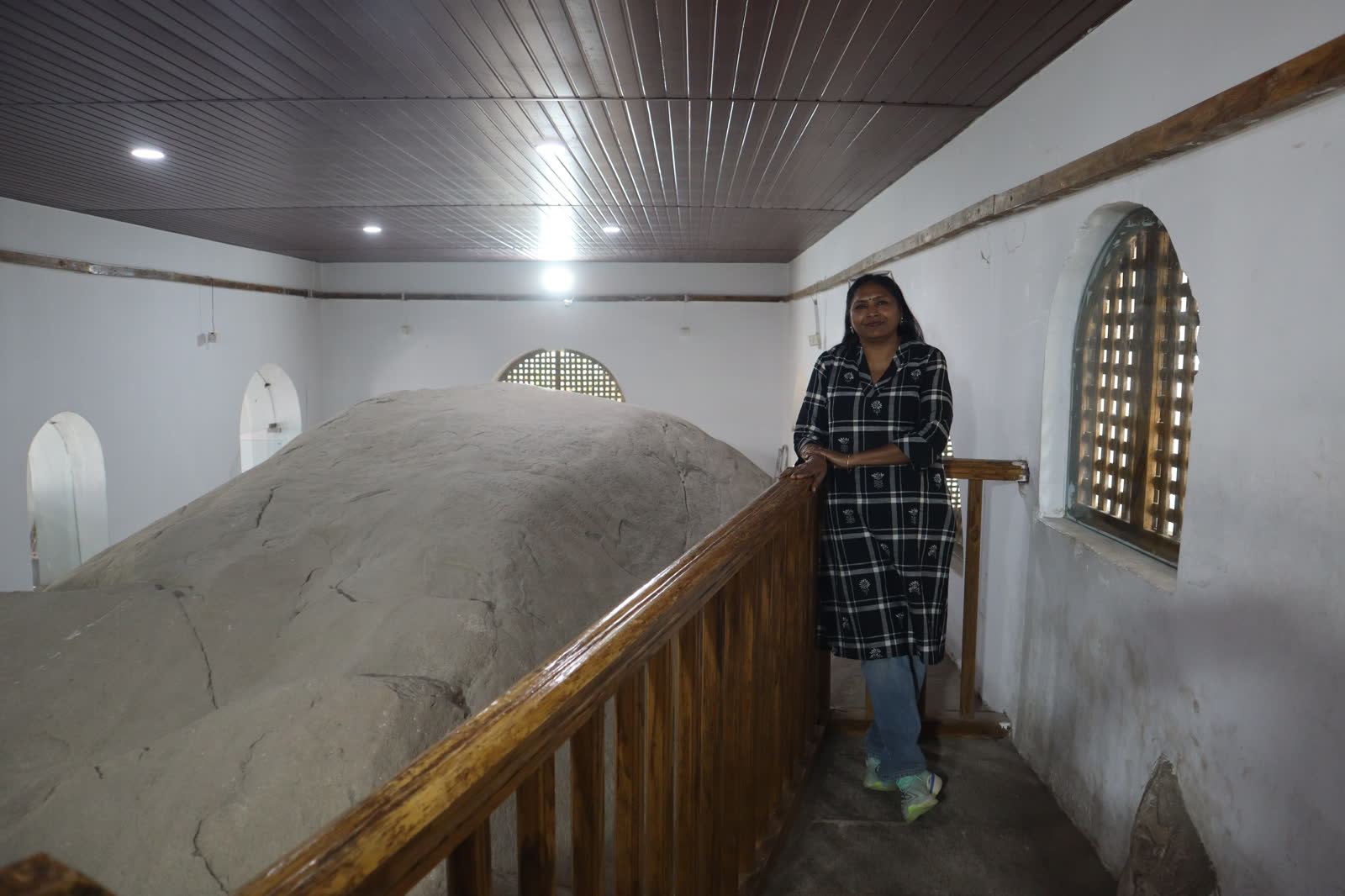
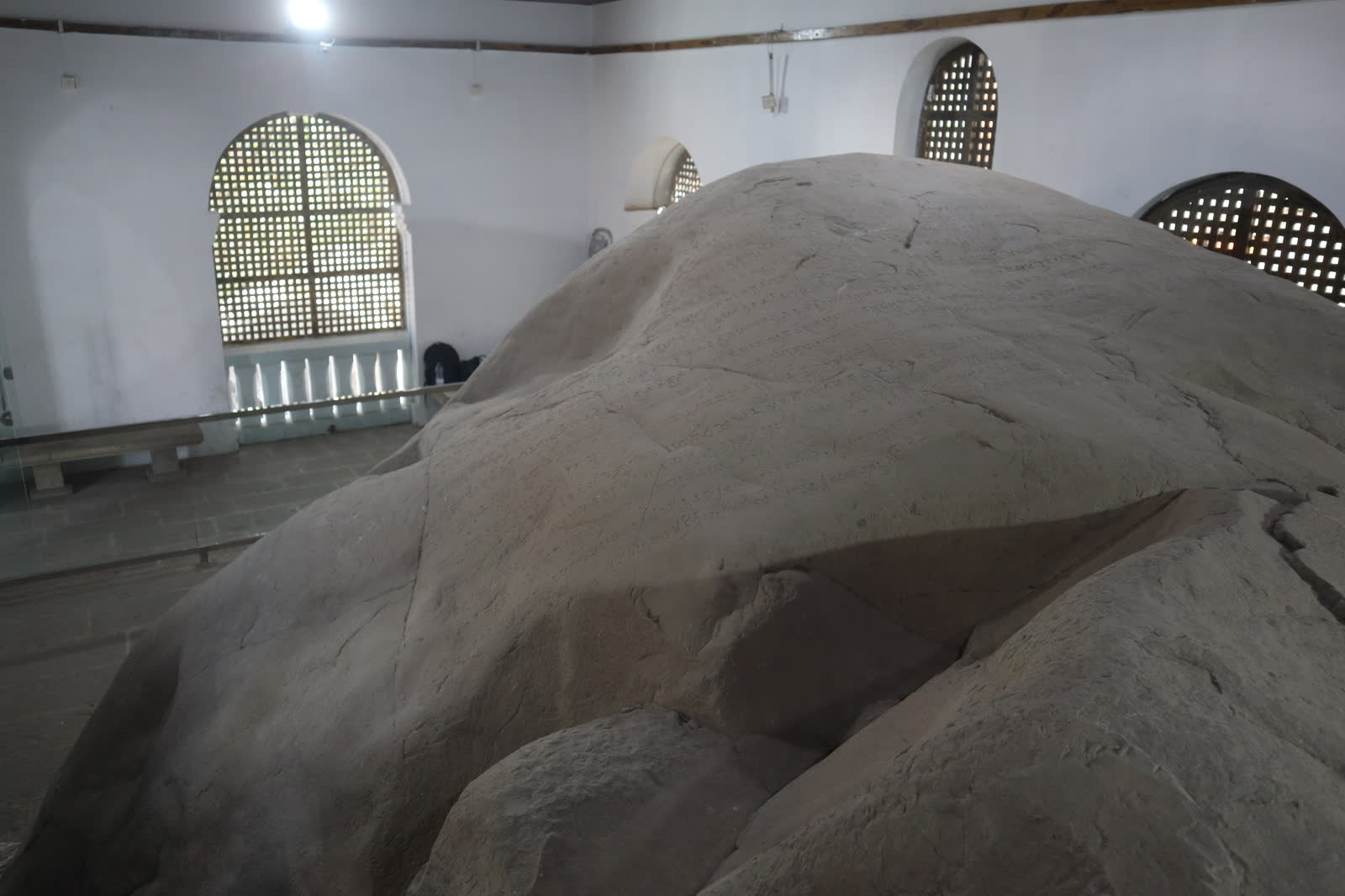
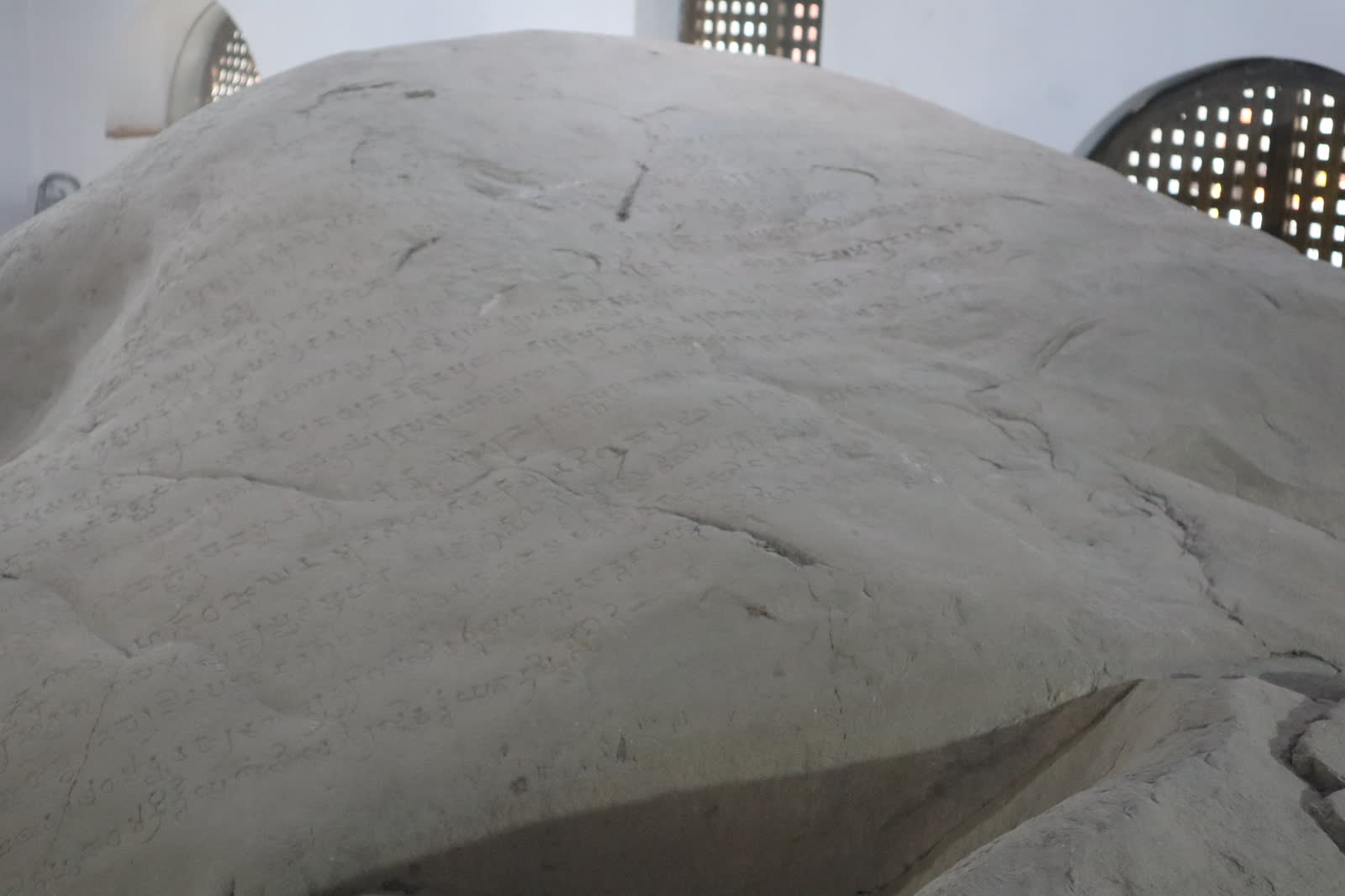
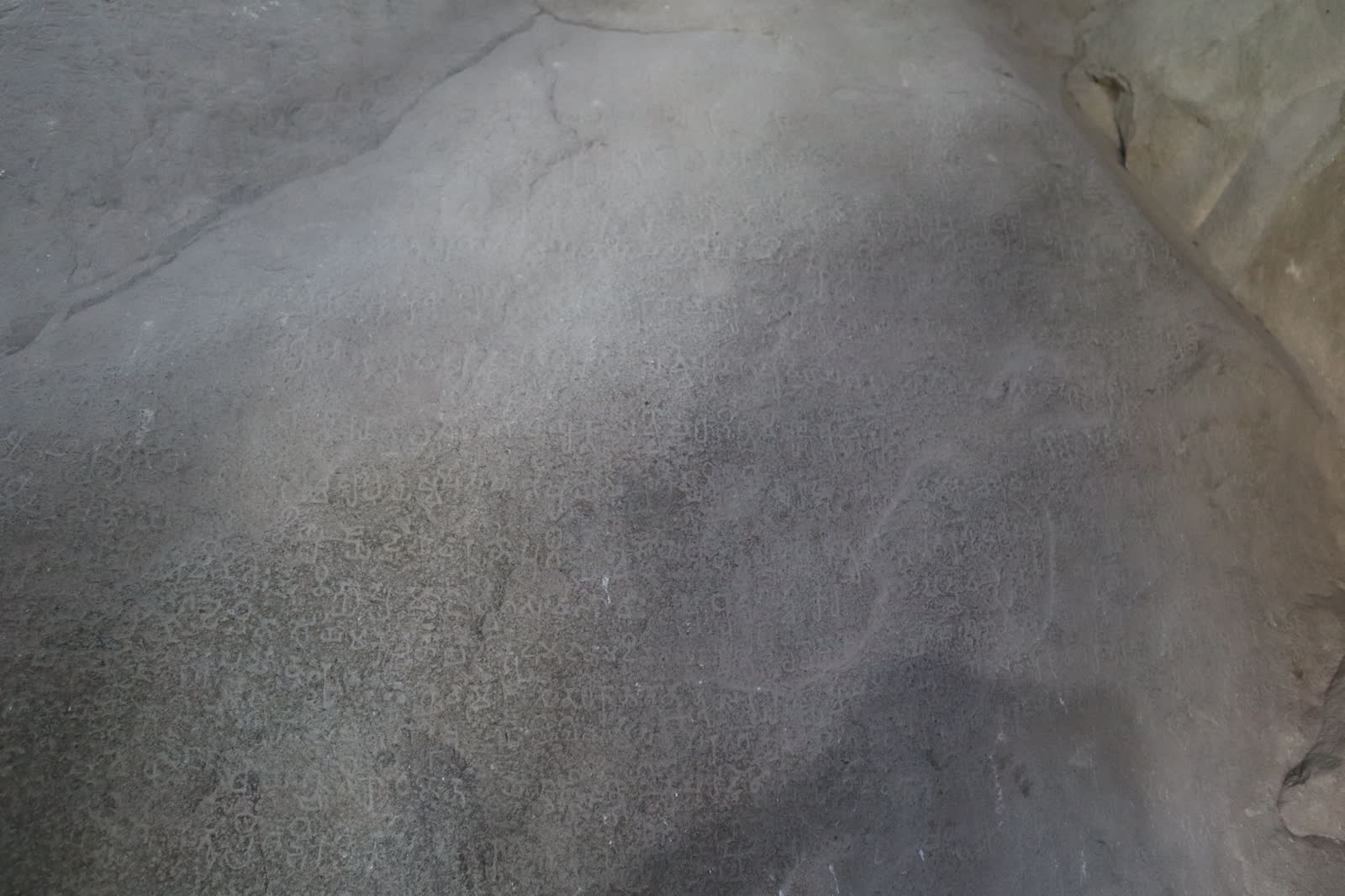
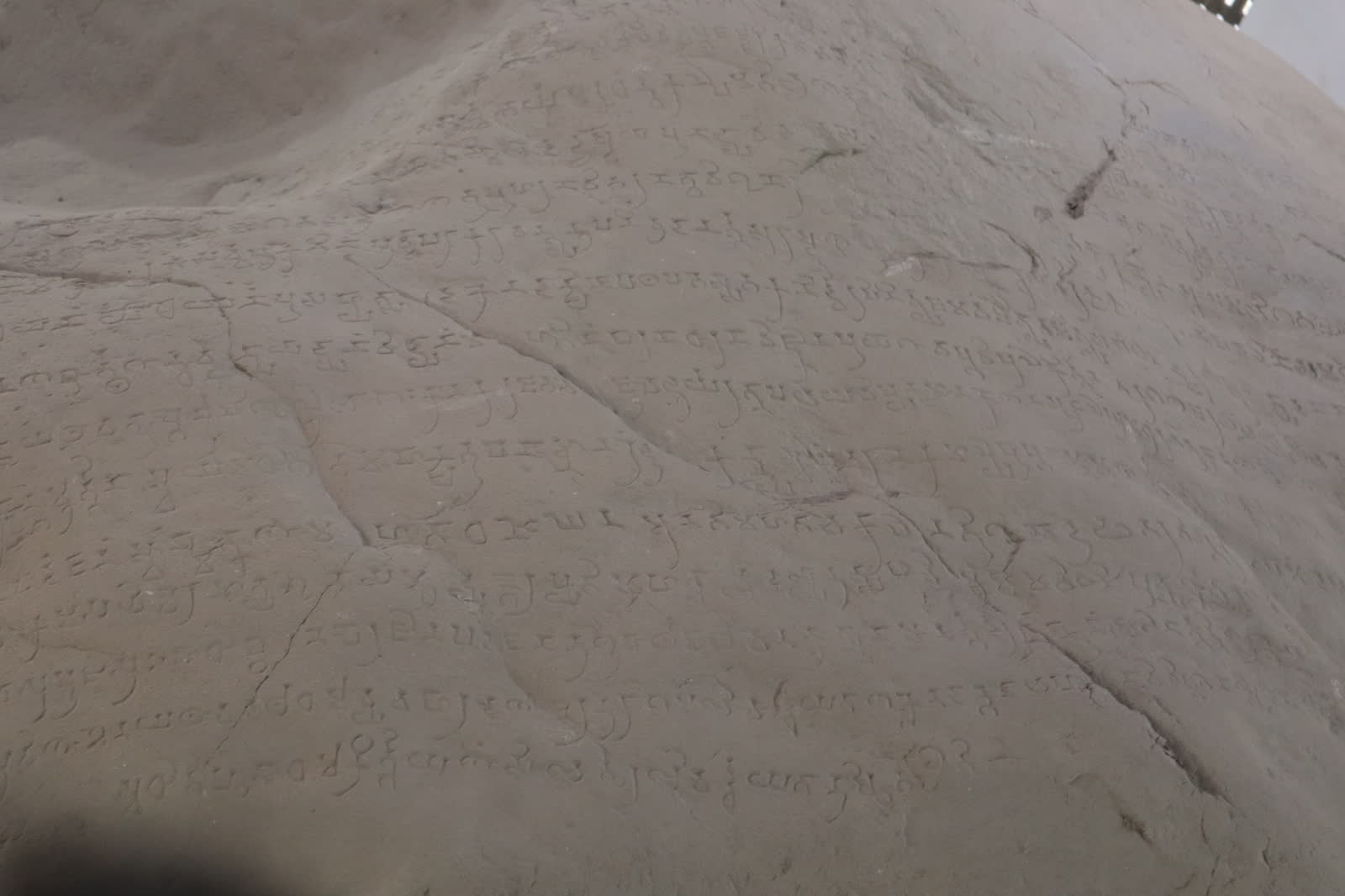
Major Lieutenant-Colonel James Tod, first visited Girnār in December 1822, at that time the inscription seems to have been intact. It probably had laid buried in dense forest and might never have come to light had not a local notable made a causeway through the jungle for the benefit of pilgrims to the hill, which is one of the most sacred places venerated by the Jains. He described it as a huge hemispherical mass of dark granite, which, like a wart upon the body, has protruded through the crust of mother earth, without fissure or inequality, and which, by the aid of the ‘iron pen,’ has been converted into a book. Tod was a famous Rajasthan annalist and army antiquarian of the East India Company. His reaction to Girnār was written before the Brahmi script had been deciphered. His account is arresting for the recognition that the edict is both monument and inscription, an ancient rock transformed to a monument by the writing on it. The measurement of its arc is nearly ninety feet; its surface is divided into compartments or parallelograms, within which are inscriptions in the usual antique character. The way in which the Girnār edicts were inscribed on a sin…
1 (A) Devānaṁpiyo Piyadasi r[ā]jā evaṁ āha (B) dbādasa-vāsābhisitena mayā idaṁ āñ[a]pitaṁ
2 (C) sarvata vijite mama yutā ca rājūke ca prādesike ca paṁcasu paṁcasu vāsesu anusaṁ-
3 y[ā]na[ṁ n]iyātu etāyeva athāya imāya dhaṁmānusasṭiya yathā añā-
4 ya pi kaṁmāy[a] (D) [s]ādhu mātari ca pitari ca susrūsā mitra-saṁstuta-ñātīnaṁ bāmhaṇa-
5 samaṇānaṁ sādh[u d]ānaṁ prāṇānaṁ sādhu anāraṁbho apa-vyayatā apa-bhāḍatā sādhu
6 (E) parisā pi yute āñapayisati gaṇanāyaṁ hetuto ca vyaṁjanato ca
Translation
(A) King Devānaṁpriya Priyadarśin speaks thus.
(B) (When I had been) anointed twelve years, the following was ordered by me.
(C) Everywhere in my dominions the Yuktas, the Rājūka, and the Prādeśika shall set out on a complete tour (throughout their charges) every five years for this very purpose, (viz.) for the following instruction in morality as well as for other business.
(D) ‘Meritorious is obedience to mother and father. Liberality to friends, acquaintances, and relatives, to Brāhmaṇas and Śramaṇas is meritorious. Abstention from killing animals is meritorious. Moderation in expenditure (and) moderation in possessions are meritorious.’
(E) The council (of Mahāmātras) also shall order the Yuktas to register (these rules) both with (the addition of) reasons and according to the letter.