
Girnar Discovery Story
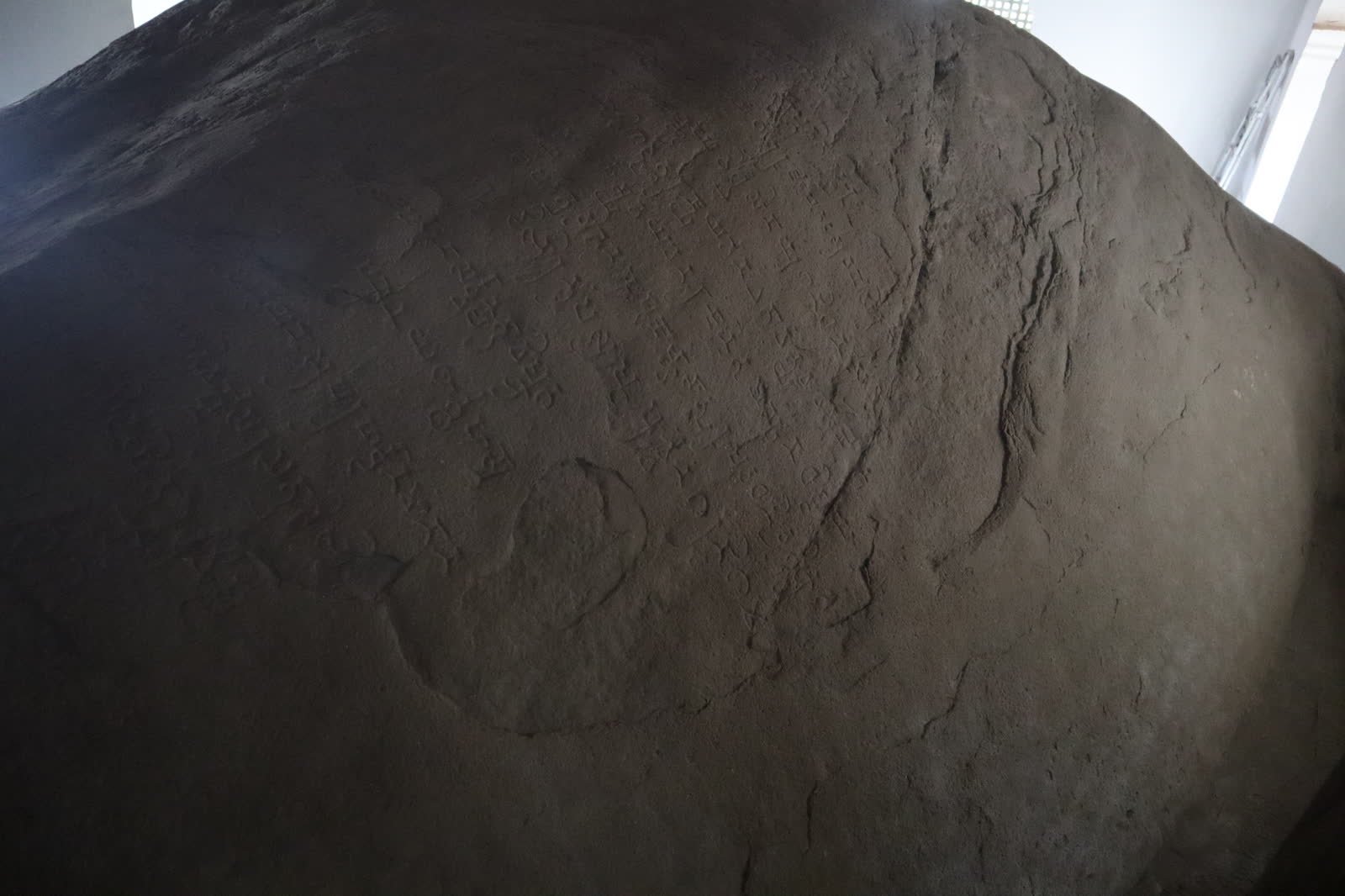
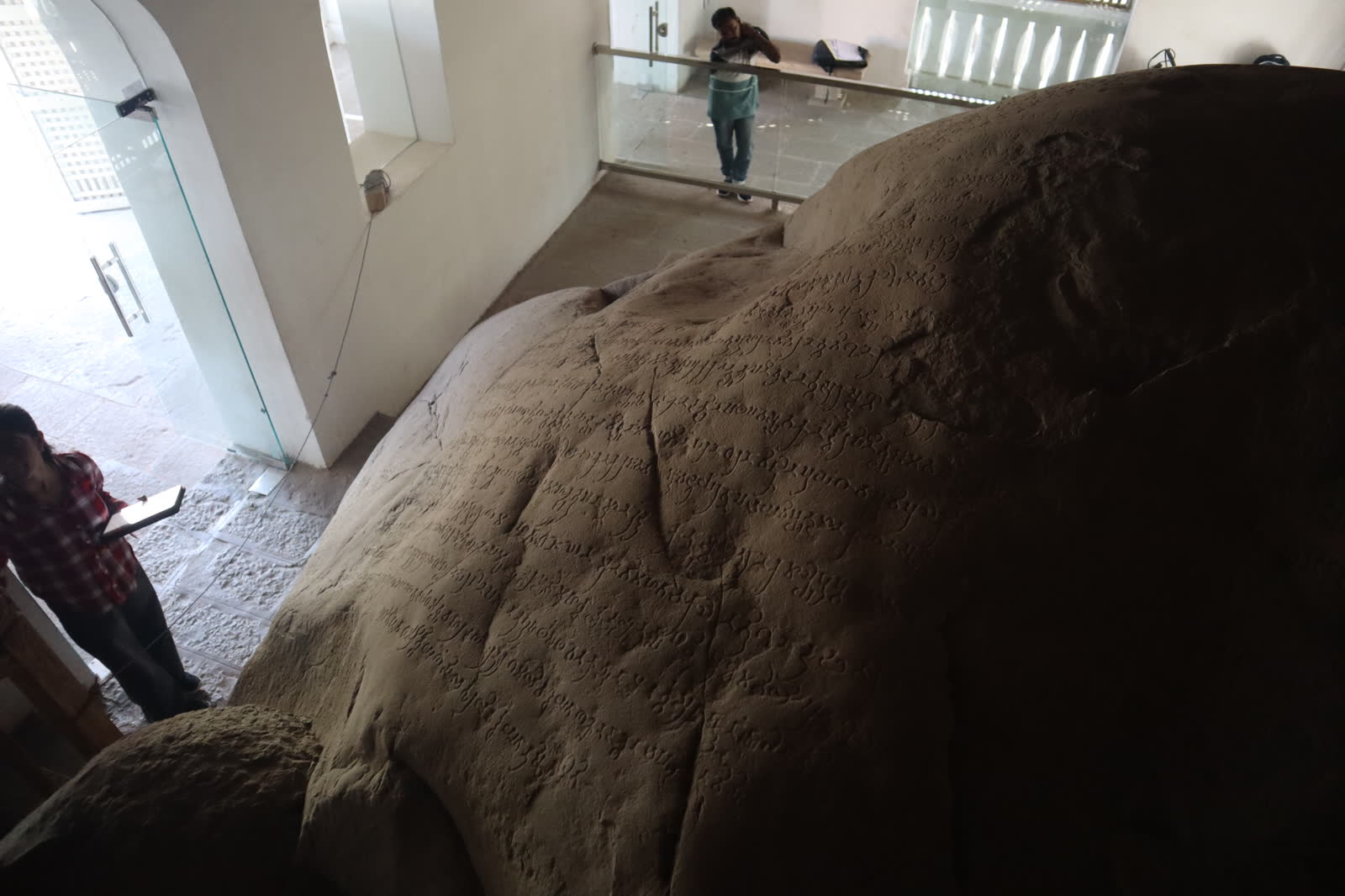
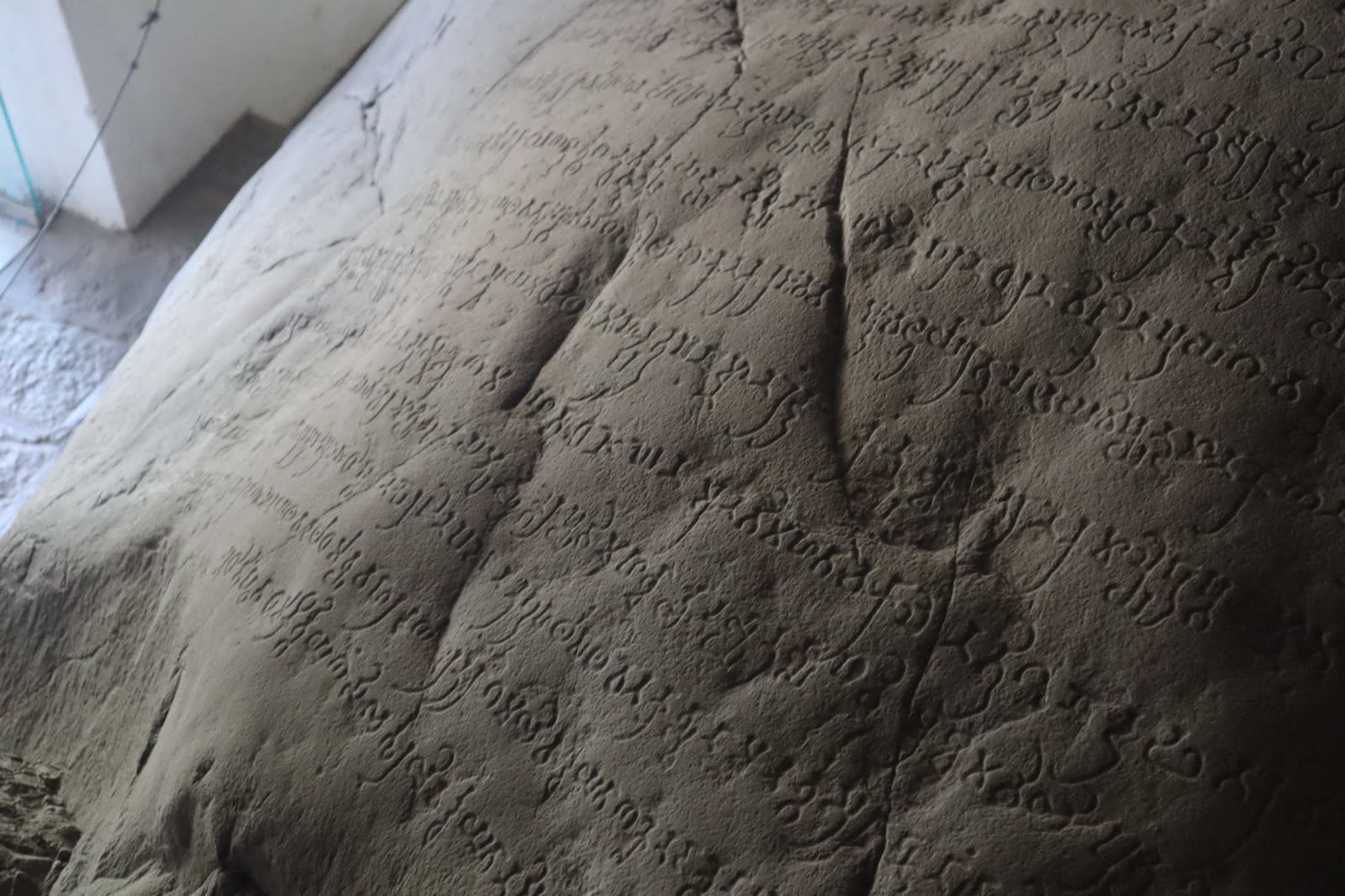
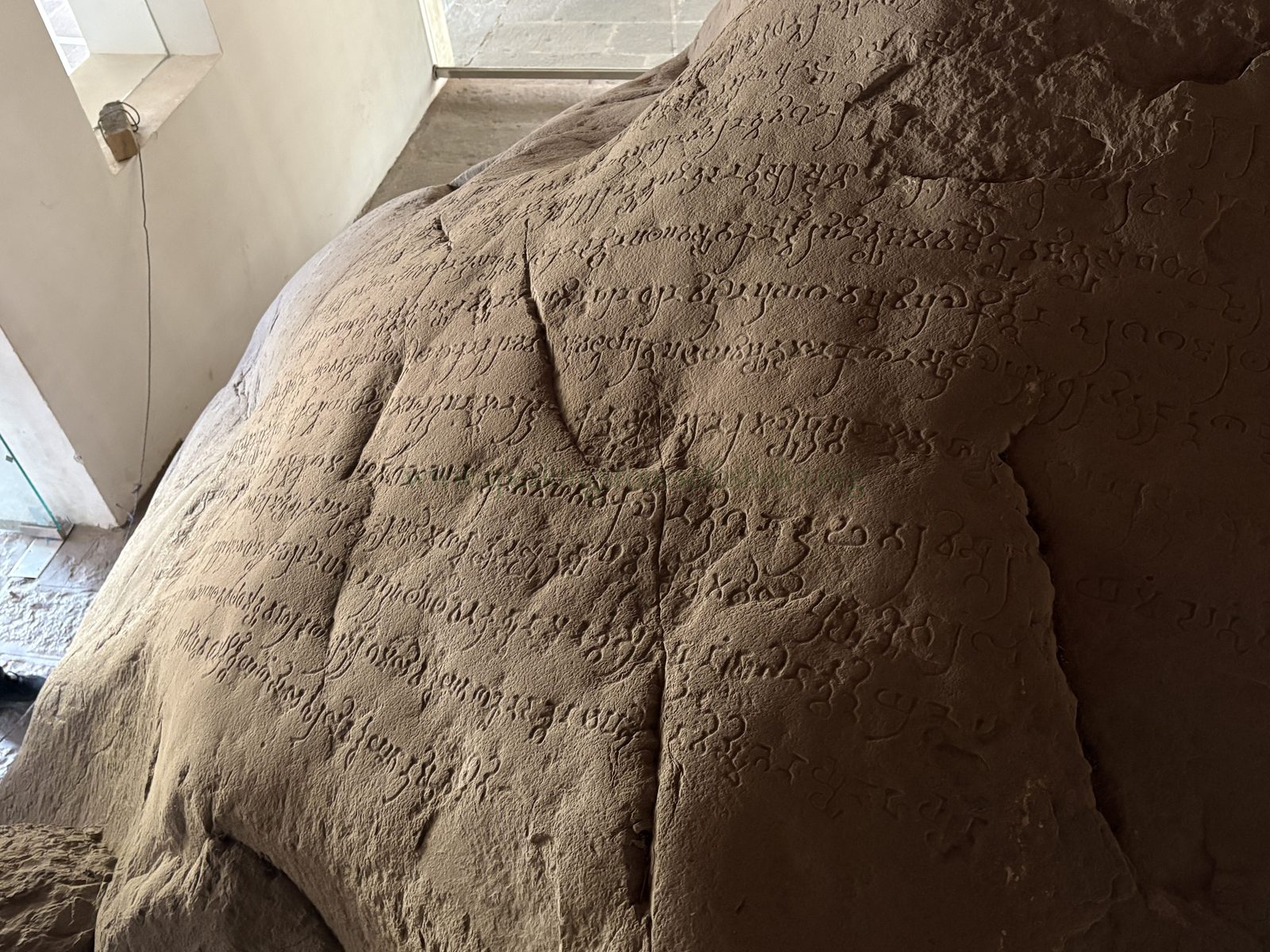
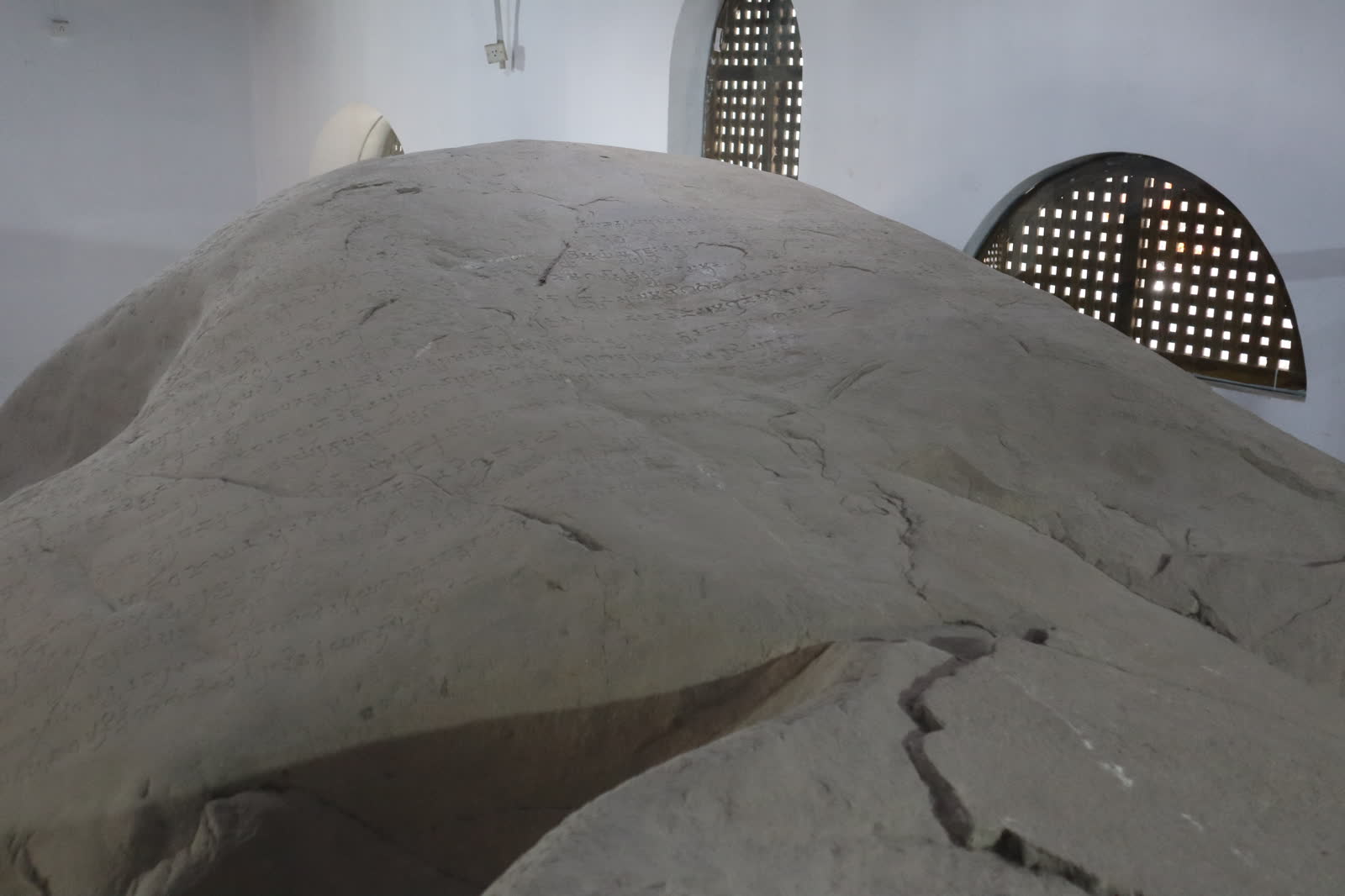
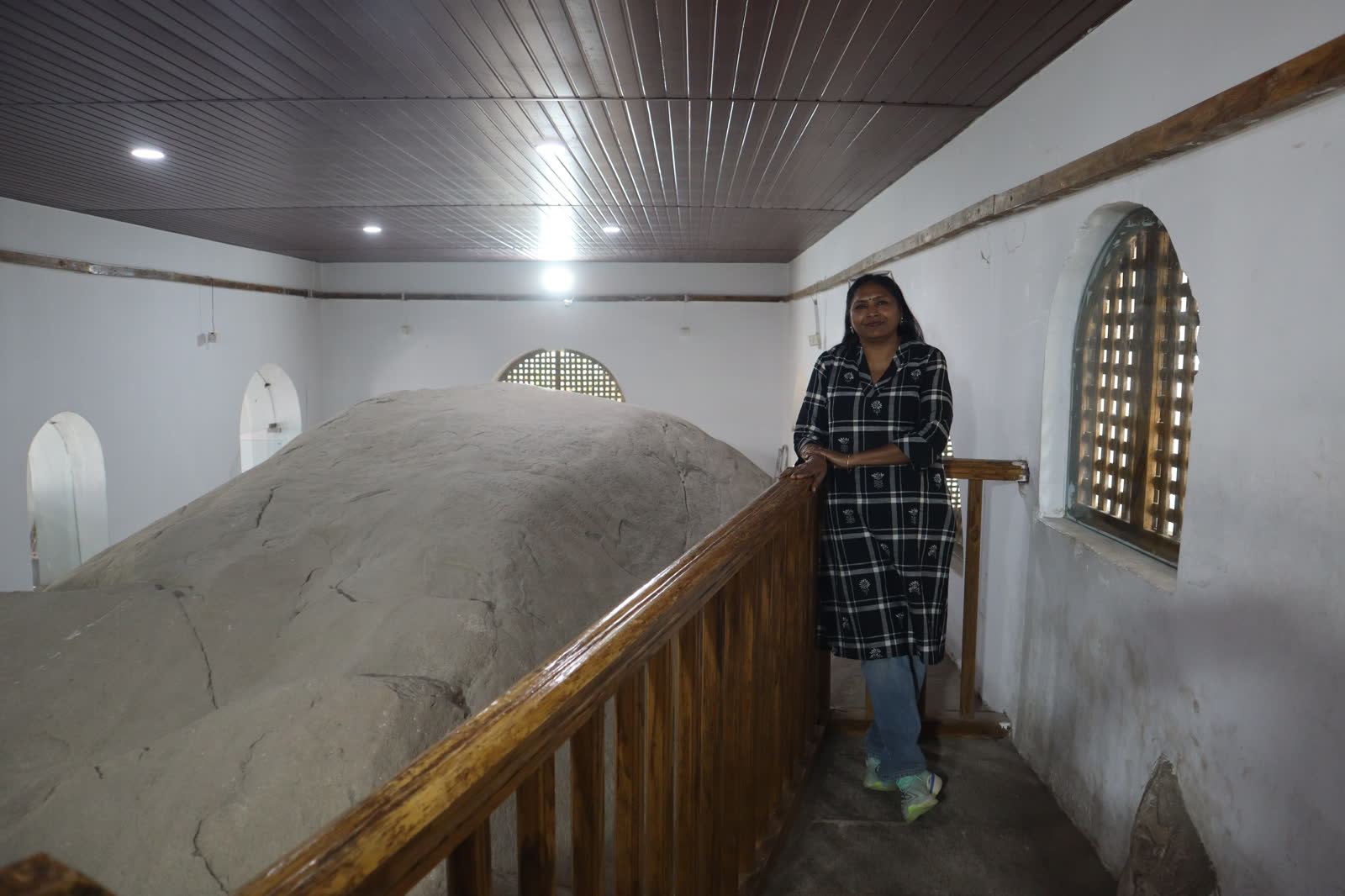
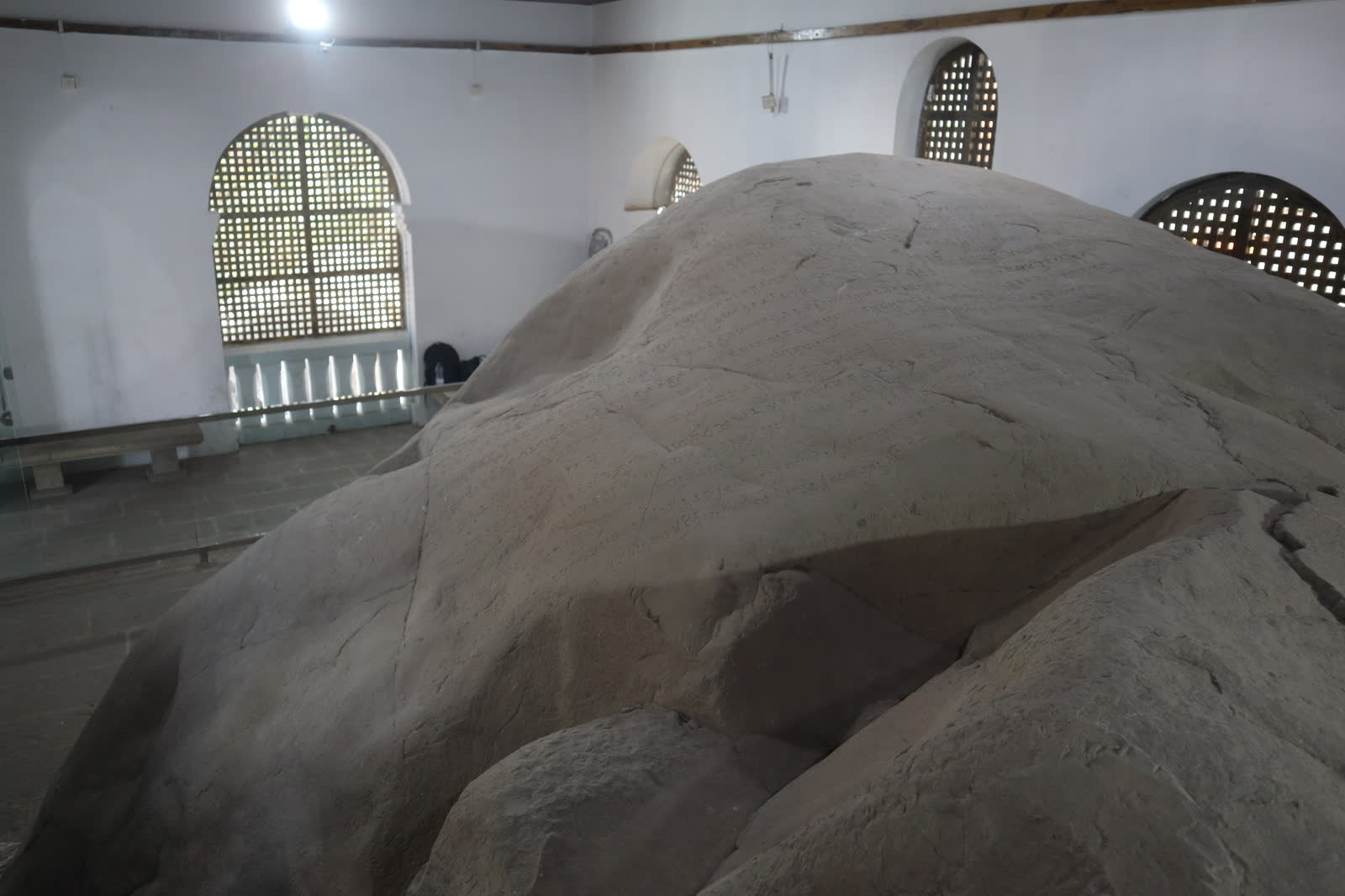
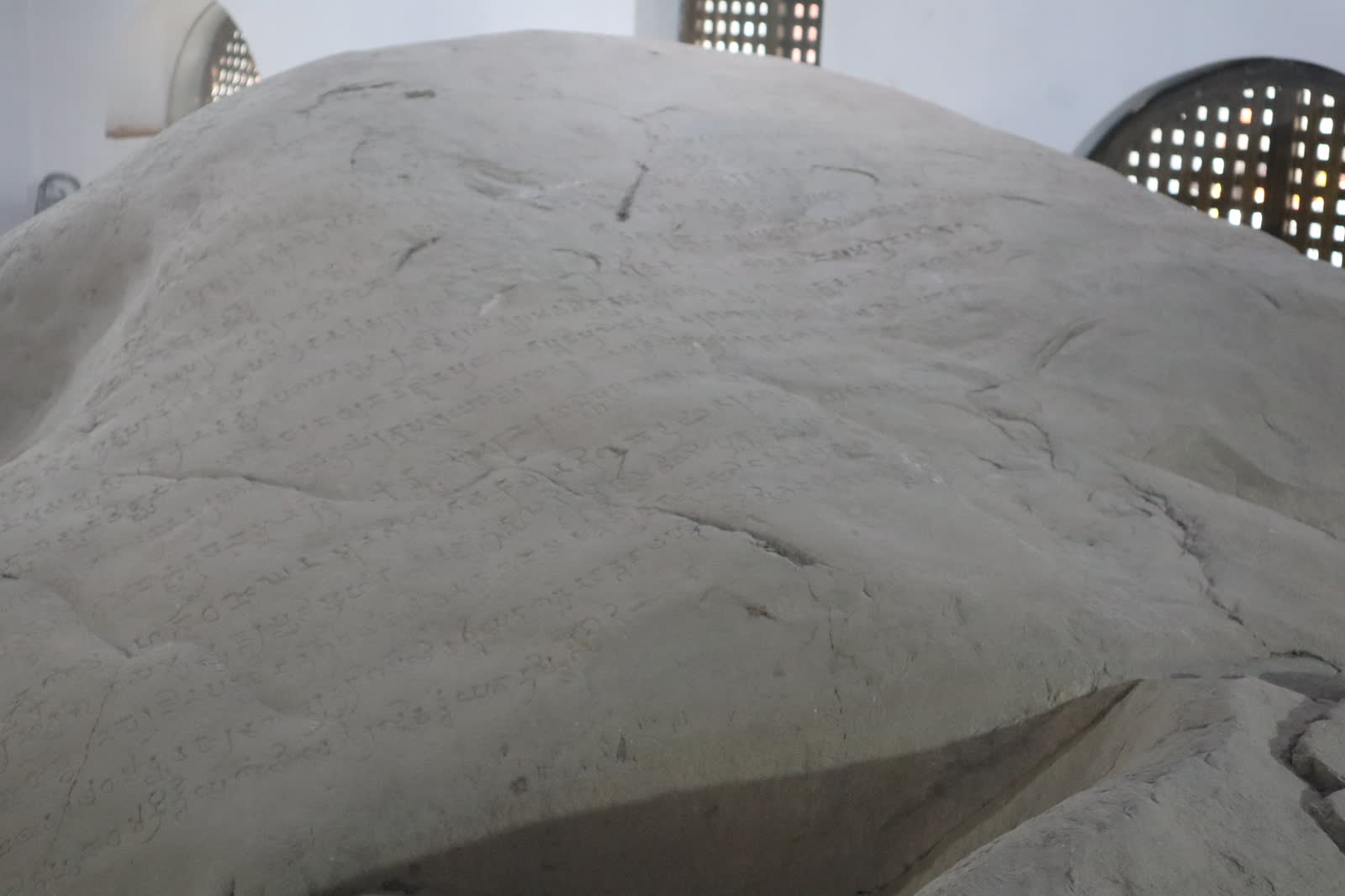
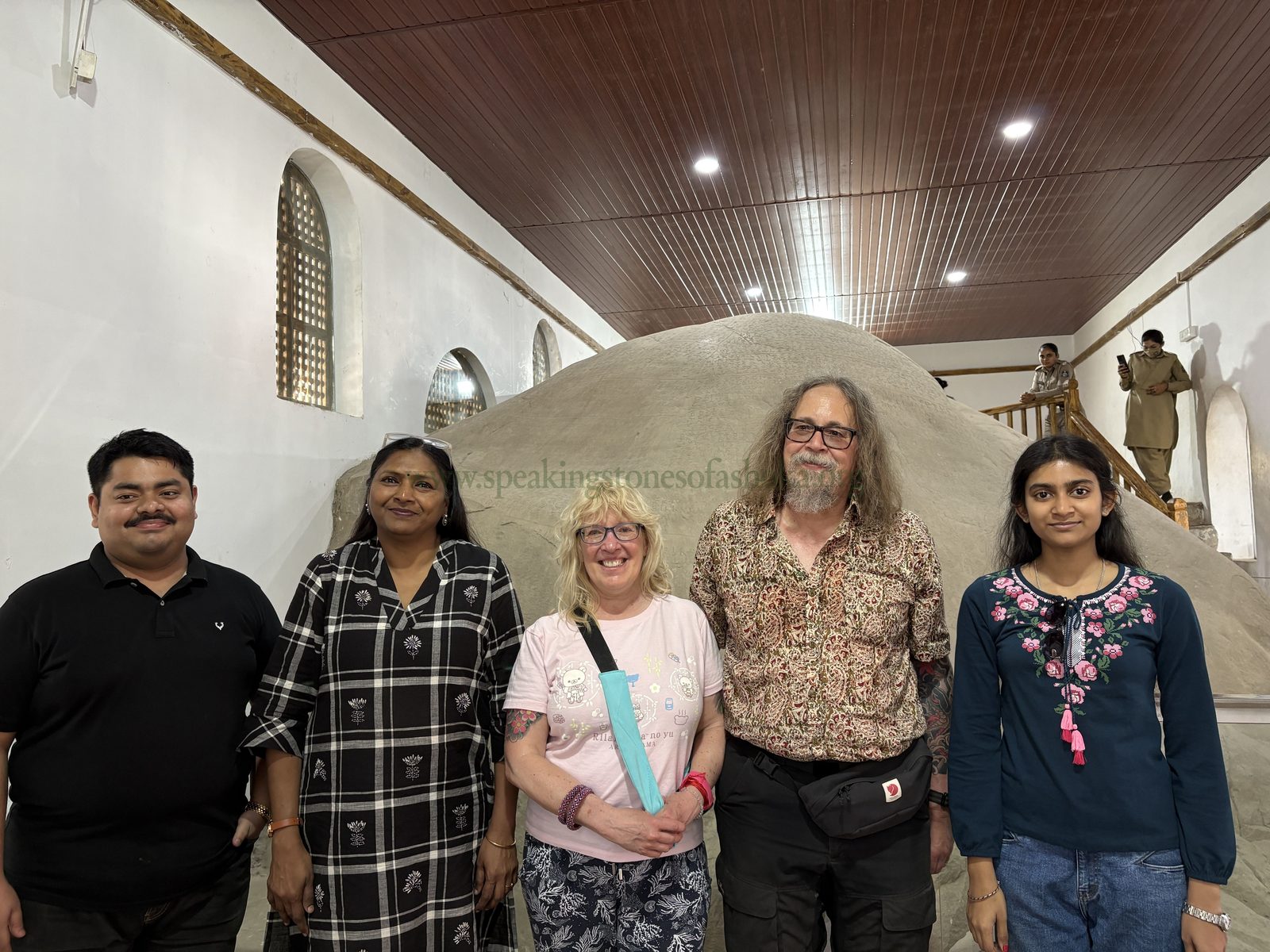
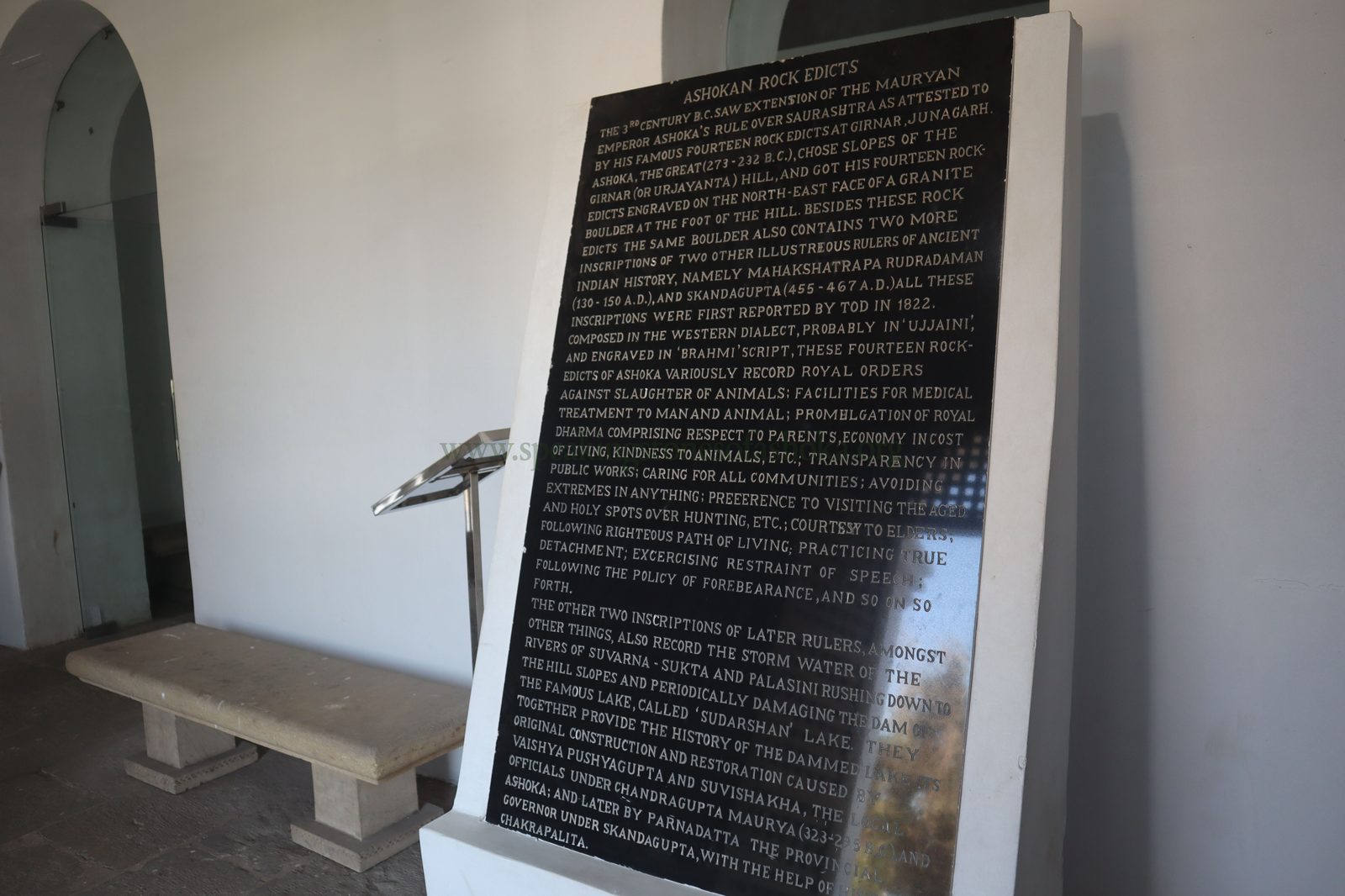
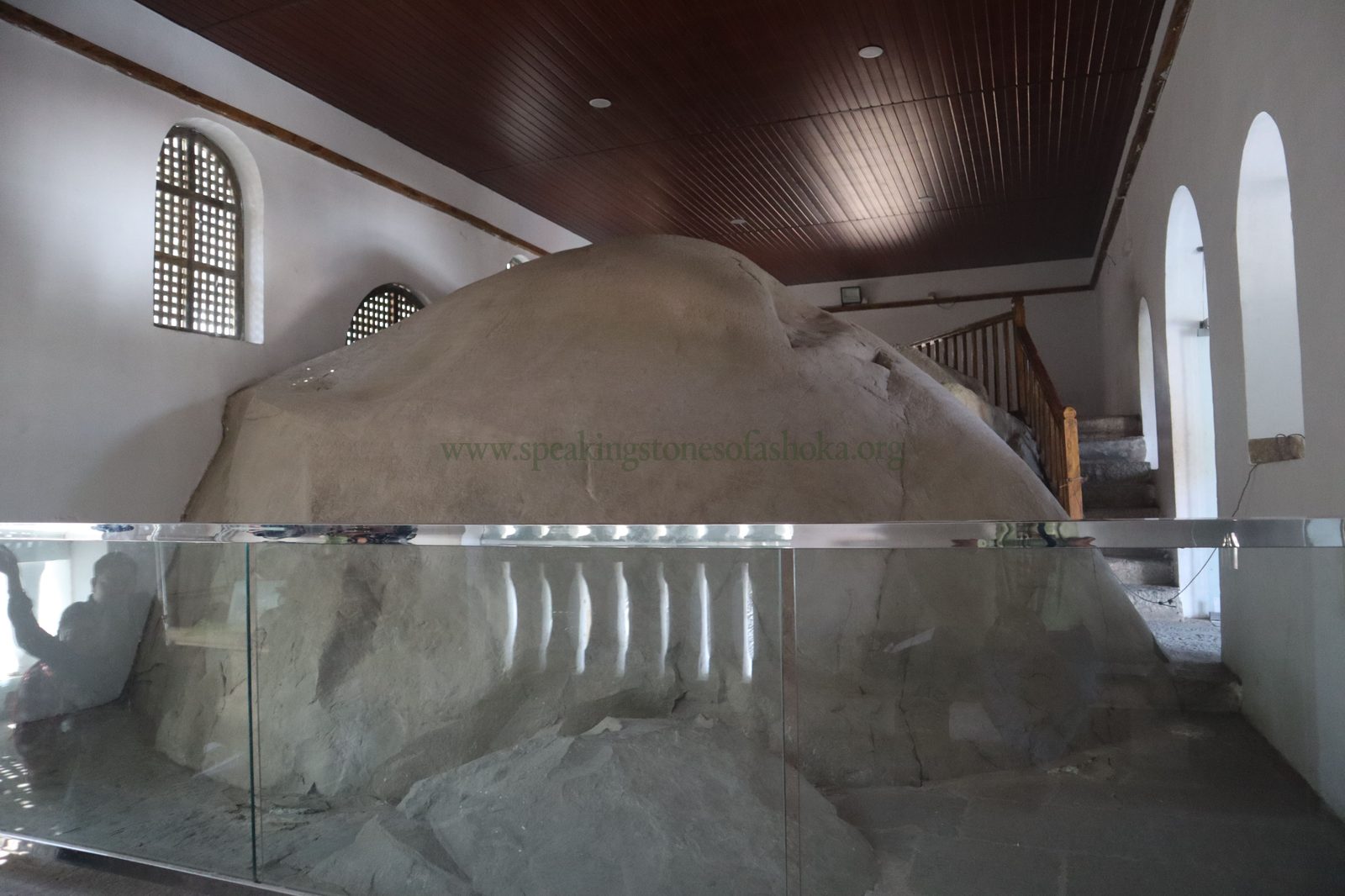
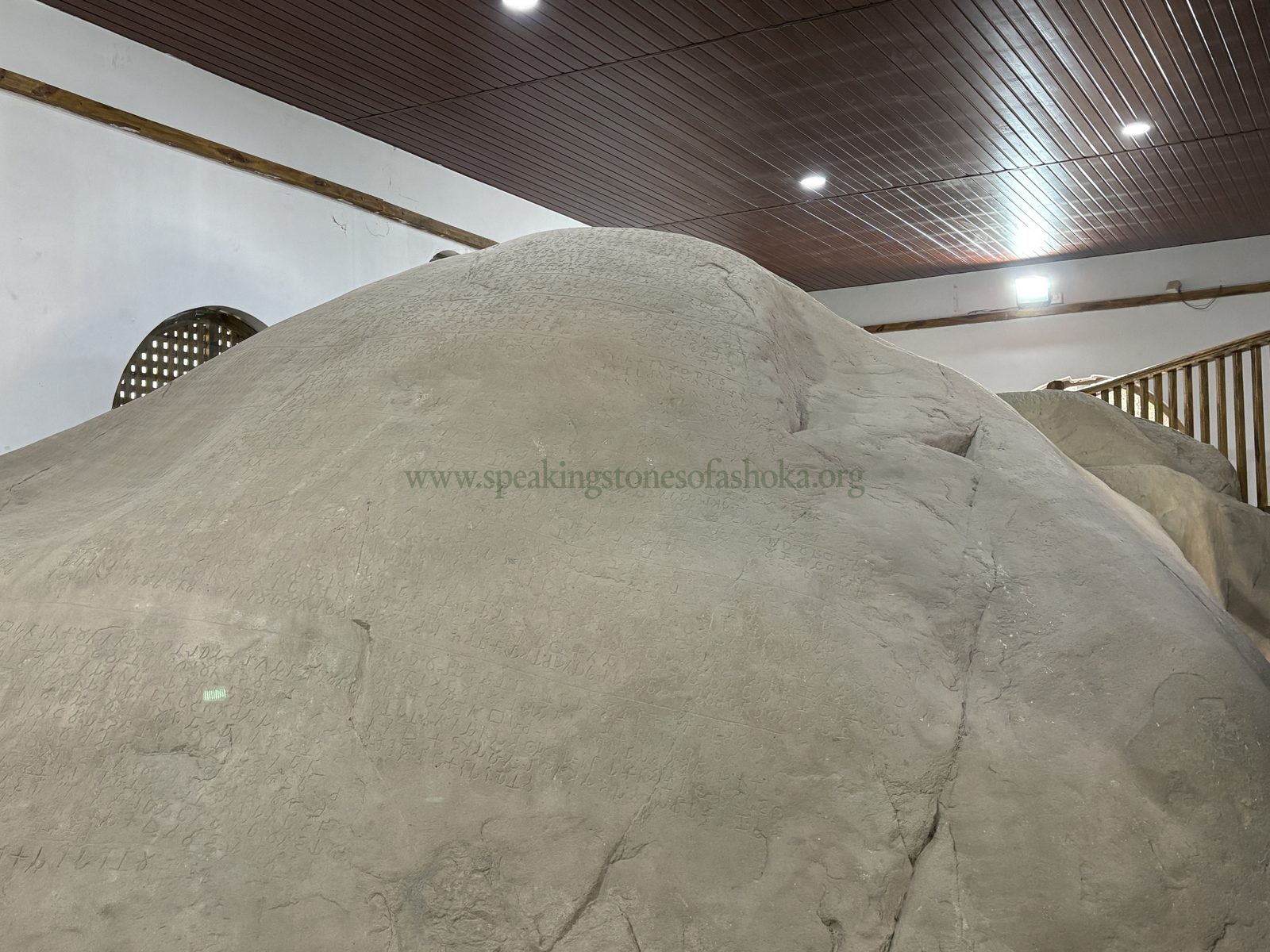
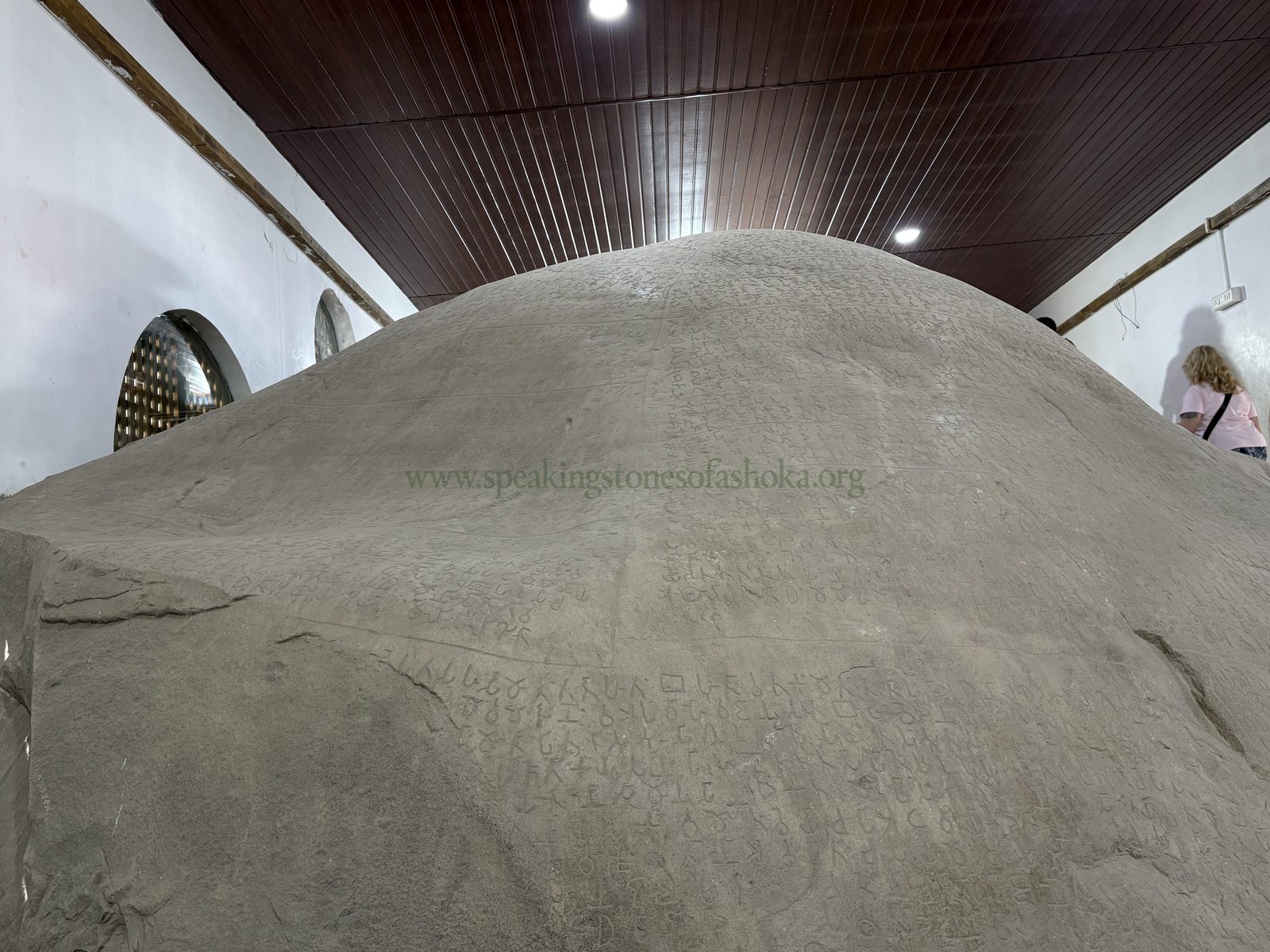
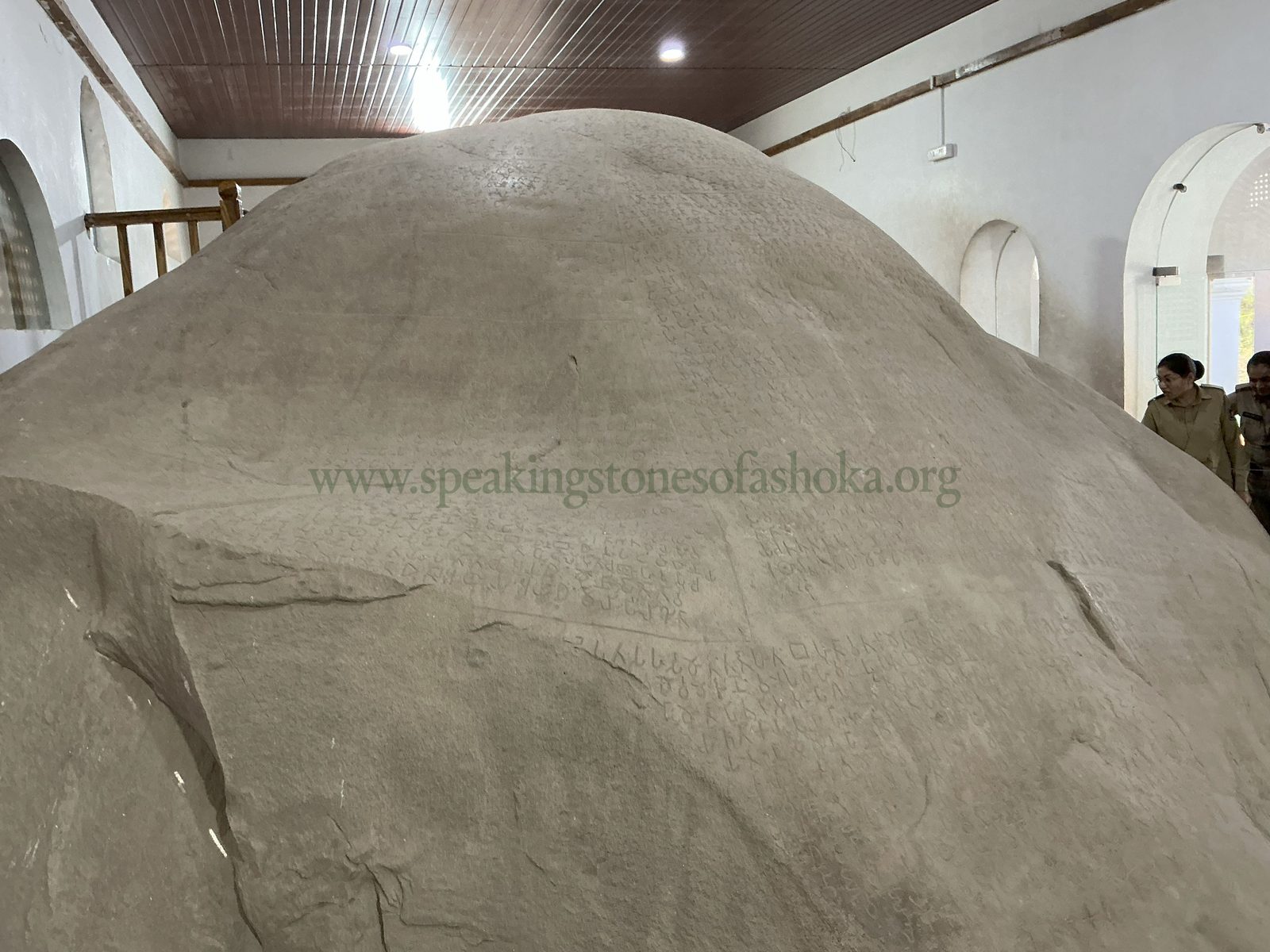
Major Lieutenant-Colonel James Tod, first visited Girnār in December 1822, at that time the inscription seems to have been intact. It probably had laid buried in dense forest and might never have come to light had not a local notable made a causeway through the jungle for the benefit of pilgrims to the hill, which is one of the most sacred places venerated by the Jains. He described it as a huge hemispherical mass of dark granite, which, like a wart upon the body, has protruded through the crust of mother earth, without fissure or inequality, and which, by the aid of the ‘iron pen,’ has been converted into a book. Tod was a famous Rajasthan annalist and army antiquarian of the East India Company. His reaction to Girnār was written before the Brahmi script had been deciphered. His account is arresting for the recognition that the edict is both monument and inscription, an ancient rock transformed to a monument by the writing on it. The measurement of its arc is nearly ninety feet; its surface is divided into compartments or parallelograms, within which are inscriptions in the usual antique character. The way in which the Girnār edicts were inscribed on a single rock ensured that, at least theoretically, it would have been possible for an official placed on a specially created platform to be at eye level with the edicts and read them out to listeners below. The relatively compact manner of the layout made it possible. This was, as we saw, impossible at Erragudi, where the edicts were engraved across multiple boulders at different heights. A more important difference was that the Girnār rock stood—and was probably chosen for this reason—in the vicinity of an artificial lake, not far from the water’s edge. Known as Sudarshana lake, this waterbody was created as a consequence of the construction of a dam during the time and on the instructions of Chandragupta Maurya.
Subsequently portions of edicts V and XIII were blasted with gunpowder by the workmen of a pious merchant who constructed a causeway from Junagarh to Girnār. Some fragments resulting from the blasting of the rock were found by Postans (1838: 874); they have been transferred to the local museum. We are indebted to H.H. the present nawāb of Junagarh, for the preservation of the inscriptions from total destruction, as he interfered to prevent the further mutilation of the stone. The popular belief in the spot is, that the unknown char acters refer to immense treasures, buried in the neighbourhood of, or under the rock” (Postans 1838: 874 fn.). At the recommendation of the late Dr. Burgess a shed has been specially built to protect the boulder from the sun and rain.
When in 1893 the road, which leads from Junāgaḍh to the Girnār was being repaired, some stones were dug out near the rock, on which Aśoka´s, Rudradāman´s and Skandagupta´s inscriptions are incised. They had been put on one side, and Valabhji Haridatta found among them a fragment, 19 inches long and 17 inches broad, a part of which bears letters of the Aśoka type (Valabhjï Haridatta, Curator of the Rajkot Museum, in translation in Bühler 1894d: 318). Rhys Davids re-discovered this part (fragment I) in the museum and sent a “simple and partial sketch” to Senart (1900: 335), who re-edit ed it without knowledge of Bühler’s previous work. A further part (fragment II) was found by “Rhys Davids (...) on the floor by the rock, and has now been removed to the museum”. It was edited by Senart 1900.
There are two preserved parts of the huge bandh, Girnar dam. The southern part is in the middle of a habitation area close to the fort; its cut can be examined from the highest point of the Khapra Kodhia caves. It is strongly recommended not to visit these caves without a bodyguard. The cut of the northern part can be seen from the river; for an inspection of the whole surface a fence has to be searched for holes. Both parts together are best seen from the fort defences. R.N. Mehta searched for the dam in December 1967 and May 1968 and located the site of the dam built by Rudradāman.
The first decipherment of the Brahmi alphabet and, with it, of the Girnār inscription, is due to the learning and ingenuity of James Prinsep. His transcript and translation were based on tracings on cloth which had been taken in 1835 by Captain Lang for the Rev. Dr. J. Wilson of Bombay. Fresh copies were made by Lieutenant Postans and Captain Lang in 1838, and by Captain (afterwards General) Le Grand Jacob and Professor Westergaard in 1842. These materials were utilized by Mr. E. Norris for drawing up an improved plate of the Girnār inscription, from which Professor H. H. Wilson's transcript and translation in JRAS, vol 12 (1850), were made. No better materials were available to three other scholars who examined the Girnār version, viz. Professor Chr. Lassen (Indische Altertumskunde), E. Burnouf (Lotus de la Bonne Loi: Paris, 1852), and Professor H. Kern (Over de Jaartelling der Zuidelijke Buddhisten en de Gedenkstukken van Açoka den Buddhist Amsterdam, 1873).
The first perfectly mechanical estampages of the Girnār edicts were prepared in 1875 by Dr. J. Burgess. These were reproduced by collotype in 1876 in ASWI, 2. 98 f., and also in IA, 5. 257 ff., with an English translation of Kern's Dutch versions of part of the edicts. A complete edition of the Girnār edicts is included in Senart's Inuriptions de Piyadasi, vol. I. An abridged English translation of his work appeared in IA, vols. 9 and 10. In JA (8), 12. 311 ff, Senart added the results of his inspection of the Girnār rock in situ. Bühler published a number of corrections and the text of edict XIII in his Beiträge zur Erklärung der Atoka-Inschriften (ZDMG, vols. 37-48), and the full text of the Girnār version in EI, 2. 447 ff. The plates which accompany this article are much clearer than those issued in 1876, but seem to have been touched up by hand. A Collection of Prakrit and Sanskrit Inscriptions printed at Bhavnagar (without year) contains the text, Sanskrit and English translations, and facsimiles, of the Girnār edicts.
Bhagwanlal Indraji, a Junagadh resident, was born in 1839 into a family of Ayurvedic medical practitioners. As a boy he had studied Sanskrit in a traditional school and by the age of fourteen had taught himself to read the ancient scripts inscribed on the massive Girnār rock on the edge of his town. Unlike James Prinsep (1799-1840), the colonial administrator-savant who had pored over facsimiles of such inscriptions sent to him in Calcutta and there brilliantly deciphered Ashokan Brahmi, Bhagwanlal spent many days by the rock itself and deciphered words and phrases by examining them in situ. Bhagwanlal spent long hours navigating the meanings encoded in the epigraphs on the Girnār rock.
Two fragments of the lost portion of edict XIII were recovered recently and are now preserved in the Junagarh Museum. Both of them were discussed by Senart (JRAS, 1900. 335 ff.), and the second of them also by Bühler (VOJ, 8. 318 fl.). Both pieces are shown in the plate which accompanies my transcript of edict XIII.
Gallery
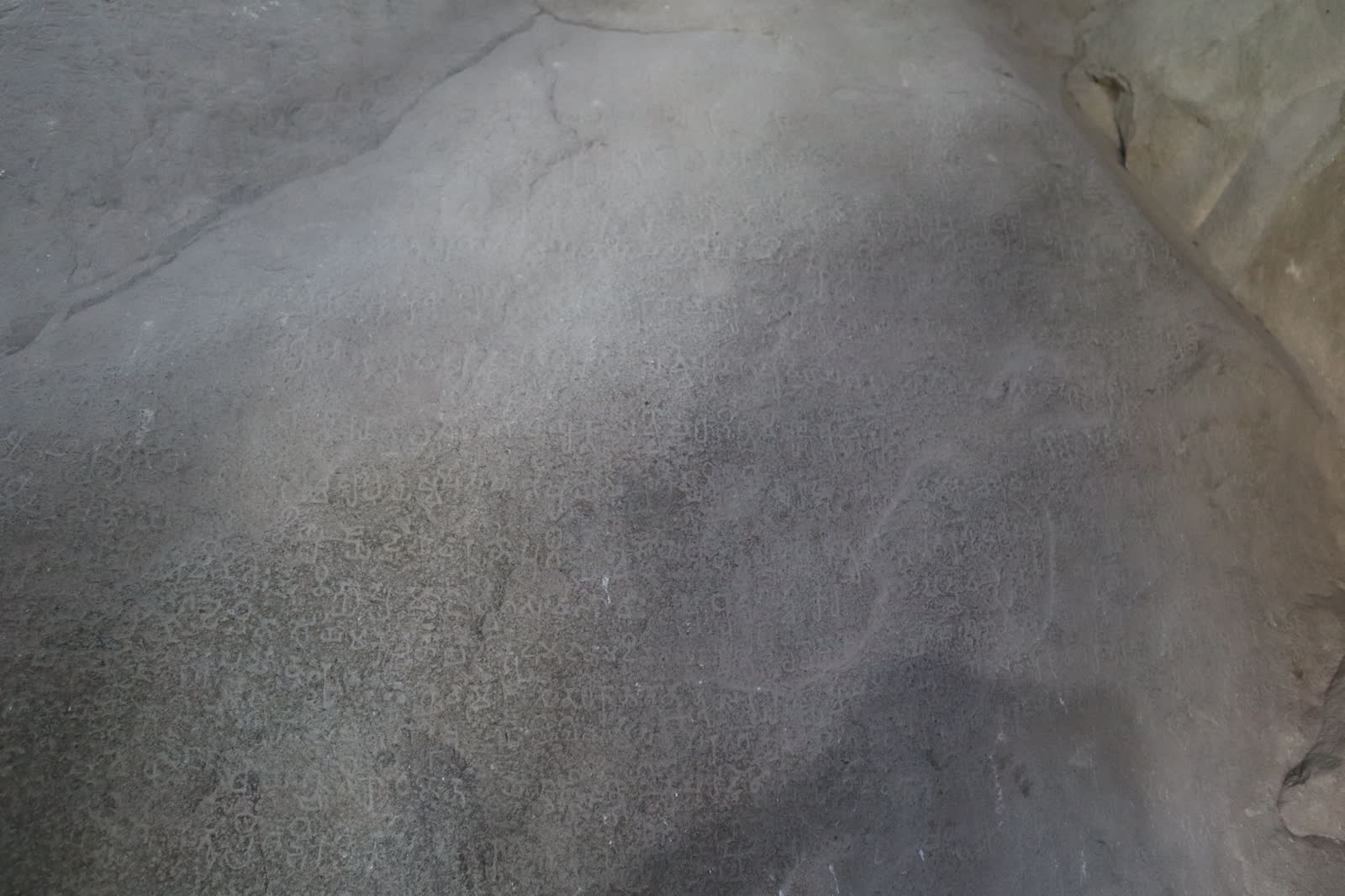
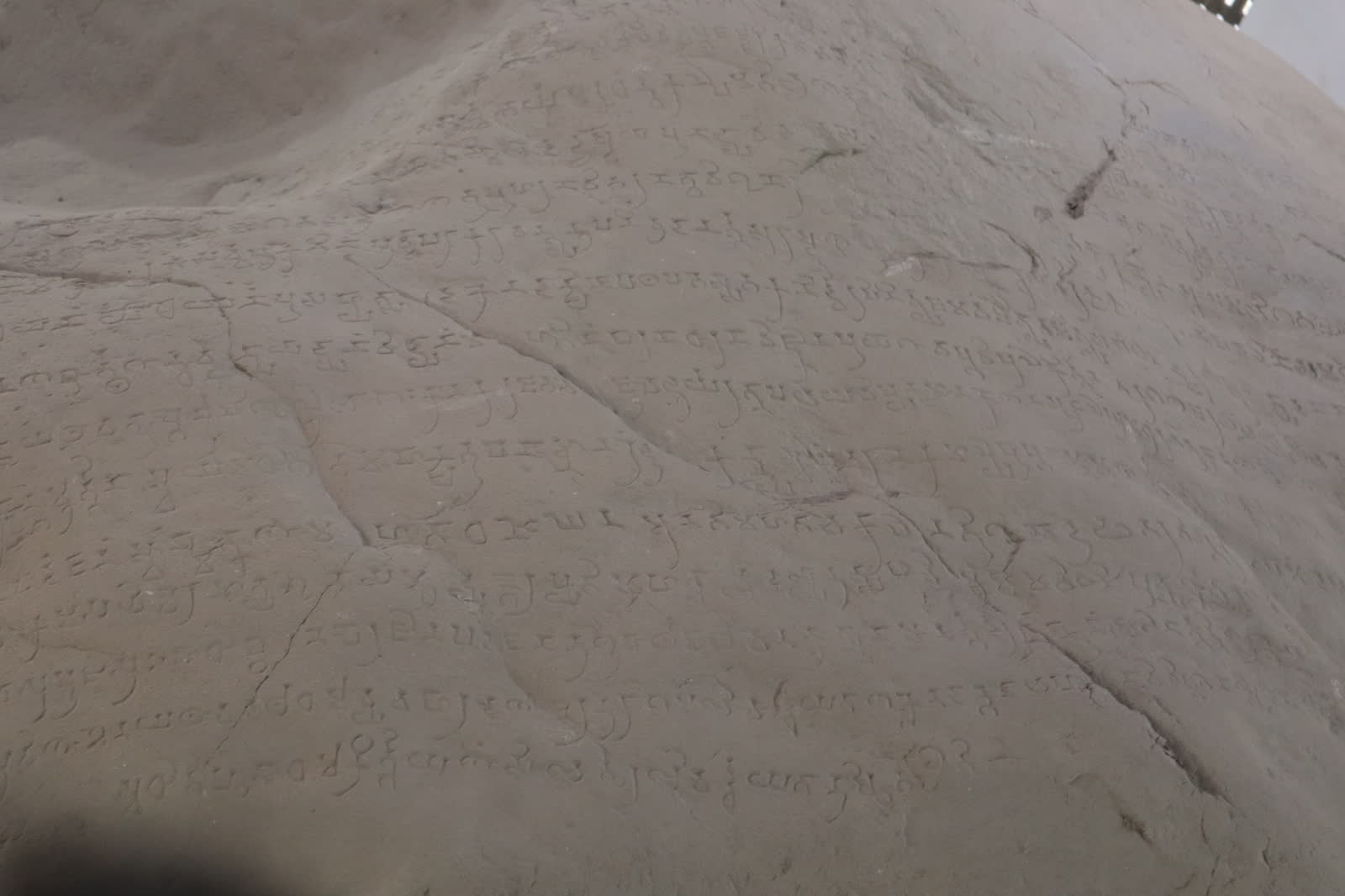
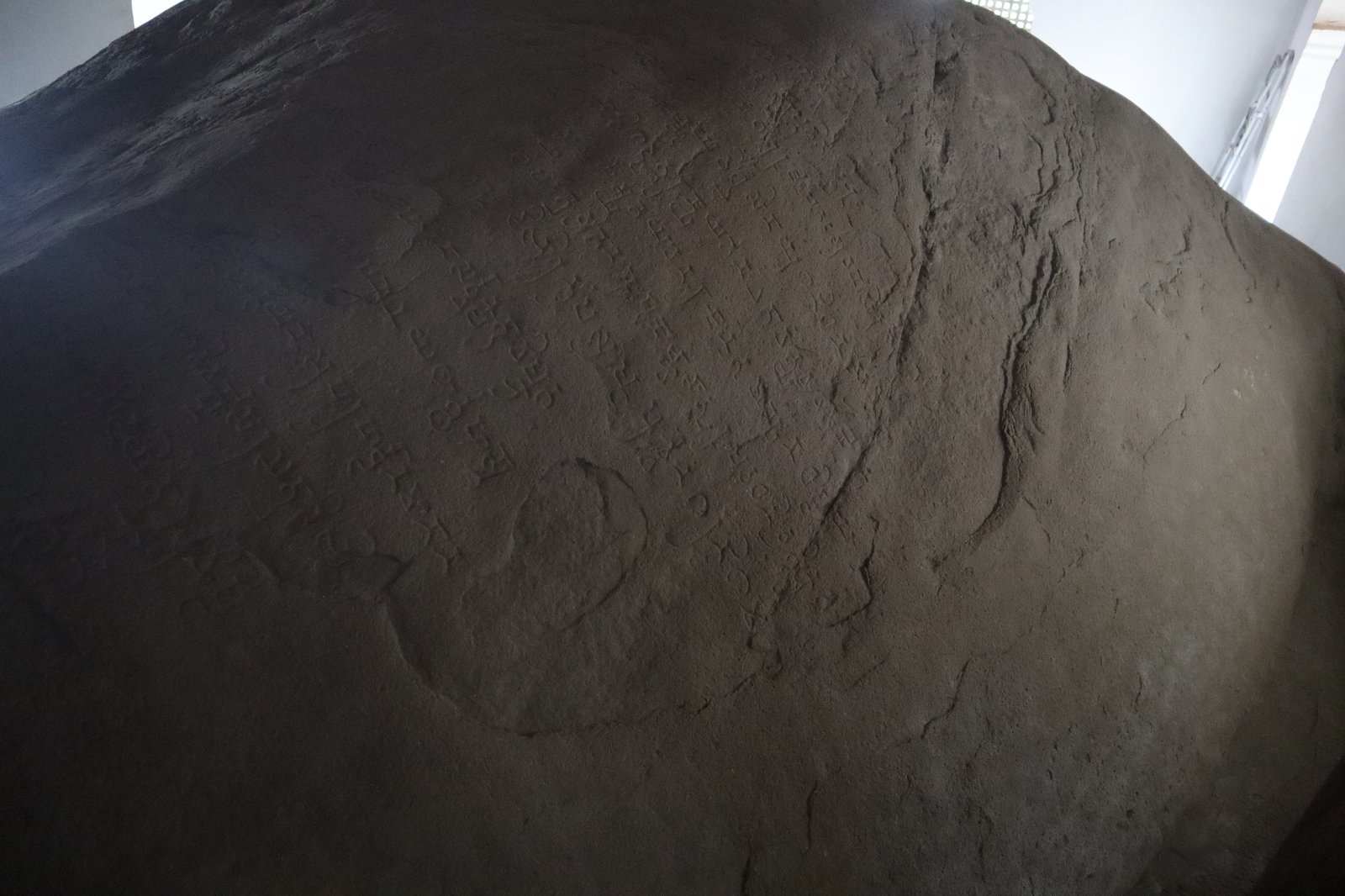
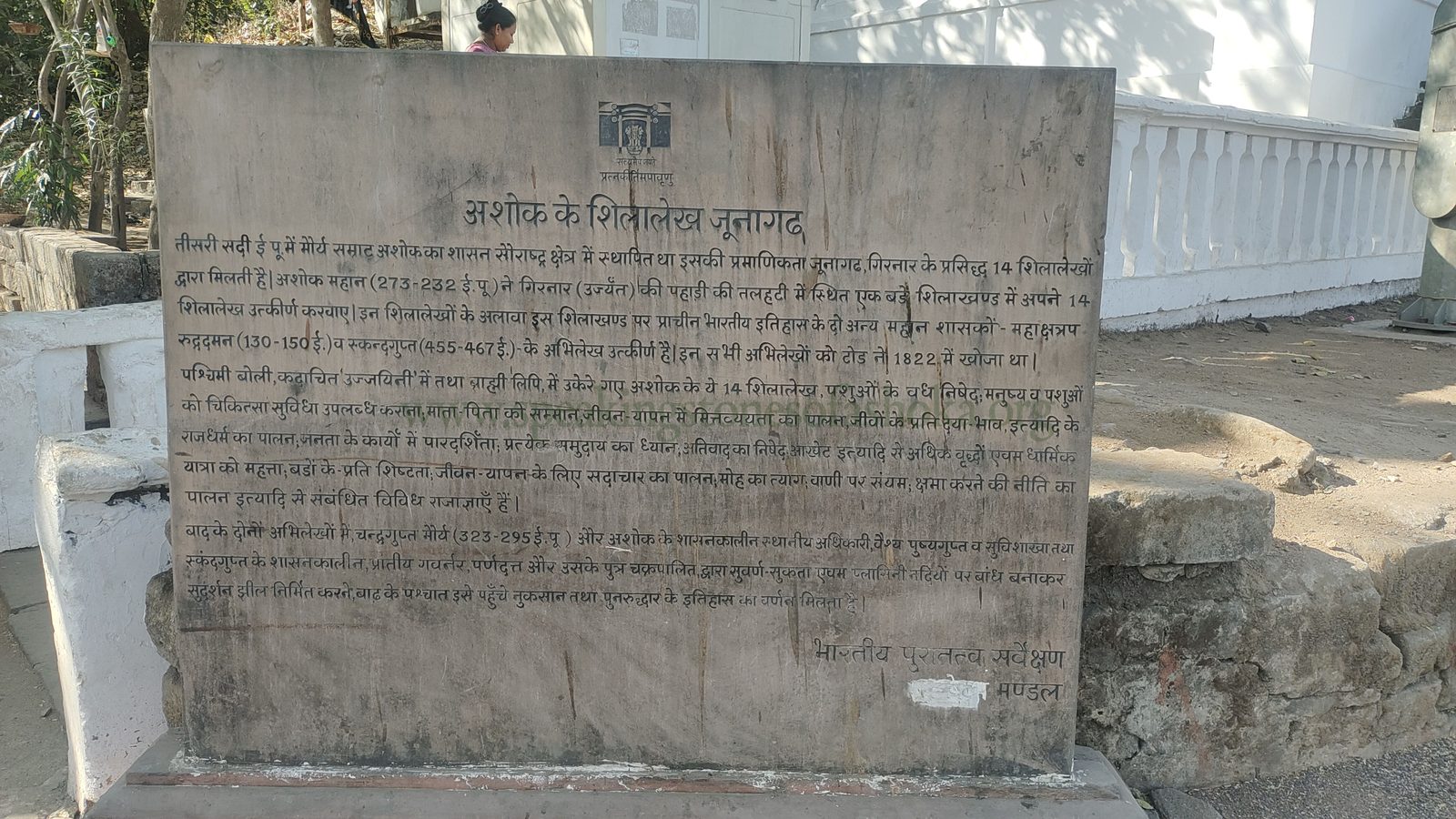
Inscriptions at this site
Major Rock Edict II (Girnar)
(A) Everywhere in the dominions of king Devānaṁpriya Priyadarśin, and likewise among (his) borderers, such as the Coḍas, the Pāṇḍyas, the Satiyaputa, the Ketalaputa, even Tāmraparṇī, the Yona king Antiyaka, and also the kings who are the neighbours of this Antiyaka, — everywhere …
Major Rock Edict III (Girnar)
(A) King Devānaṁpriya Priyadarśin speaks thus. (B) (When I had been) anointed twelve years, the following was ordered by me. (C) Everywhere in my dominions the Yuktas, the Rājūka, and the Prādeśika shall set out on a complete tour (throughout their charges) every five years for t…
Major Rock Edict IV (Girnar)
(A) In times past, for many hundreds of years, there had ever been promoted the killing of animals and the hurting of living beings, discourtesy to relatives, (and) discourtesy to Brāhmaṇas and Śramaṇas. (B) But now, in consequence of the practice of morality on the part of king …
Major Rock Edict IX (Girnar)
(A) King Devānaṁpriya Priyadarśin speaks thus. (B) Men are practising various ceremonies during illness, or at the marriage of a son or a daughter, or at the birth of a son, or when setting out on a journey; on these and other (occasions) men are practising various ceremonies. (C…
Major Rock Edict V (Girnar)
(A) King Devānaṁpriya Priyadarśin speaks thus. (B) It is difficult to perform virtuous deeds. (C) He who starts performing virtuous deeds accomplishes something difficult. (D) Now, by me many virtuous deeds have been performed. (E) Therefore (among) my sons and grandsons, and (am…
Major Rock Edict VI (Girnar)
(A) King Devānāṁpriya Priyadarśin speaks thus. (B) In times past neither the disposal of affairs nor the submission of reports at any time did exist before. (C) But I have made the following (arrangement). (D) Reporters are posted everywhere, (with instructions) to report to me t…
Major Rock Edict VII (Girnar)
(A) King Devānaṁpriya Priyadarśin desires (that) all sects may reside everywhere. (B) (For) all these desire both self-control and purity of mind. (C) But men possess various desires (and) various passions. (D) Either they will fulfil the whole, or they will fulfil (only) a porti…
Major Rock Edict VIII (Girnar)
(A) In times past kings used to set out on pleasure-tours. (B) On these (tours) hunting and other such pleasures were (enjoyed) (C) But when king Devānaṁpriya Priyadarśin had been anointed ten years, he went to Saṁbodhi. (D) Therefore these tours of morality (were undertaken). (E…
Major Rock Edict X (Girnar)
(A) King Devānaṁpriya Priyadarśin does not think that either glory or fame conveys much advantage, except (on account of his aim that) in the present time, and in the distant (future), men may (be induced) by him to practise obedience to morality, and that they may conform to the…
Major Rock Edict XI (Girnar)
(A) King Devānampriya Priyadarśīn speaks thus. (B) There is no such gift as the gift of morality, or acquaintance through morality, or the distribution of morality, or kinship through morality. (C) Herein the following are (comprised), (viz.) proper courtesy to slaves and servant…
Major Rock Edict XII (Girnar)
(A) King Devānaṁpriya Priyadarśin is honouring all sects: both ascetics and householders; both with gifts and with honours of various kinds he is honouring them. (B) But Devānaṁpriya does not value either gifts or honours so (highly) as (this), (viz.) that a promotion of the esse…
Major Rock Edict XIII (Girnar)
(A) . . . . . . . . . the Kaliṅgas . . . . . . . . . (B) . . . . . . . . . one hundred thousand in number were those who were slain there, (and) many times as many those who died. (C) After that, now that (the country of) the Kaliṅgas has been taken, a zealous study of morality .…
Major Rock Edict XIV (Girnar)
(A) These rescripts on morality have been caused to be written by king Devānaṁpriya Priyadarśin either in an abridged (form), or of middle (size), or at full length. (B) And the whole was not suitable everywhere. (C) For (my) dominions are wide, and much has been written, and I s…