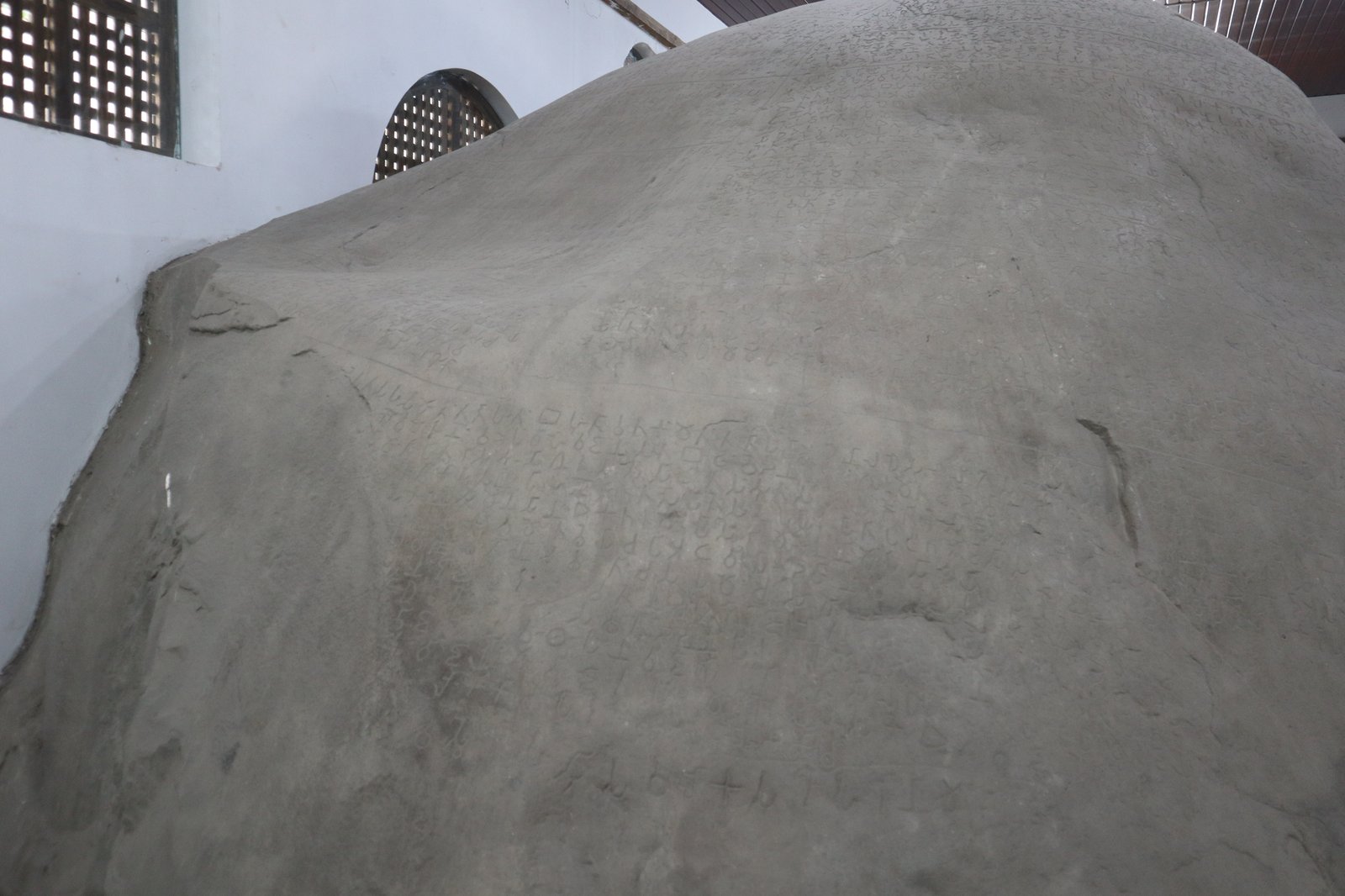
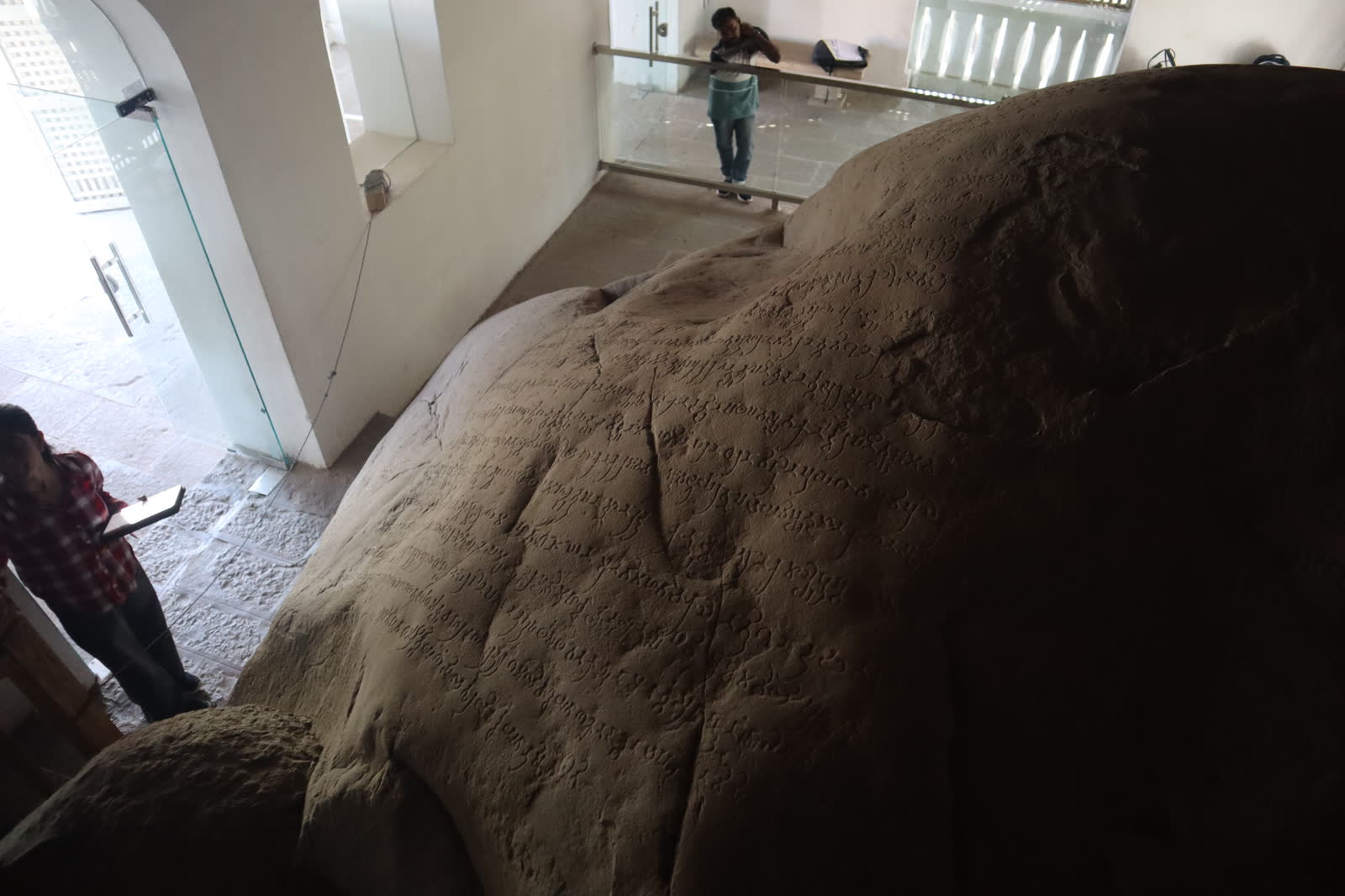
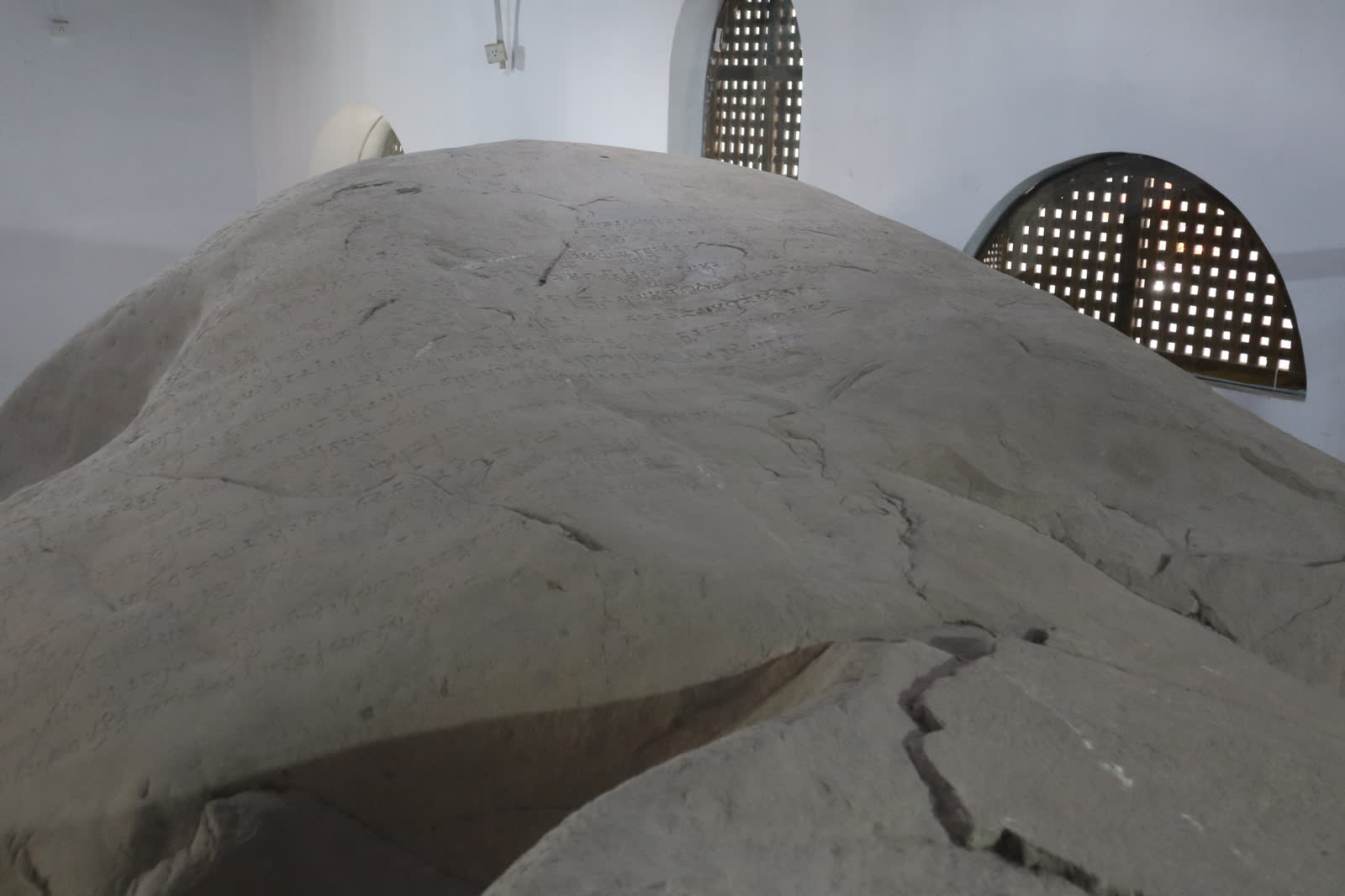
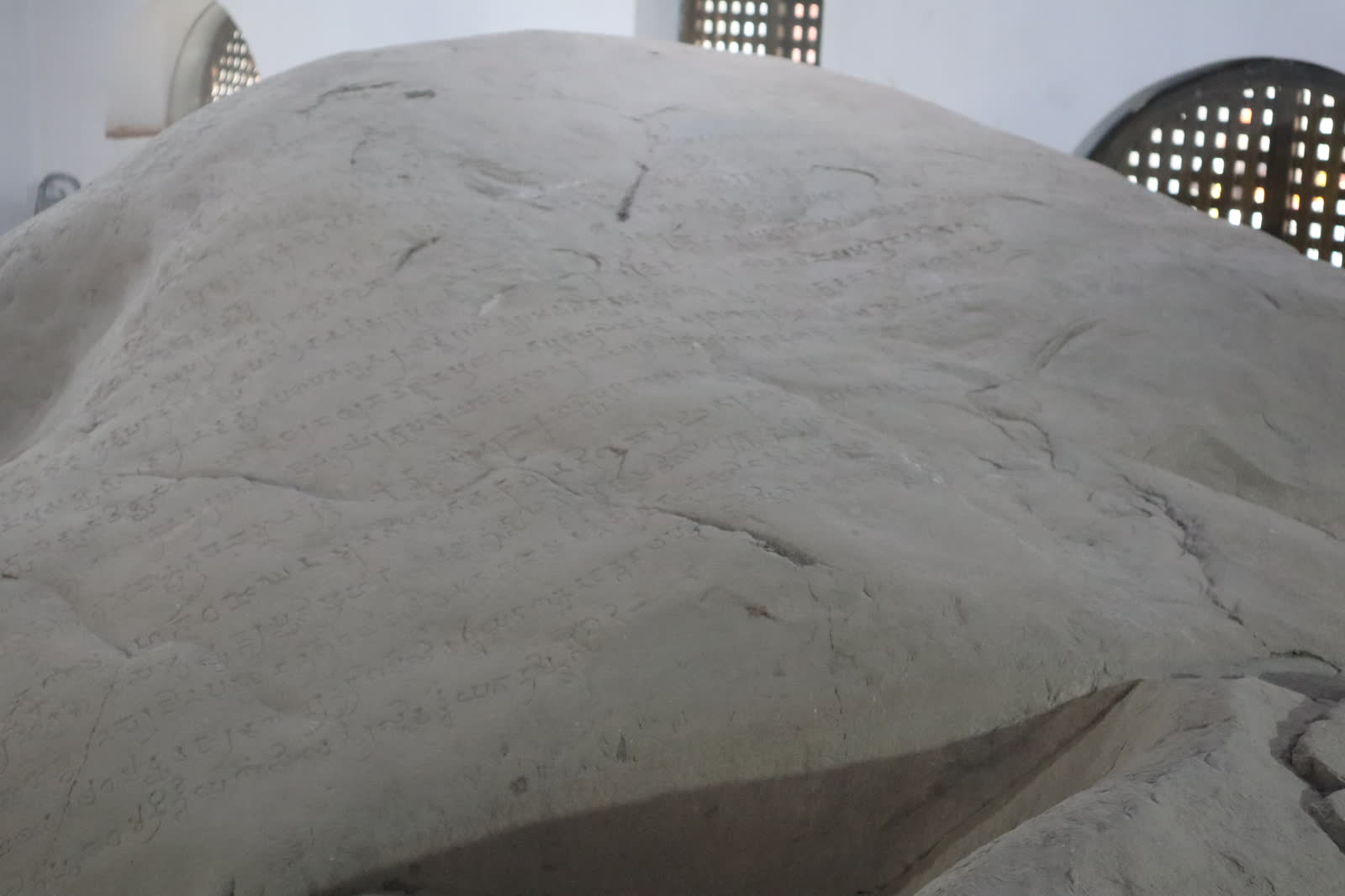
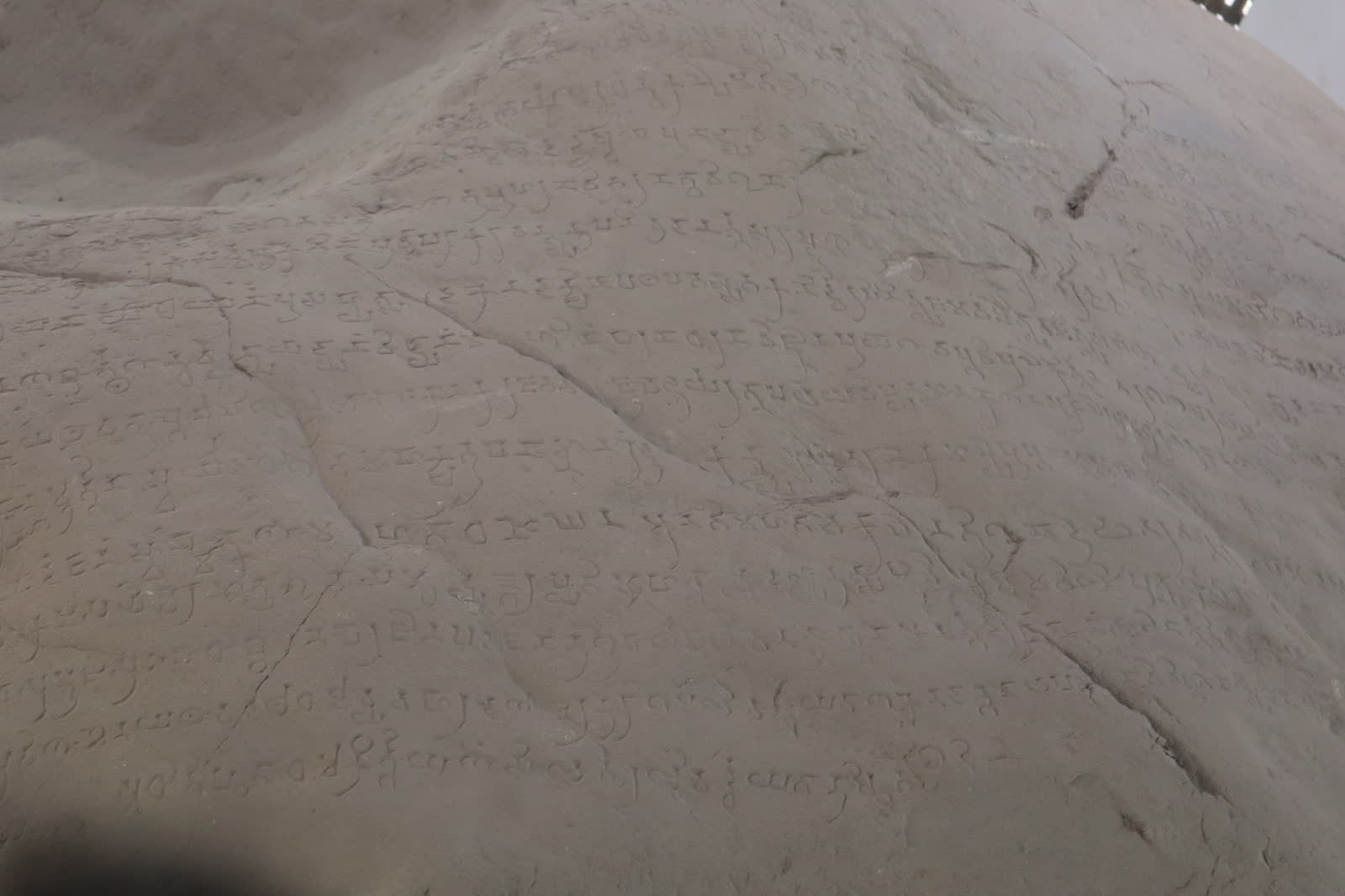
Original Text
1 (A) Devānaṁpiyo Priyadasi rājā eva āha (B) asti jano ucāvacaṁ maṁgalaṁ karote ābādhesu vā
2 āvāha-vīvāhesu vā putra-lābhesu vā pravāsaṁmhi vā etamhī ca añamhi ca jano ucāvacaṁ maṁgalaṁ karote
3 (C) eta tu mahiḍāyo bahukaṁ ca bahuvidhaṁ ca chudaṁ ca nirath[aṁ] ca maṁgalaṁ karote (D) ta katavyameva tu magalaṁ (E) apa-phalaṁ tu kho
4 etarisaṁ maṁgalaṁ (F) ayaṁ tu mah[ā]-phale maṁgale ya dhaṁma-maṁgale
(G) ta[te]ta dāsa-bhatakamhi samya-pratipatī gurūnaṁ apaciti sādhu
5 pānesu sayamo sādhu bamhaṇa-samaṇānaṁ sādhu dānaṁ et[a] ca añ[a] ca etārisaṁ dhaṁma-maṁgalaṁ nāma (H) ta vatavyaṁ pitā va
6   putena vā bhātrā vā svāmikena vā idaṁ sādhu idaṁ katavya maṁgalaṁ āva tasa athasa nisṭānāya (I) asti ca pi vutaṁ
7  sādhu dana iti (J) na tu etārisaṁ asti dānaṁ va ana[ga]ho va yārisaṁ dhaṁma-dānaṁ va dhamanugaho va (K) ta tu kho mitrena va suhadayena [v]ā
8  ñatikena va sahāyana va ovāditavyaṁ tamhi tamhi pakaraṇe [i]daṁ kacaṁ idaṁ sādha iti iminā sak[a]
9   svagaṁ ārādhetu iti (L) ki ca iminā katavyataraṁ yathā svagāradhī
Translation
(A) King Devānaṁpriya Priyadarśin speaks thus.
(B) Men are practising various ceremonies during illness, or at the marriage of a son or a daughter, or at the birth of a son, or when setting out on a journey; on these and other (occasions) men are practising various ceremonies.
(C) But in such (cases) women are practising many and various vulgar and useless ceremonies.
(D) Now, ceremonies should certainly be practised.
(E) But ceremonies like these bear little fruit indeed.
(F) But the following practice bears much fruit, viz. the practice of morality.
(G) Herein the following (are comprised), (viz.) proper courtesy to slaves and servants, reverence to elders, gentleness to animals, (and) liberality to Brāhmaṇas and Śramaṇas; these and other such (virtues) are called the practice of morality.
(H) Therefore a father, or a son, or a brother, or a master ought to say:—'This is meritorious. This practice should be observed until the (desired) object is attained.’
(I) And it has been said also: ‘Gifts are meritorious.’
(J) But there is no such gift or benefit as the gift of morality or the benefit of morality.
(K) Therefore a friend, or a well-wisher, or a relative, or a companion should indeed admonish (another) on such and such an occasion:—'This ought to be done; this is meritorious. By this (practice) it is possible to attain heaven.’
(L) And what is more desirable than this, viz. the attainment of heaven?