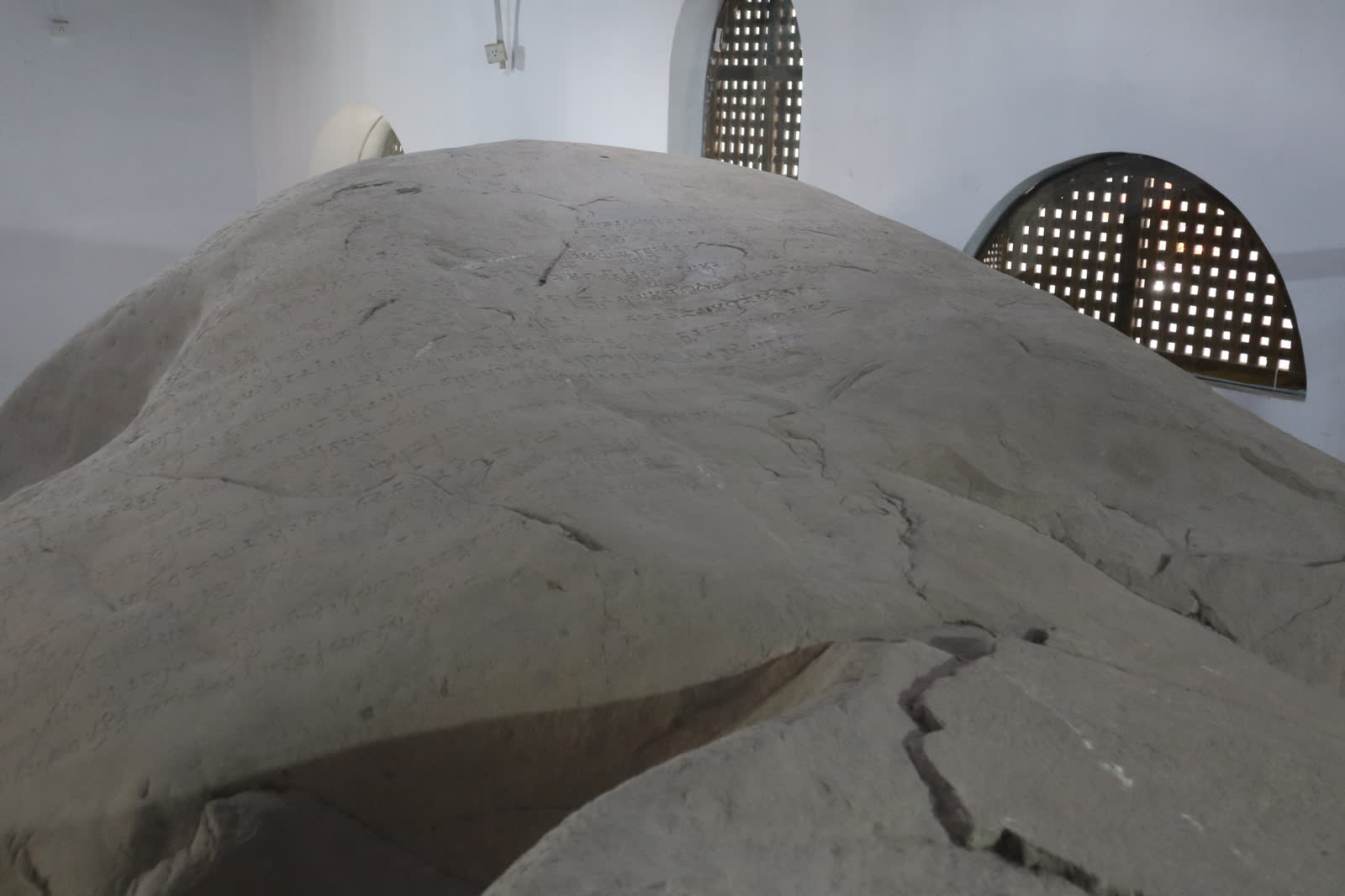
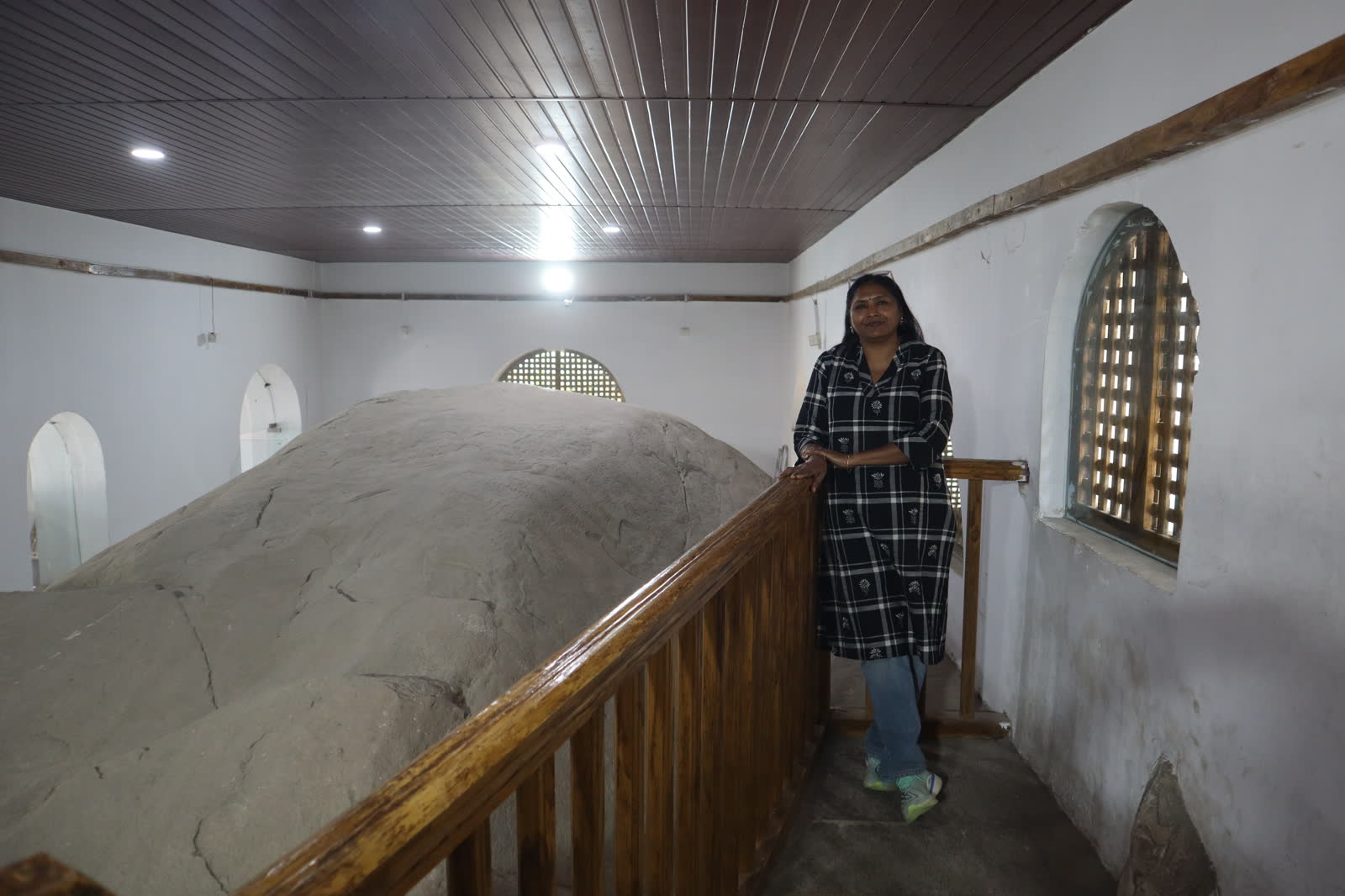
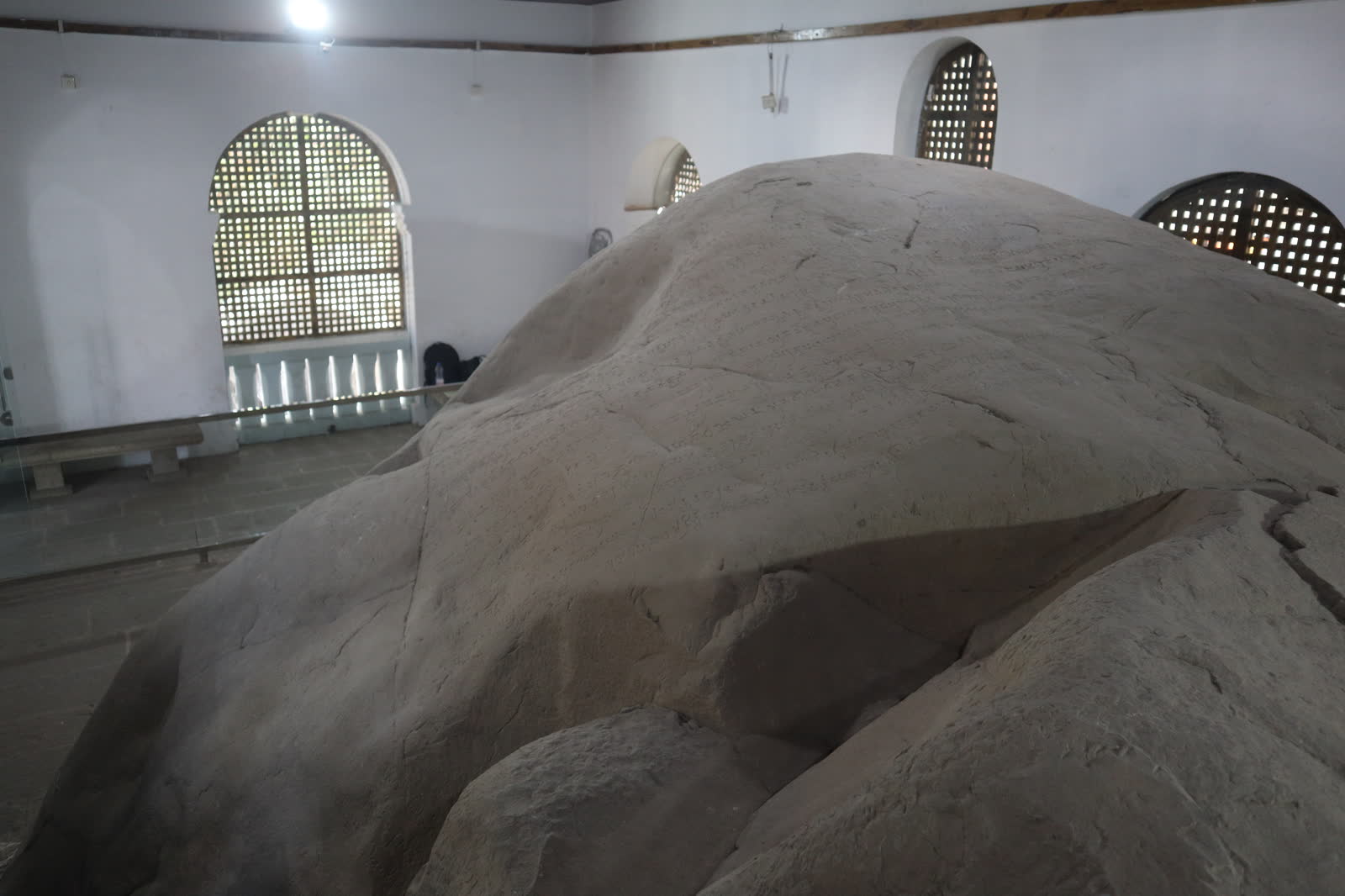
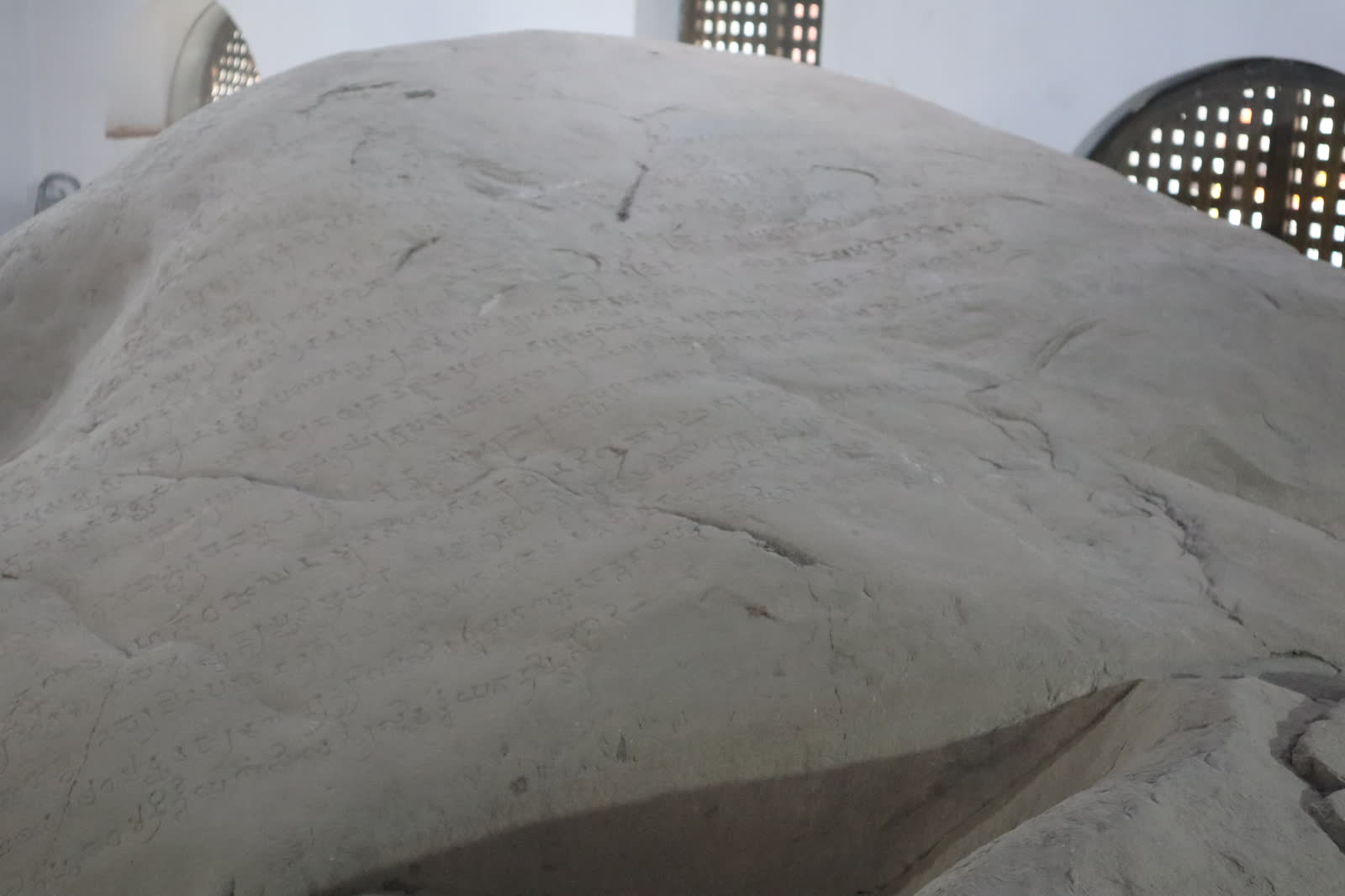
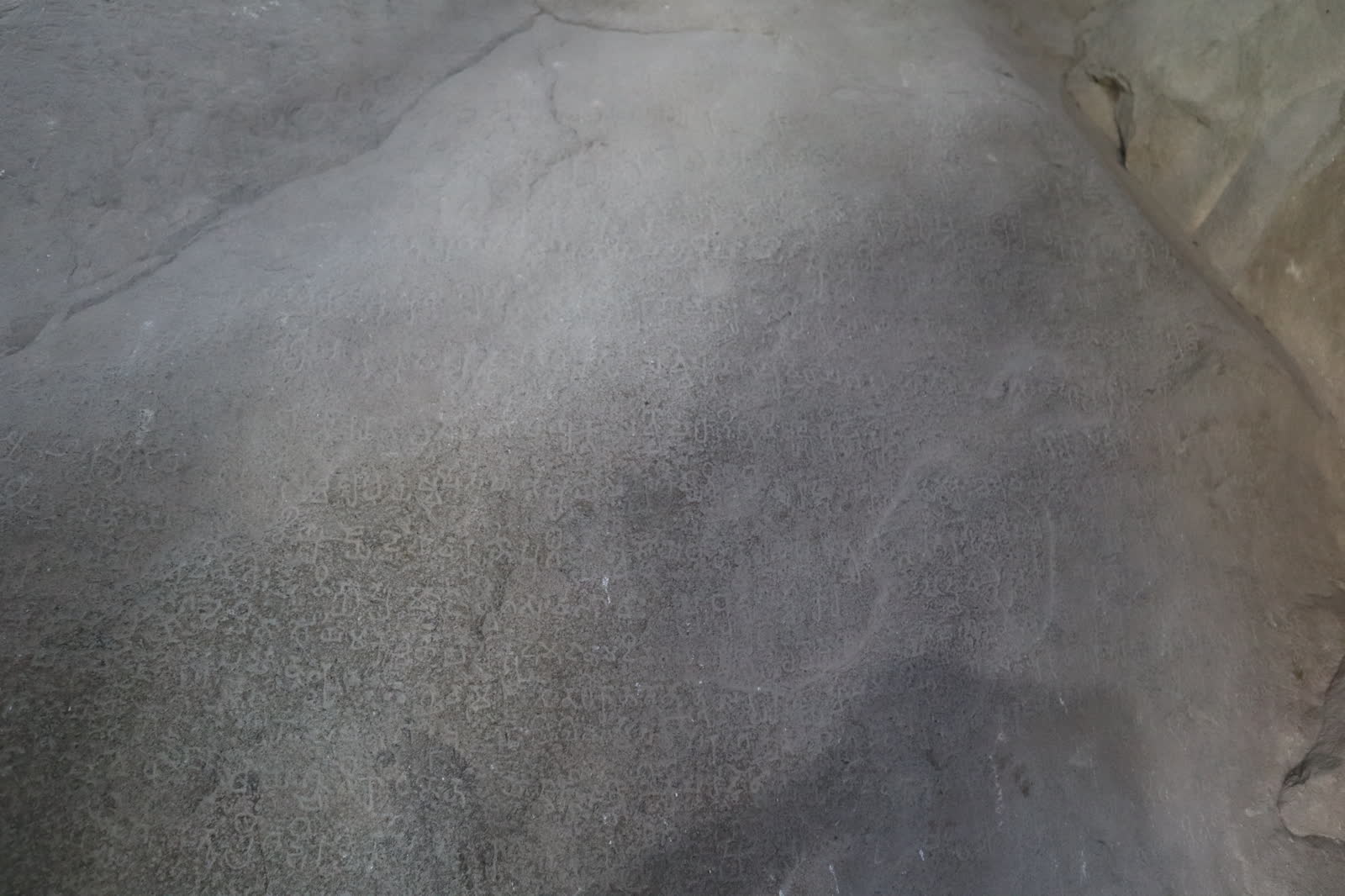
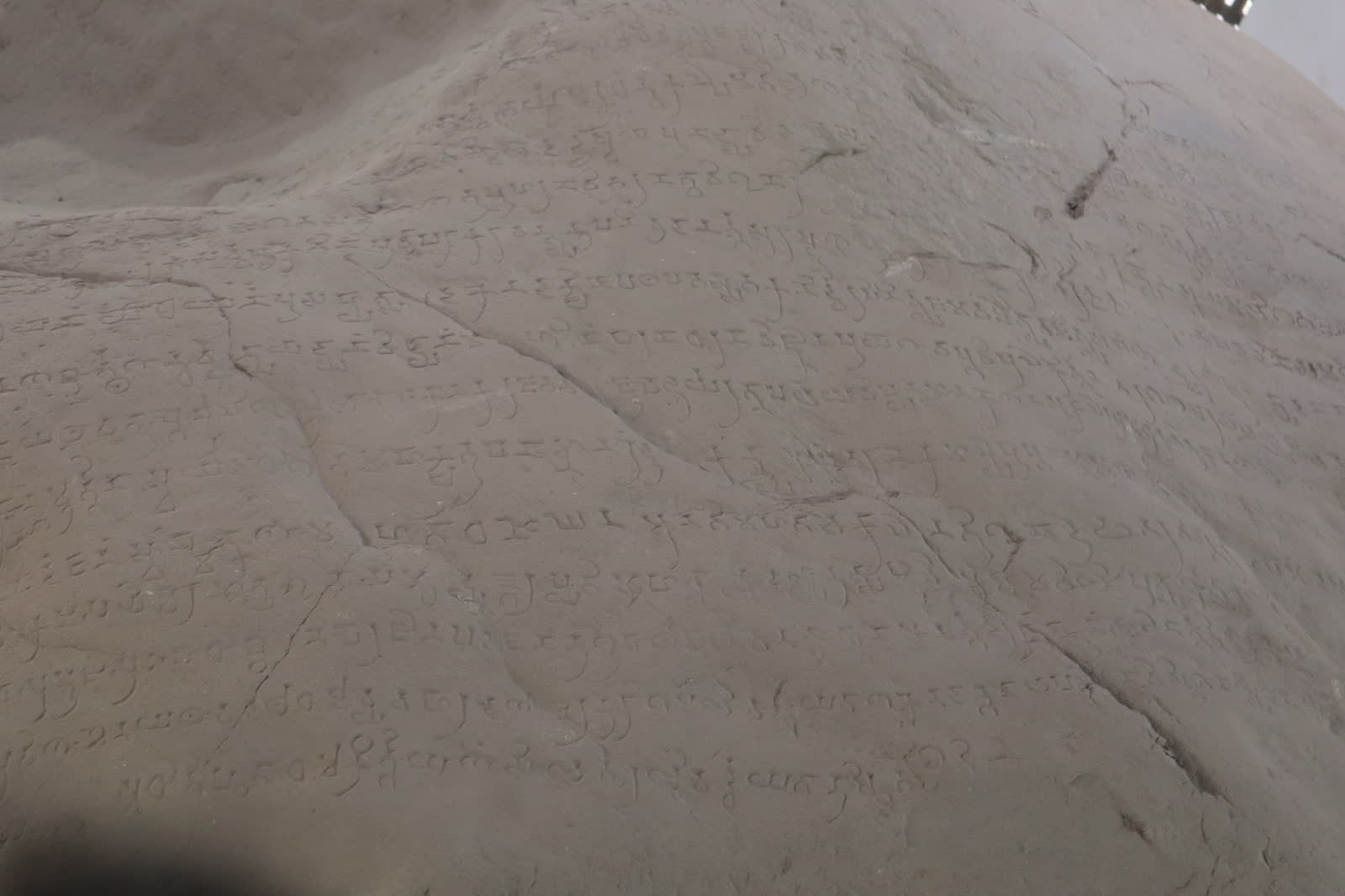
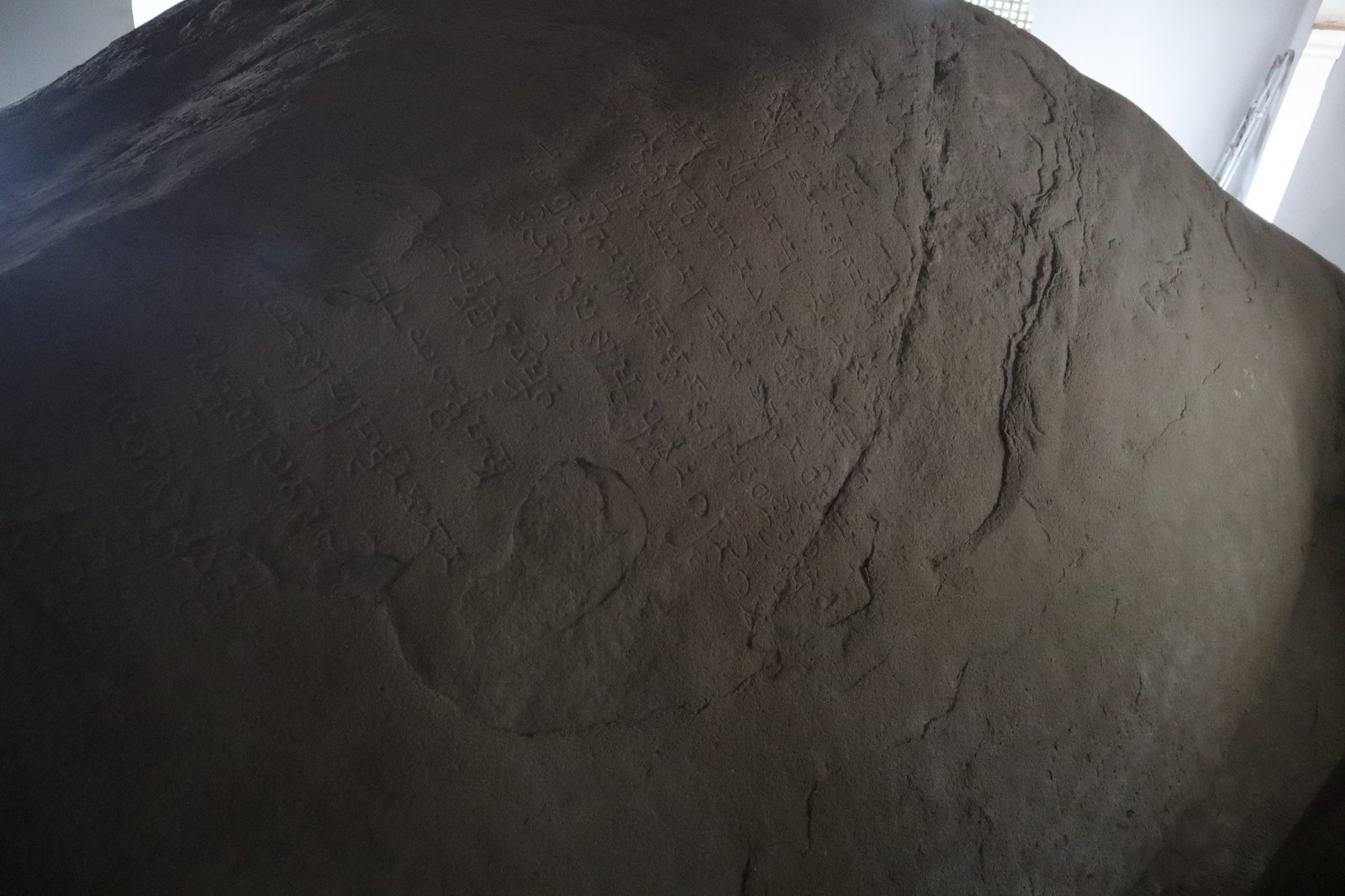
Original Text
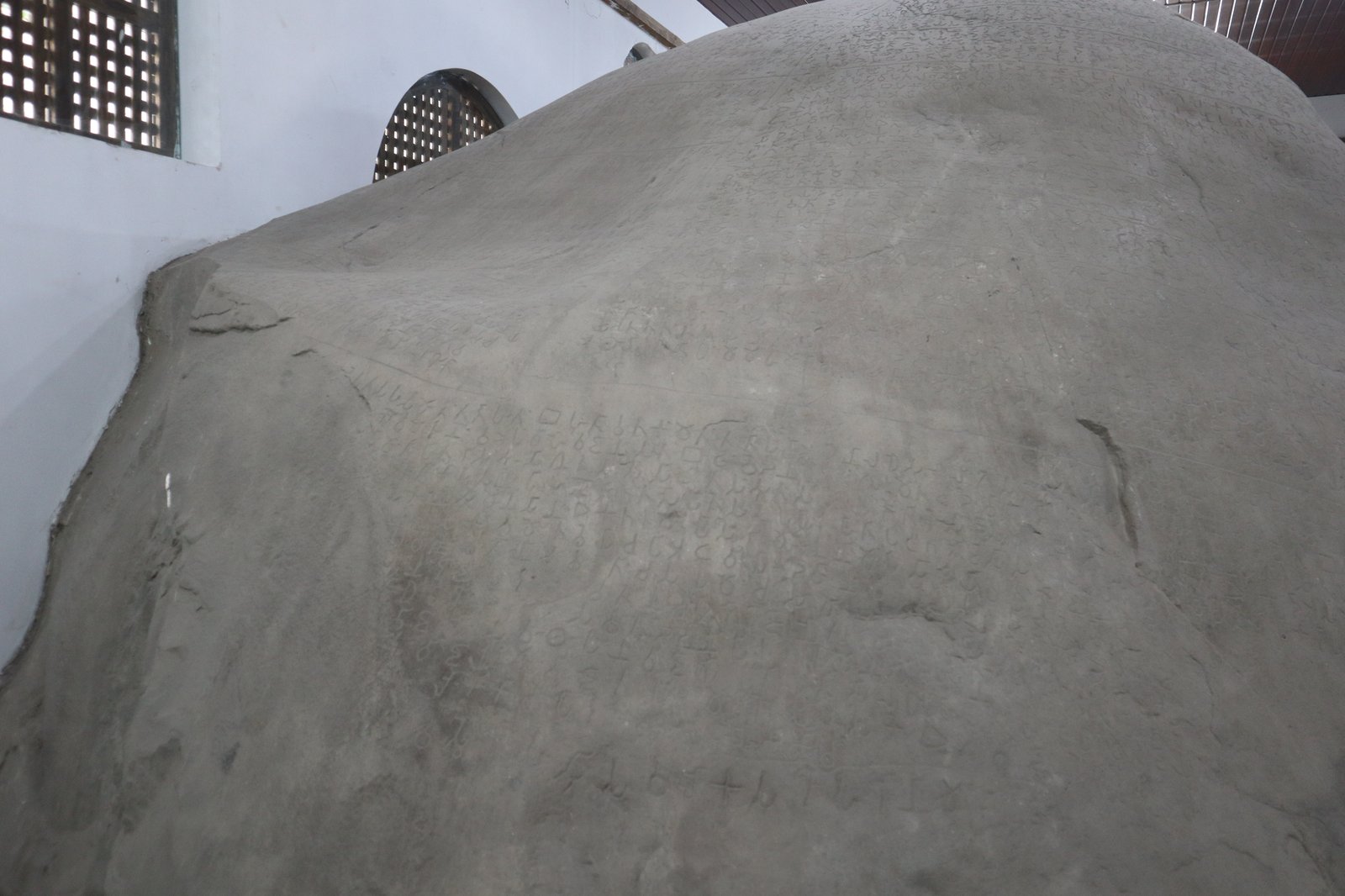
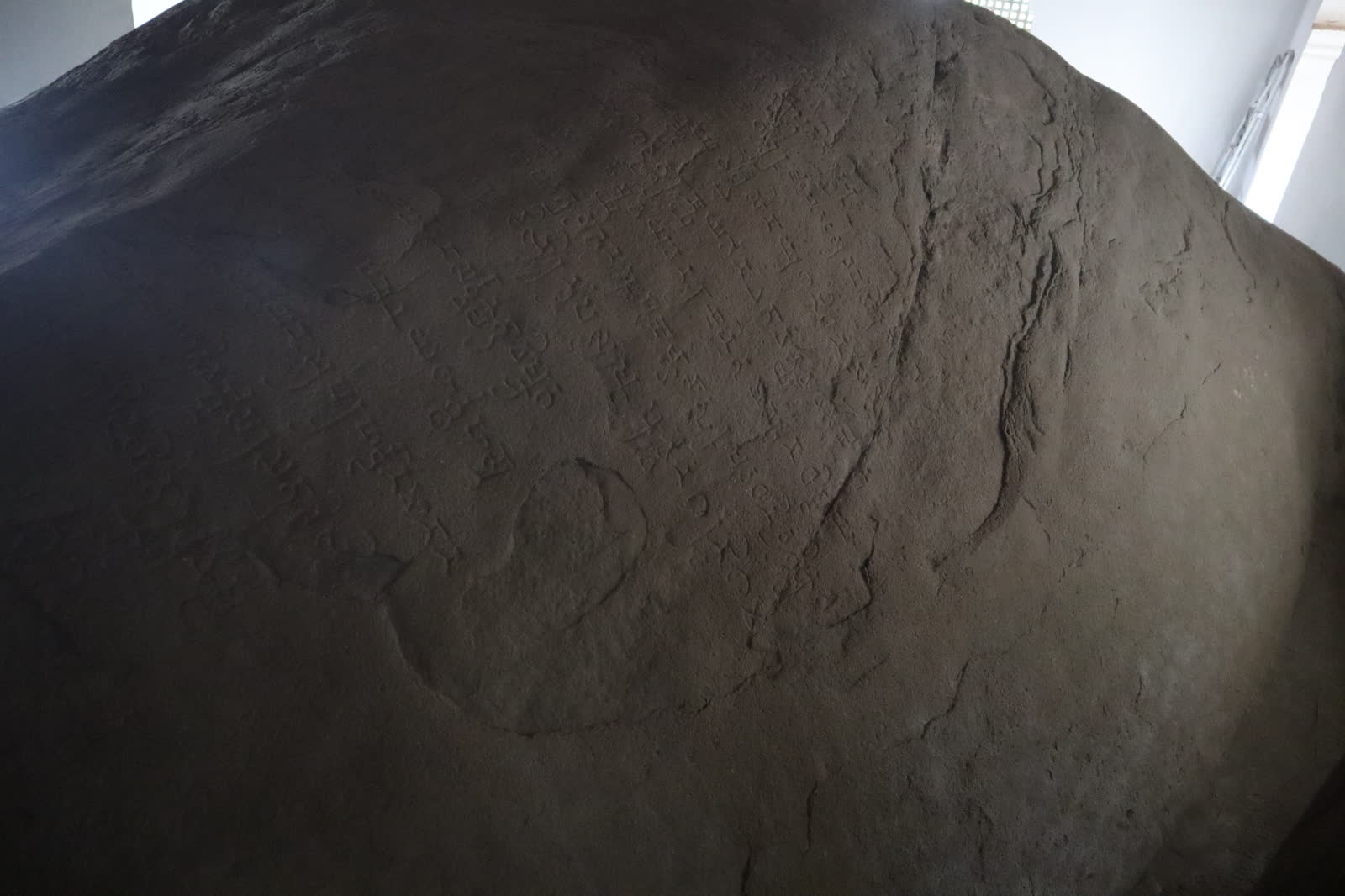
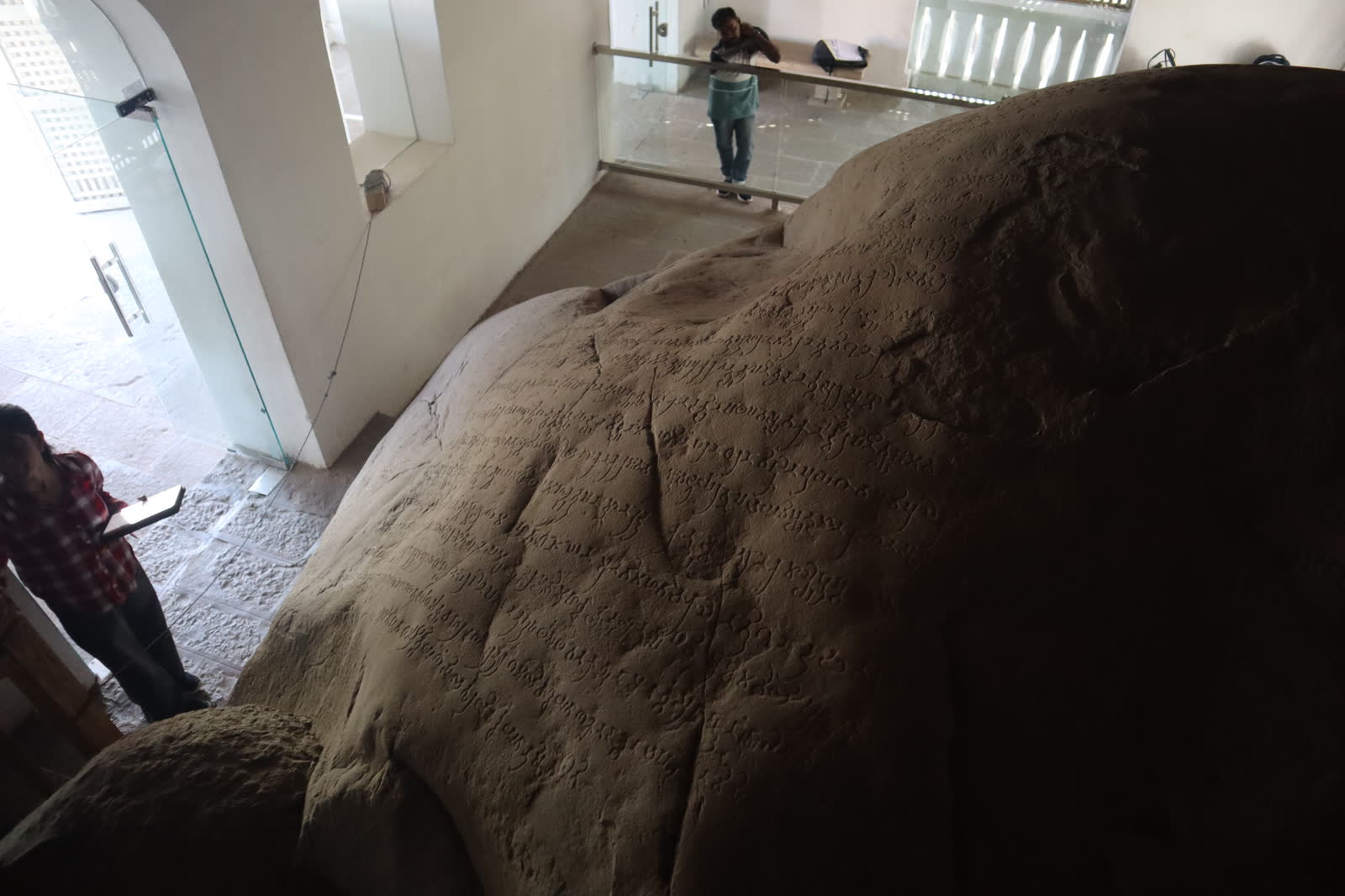
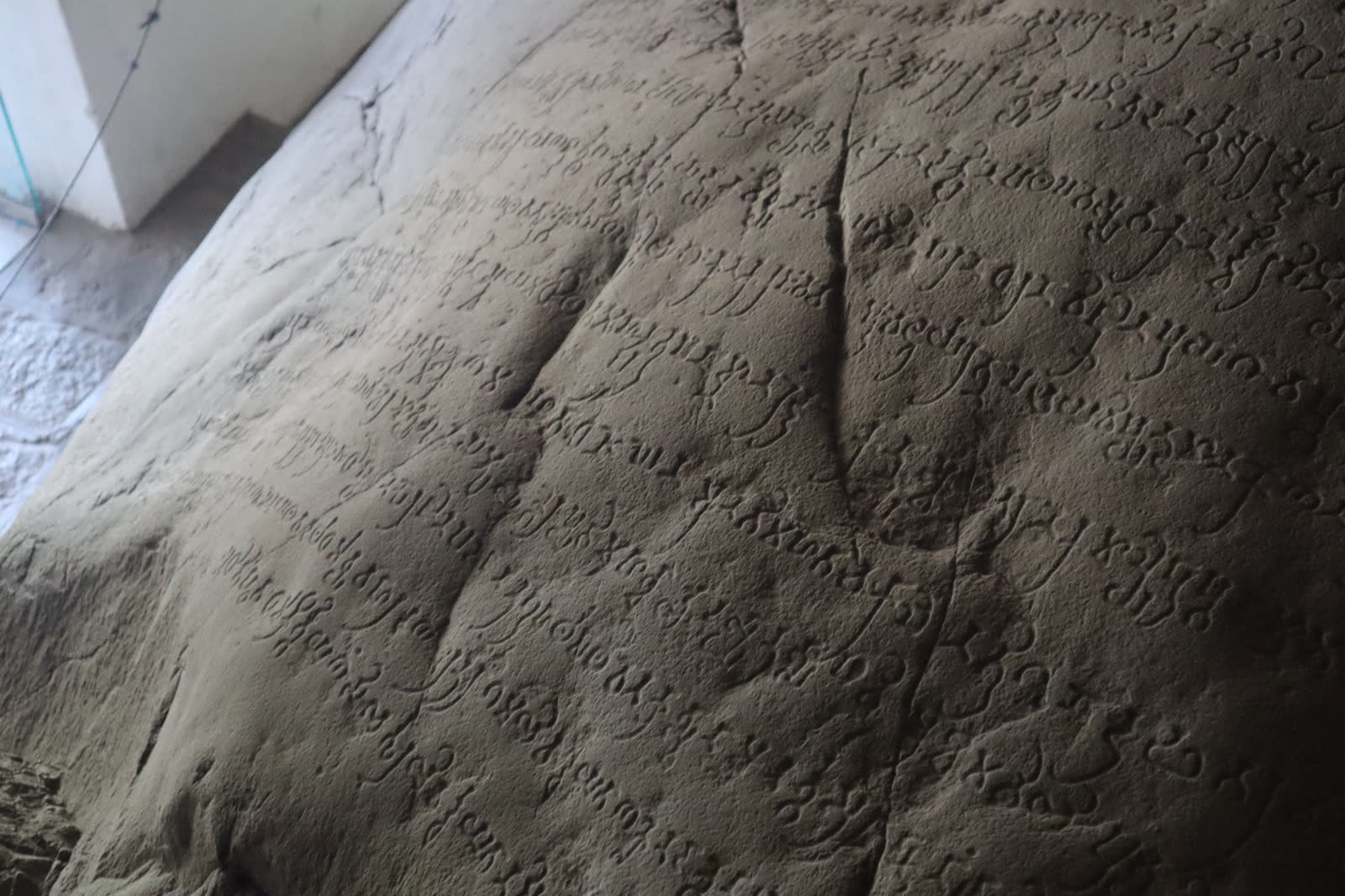
1 (A) D[e]vānaṁpriyo Piyadasi rājā evaṁ āha (B) kalāṇaṁ dukaraṁ (C) y[o ādikaro] kalāṇ[a]sa so dukaraṁ karoti
2 (D) ta mayā bahu kalāṇaṁ kataṁ (E) t[a] mama putā ca potā ca paraṁ ca tena y[a] me [a]pacaṁ āva saṁvaṭa-kapā anuvatisare tathā
3 so sukataṁ kāsati (F) yo tu eta desaṁ pi hāpesati so [du]kataṁ kāsati (G) sukaraṁ hi pāpa[ṁ] (H) atikātaṁ aṁtaraṁ
4 na bhūta-pruvaṁ dhaṁma-mahāmātā nāma (I) ta m[a]yā traidasa-vāsābhi[s]i[tena] dhaṁm[a]-mahāmātā katā (J) te sava-pāsaṁḍesu vyāpatā dhāmadhisṭānāya
5 ....... [dha]ṁma-yutasa ca Yoṇa-K[a]ṁbo[ja]-Gaṁdhārānaṁ Risṭika-P[e]teṇikānaṁ ye vā pi a[ṁ]ñ[e ā]parātā (K) bhatamayesu va
6 ....... [su]khā[ya dhaṁma]-yutānaṁ apar[i]godhāya vyāpatā te (L) ba[ṁ]dhana-badhasa paṭividhānāya
7 ....... [p]rajā katābhīkāresu vā thairesu vā vyāpatā te (M) Pāṭalipute ca bāhirasu ca
8 ....... [y]e vā pi me añe ñātikā sarvata vyāpatā te (N) yo ayaṁ dhaṁma-nisrito ti va
9 ....... [t]e [dha]ṁma-mahāmātā (O) etāya athāya ayaṁ dhaṁma-lipī likhitā
10 ……..
Translation
(A) King Devānaṁpriya Priyadarśin speaks thus.
(B) It is difficult to perform virtuous deeds.
(C) He who starts performing virtuous deeds accomplishes something difficult.
(D) Now, by me many virtuous deeds have been performed.
(E) Therefore (among) my sons and grandsons, and (among) my descendants (who shall come) after them until the æon of destruction (of the world), those who will conform to this (duty) will perform good deeds.
(F) But he who will neglect even a portion of this (duty) will perform evil deeds.
(G) For sin is easily committed.
(H) In times past (officers) called Mahāmātras of morality (Dharma-mahāmātra) did not exist before.
(I) But Mahāmātras of morality were appointed by me (when I had been) anointed thirteen years.
(J) These are occupied with all sects in establishing morality . . . . . . . . . of those who are devoted to morality (even) among the Yoṇas, Kambojas, and Gandhāras, the Risṭikas and Peteṇikas, and whatever other western borderers (of mine there are).
(K) They are occupied with servants and masters . . . . . . . . . for the . . . . . . . . . happiness of those who are devoted to morality, (and) in freeing (them) from desire (for worldly life).
(L) They are occupied in supporting prisoners (with money) . . . . . . . . . (if one has) children, or with those who are bewitched (i. e. incurably ill ?), or with the aged.
(M) They are occupied everywhere, both in Pāṭaliputra and in the outlying . . . . . . . . and whatever other relatives of mine (there are).
(N) These Mahāmātras of morality . . . . . . . . . whether one is eager for morality . . . . . . . .
(O) For the following purpose has this rescript on morality been written . . . . . . . .