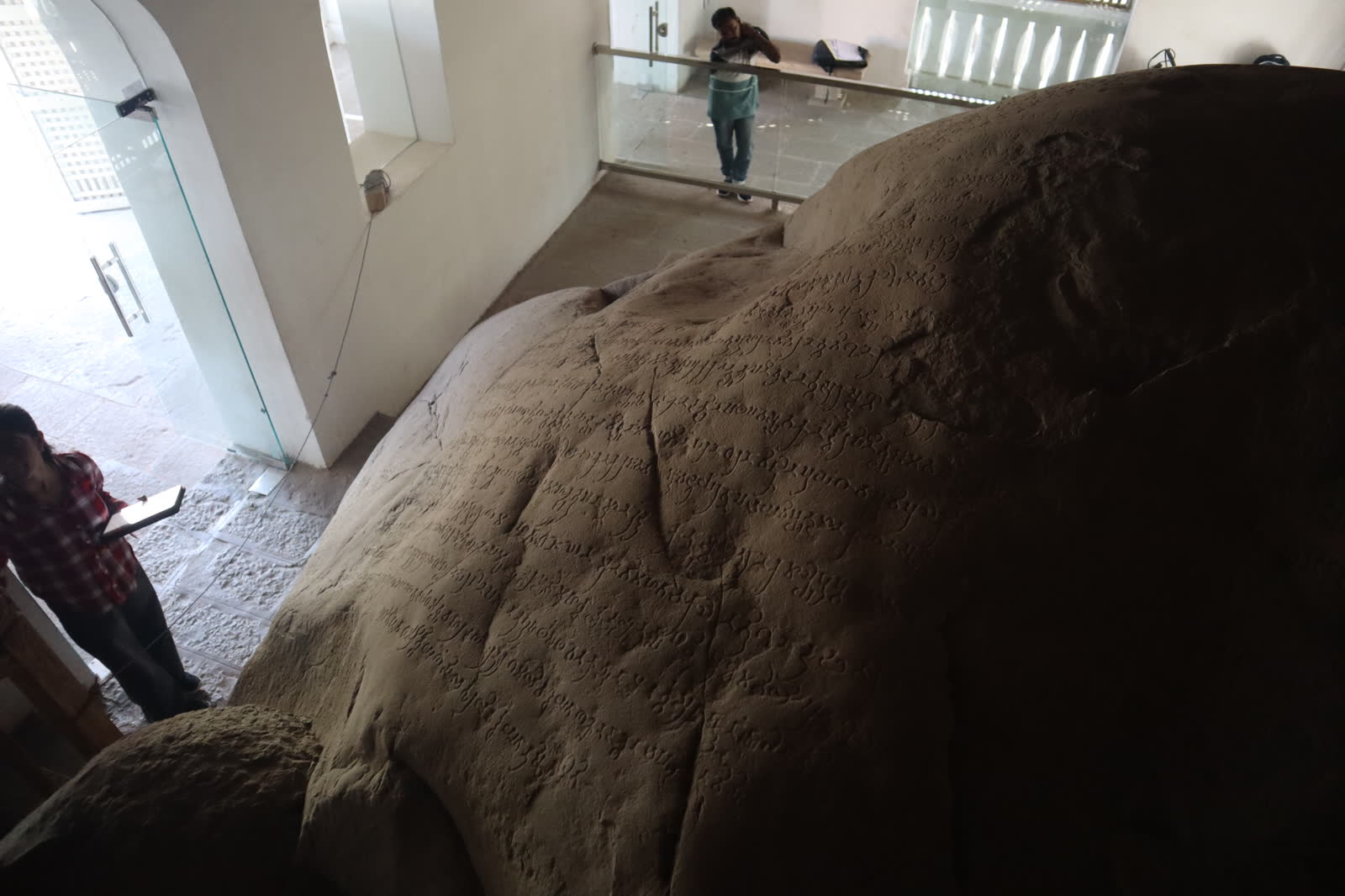
Original Text
1 (A) [Devā] . . . . . . . . . [s]i rājā evaṁ āha (B) atikrāt[a]ṁ aṁtara[ṁ]
2 na bhūta-pru[v]...[s] . [v] . . . [l] . atha-kaṁme va paṭivedanā vā (C) ta mayā evaṁ kataṁ
3  (D) s[a]ve kāle bhuṁj[a]mānasa me orodhanamhi gabhāgāramhi vacamhi va
4  vinītamhi ca uyānesu ca savatra paṭivedakā sṭitā athe me [ja]nasa
5  paṭivedetha iti (E) sarvatra ca janasa athe karomi (F) ya ca kiṁci mukhato
6 āñapayāmi svayaṁ dāpakaṁ vā srāvāpakaṁ vā ya vā puna mahāmātresu
7  ācāyi[ke] aropitaṁ  bhavati tāya athāya vivādo nijhatī v[a s]aṁto parisāyaṁ
8 ānaṁtaraṁ paṭ[i]vedeta[v]yaṁ me sa[r]vatra sarve kāle (G) evaṁ mayā āñapitaṁ (H) nāsti  hi me to[s]o
9 usṭānamhi atha-saṁtīraṇāya va (I) katavya-mate hi me sa[rva]-loka-hitaṁ
10  (J) tasa ca puna esa mūle usṭānaṁ ca atha-saṁtīraṇā cha (K) nāsti hi kaṁmataraṁ
11 sarva-loka-hitatpā (L) ya ca kiṁci parākramāmi ahaṁ kiṁti bhūtānaṁ ānaṁṇaṁ gacheyaṁ
12 idha ca nāni sukhāpayāmi paratrā ca svagaṁ ārādhayaṁtu ta  (M) etāya athāya
13 ayaṁ dha[ṁ]ma-lipī lekhāpitā kiṁti ciraṁ tisṭeya iti tathā ca me putrā potā ca prapotrā ca
14 anuvataraṁ  sava-loka-hitāya (N) dukaraṁ [t]u idaṁ añatra  agena parākramena
Translation
(A) King Devānāṁpriya Priyadarśin speaks thus.
(B) In times past neither the disposal of affairs nor the submission of reports at any time did exist before.
(C) But I have made the following (arrangement).
(D) Reporters are posted everywhere, (with instructions) to report to me the affairs of the people at any time, while I am eating, in the harem, in the inner apartment, even at the cowpen, in the palanquin, and in the parks.
(E) And everywhere I am disposing of the affairs of the people.
(F) And if in the council (of Mahāmātras) a dispute arises, or an amendment is moved, in connexion with any donation or proclamation which I myself am ordering verbally, or (in connexion with) an emergent matter which has been delegated to the Mahāmātras, it must be reported to me immediately, anywhere, (and) at any time.
(G) Thus I have ordered.
(H) For I am never content in exerting myself and in dispatching business.
(I) For I consider it my duty (to promote) the welfare of all men.
(J) But the root of that (is) this, (viz.) exertion and the dispatch of business.
(K) For no duty is more important than (promoting) the welfare of all men.
(L) And whatever effort I am making, (is made) in order that I may discharge the debt (which I owe) to living beings, (that) I may make them happy in this (world), and (that) they may attain heaven in the other (world).
(M) For the following purpose has this rescript on morality been caused to be written, (viz.) that it may last long, and that my sons, grandsons, and great-grandsons may conform to this for the welfare of all men.
(N) But it is difficult to accomplish this without great zeal.