
Discovery of Dhauli
1. Asokan Sites and Artefacts - Harry Falk
Page-113-114
Discovery:
A first reading of some initial words was published by Prinsep 1837a: 471. Kittoe gave his report in 1838a: 435: “I had the good fortune to discover by the merest accident: a byragí priest, native of Mirzapoor near Benares having described it to me; such, however, is the aversion the Ooriyahs have, to our going near their places of worship, that I was actually decoyed away from the spot, when within a few yards of it, being assured that there was no such place,and had returned for a mile or more, when I met with a man who led me back to the spot by torch-light. I set fire to the jangal and perceived the inscription which was completely hidden by it.” Later, Kittoe went to the rock “before day-break and had to wait till it was light; for the two bear cubs which escaped me there last year,when I killed the old bear, were now full grown and disputed the ground” (1838b: 684). Today, all memory of bears once living in this area is gone.
Kittoe (1838a: 451) reported an old name asvastama for the rocks with the inscriptions, but today nothing similar to asvastama has any meaning to the local population.
2. Corpus Inscriptionum Indicarum:Vol-I (Inscriptions of Asoka)
Pages: xiii-xiv
THE DHAULI ROCK (Text, p 84)
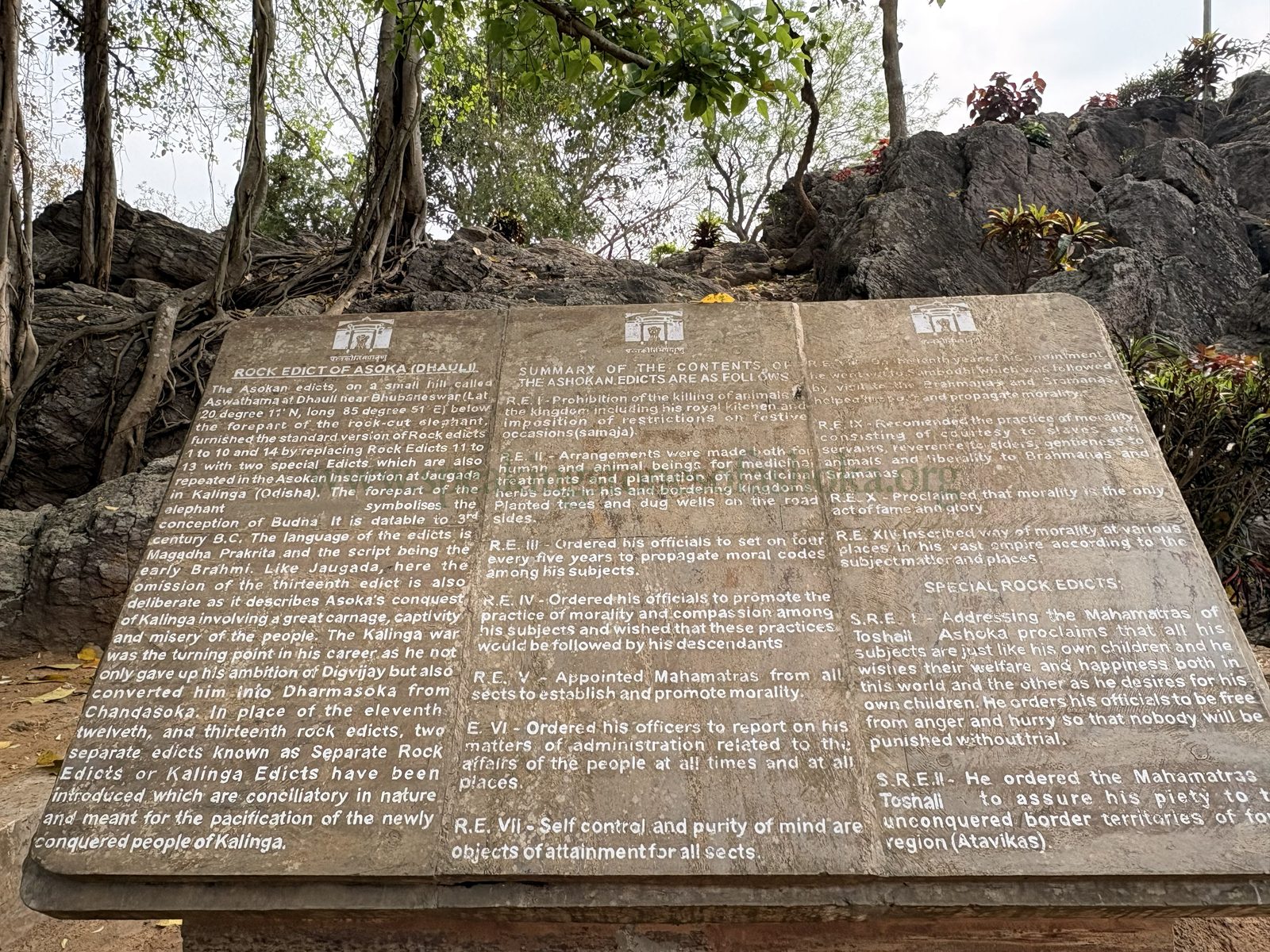
Dhauli is a village in the Khurda subdivision of the Puri district, Orissa, about seven miks south of Bhuvanesvar The inscribed rock near the village was discovered in 1837 by Lieutenant Kittoe, who calls it Aswastama'. It is situated on a rocky eminence forming one of a cluster of hills, three in number, on the south bank of the Dyah river.'
The hills before alluded to rise abruptly from the plains and occupy a space of about five furlongs by three; they have a singular appearance from their isolated position, no other hills being nearer than eight or ten miles They are apparently volcanic, and composed of upheaved breccin with quartzose rock intermixed."
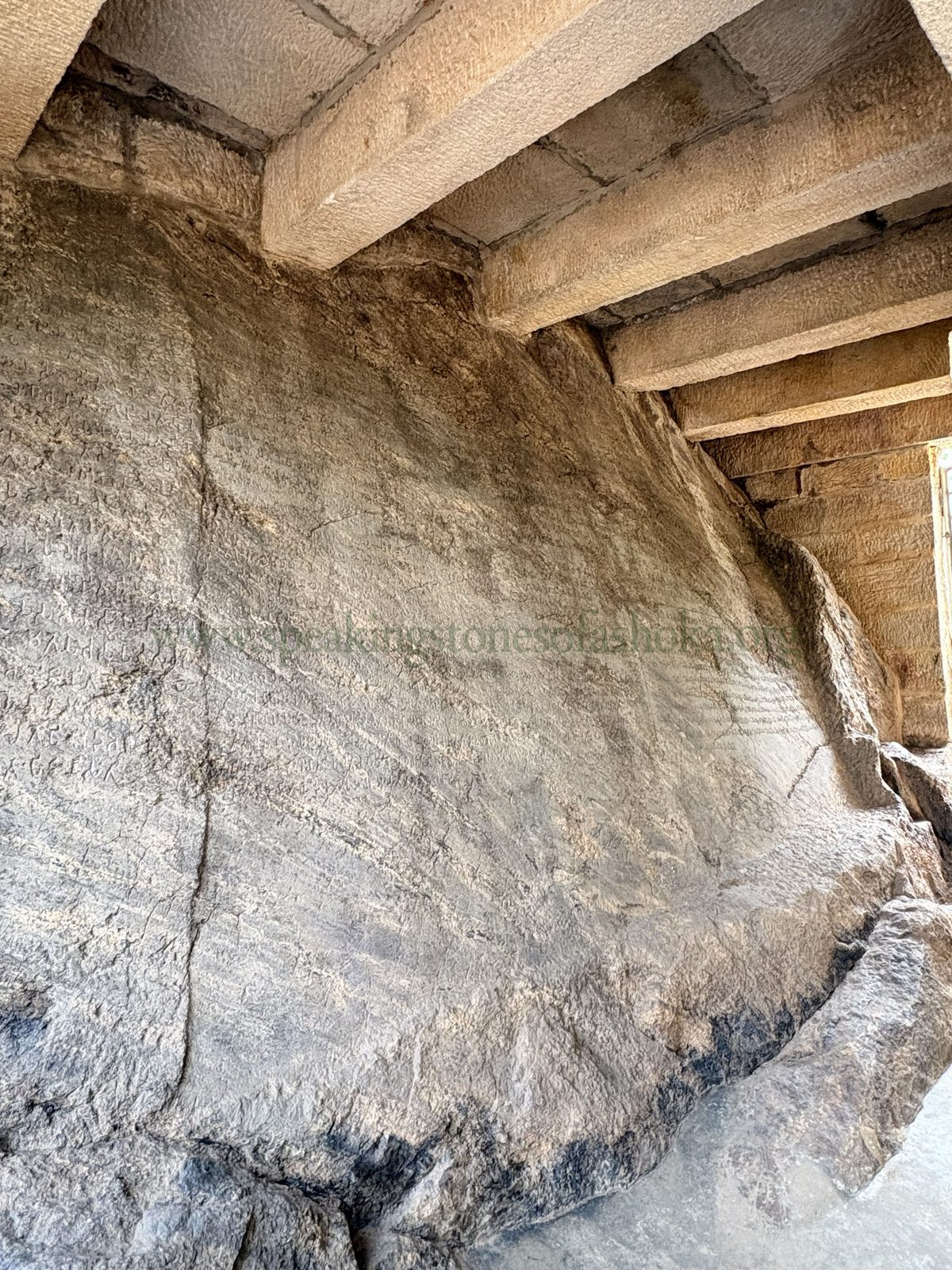
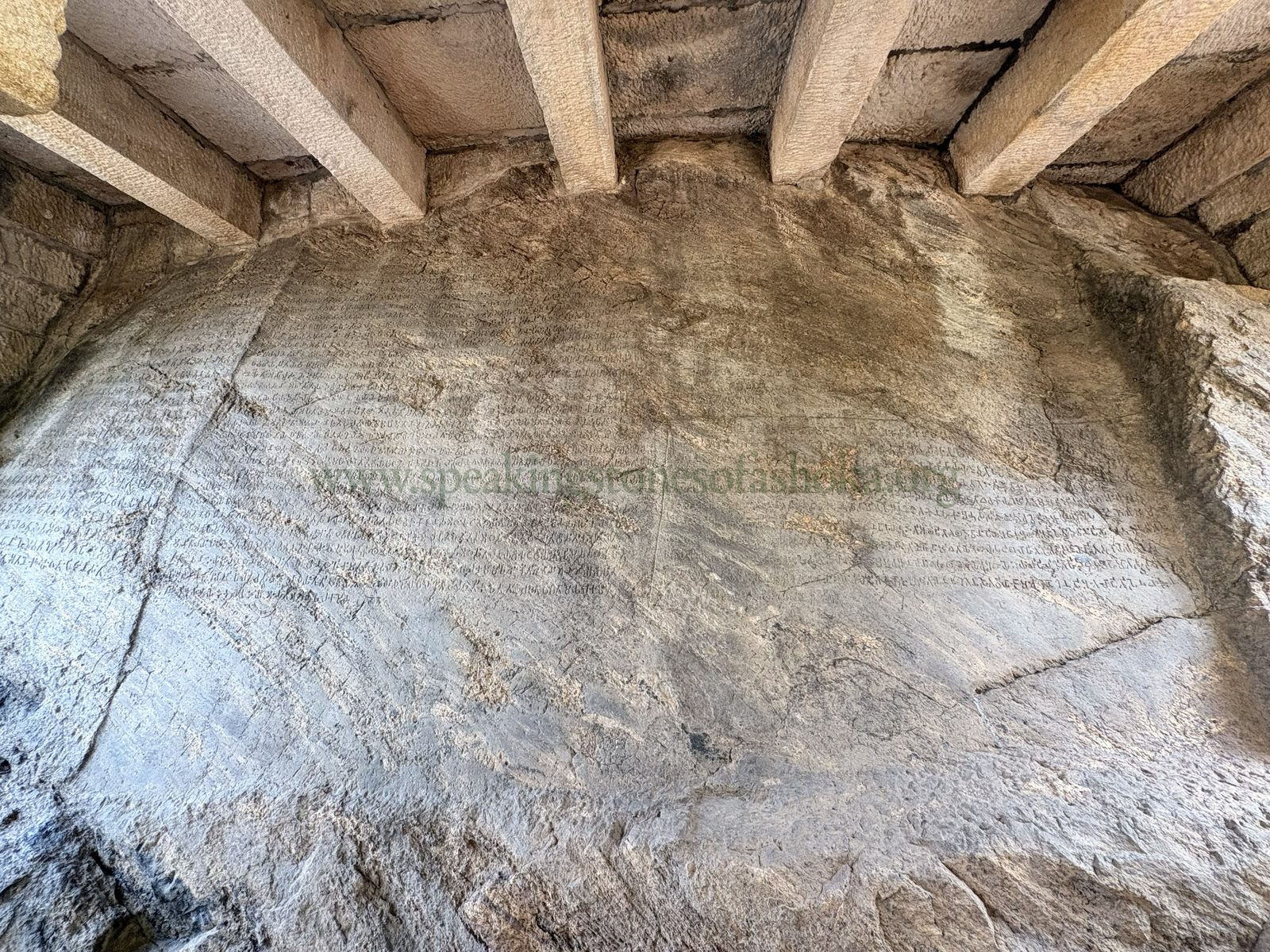
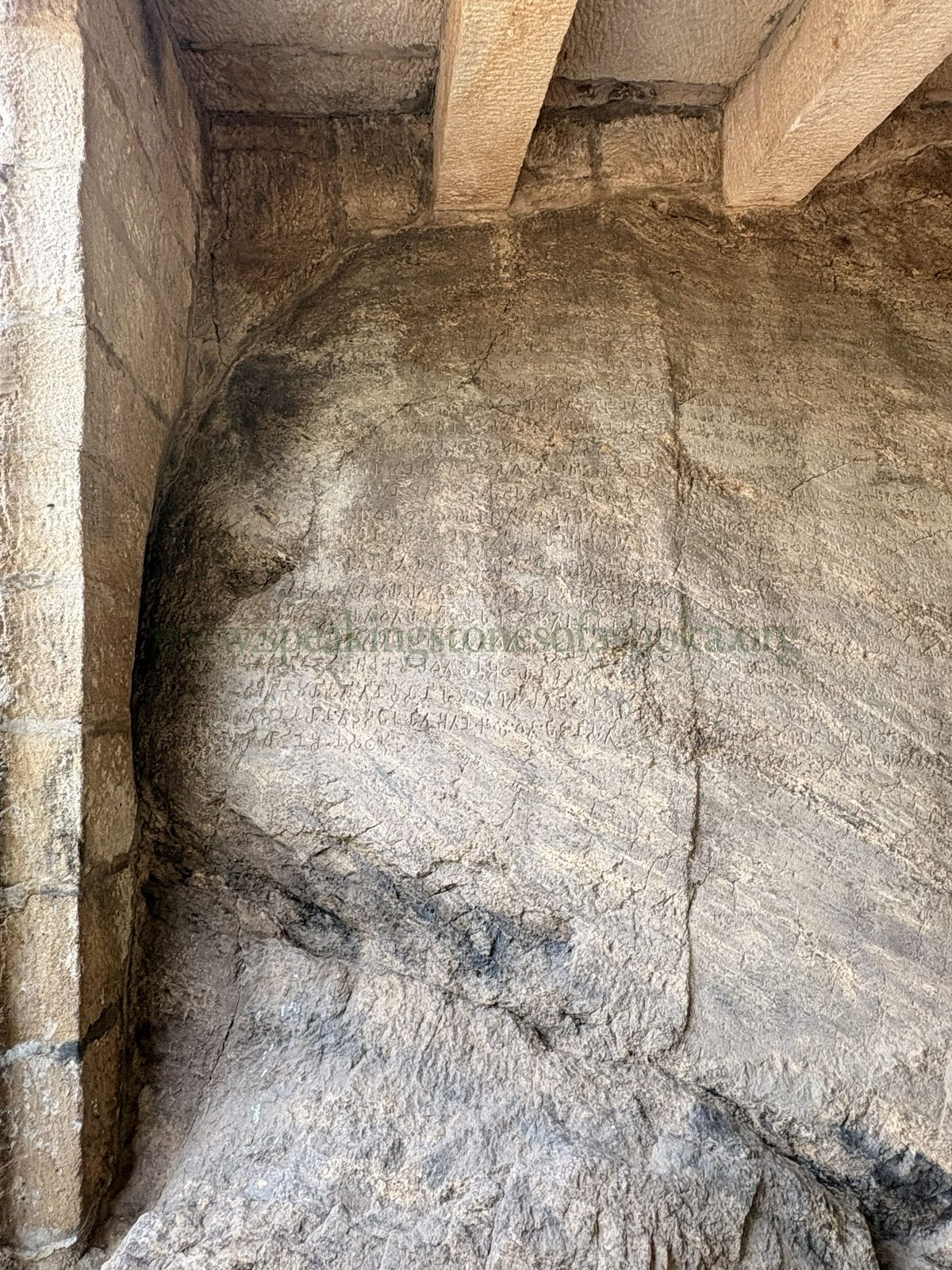
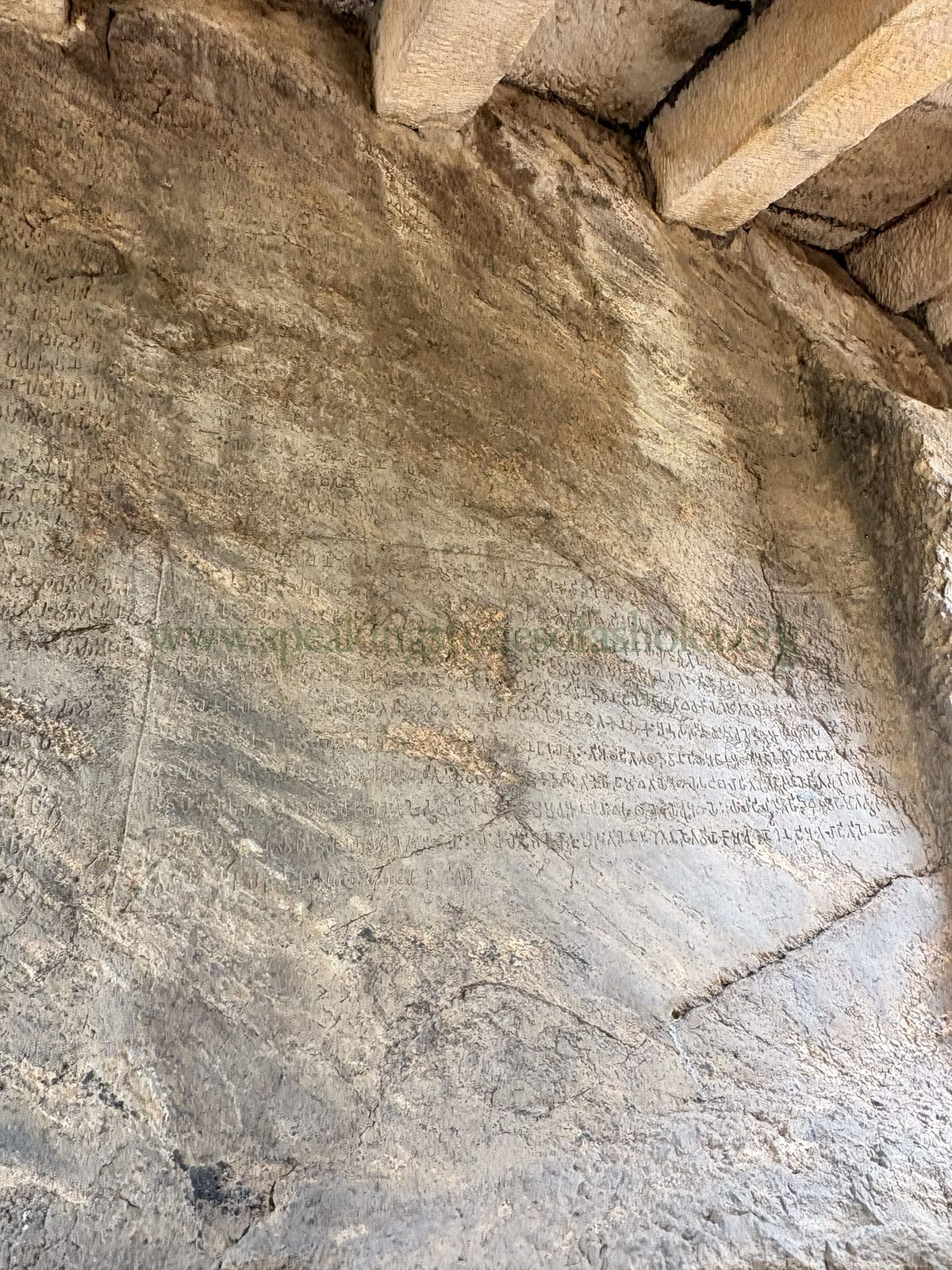
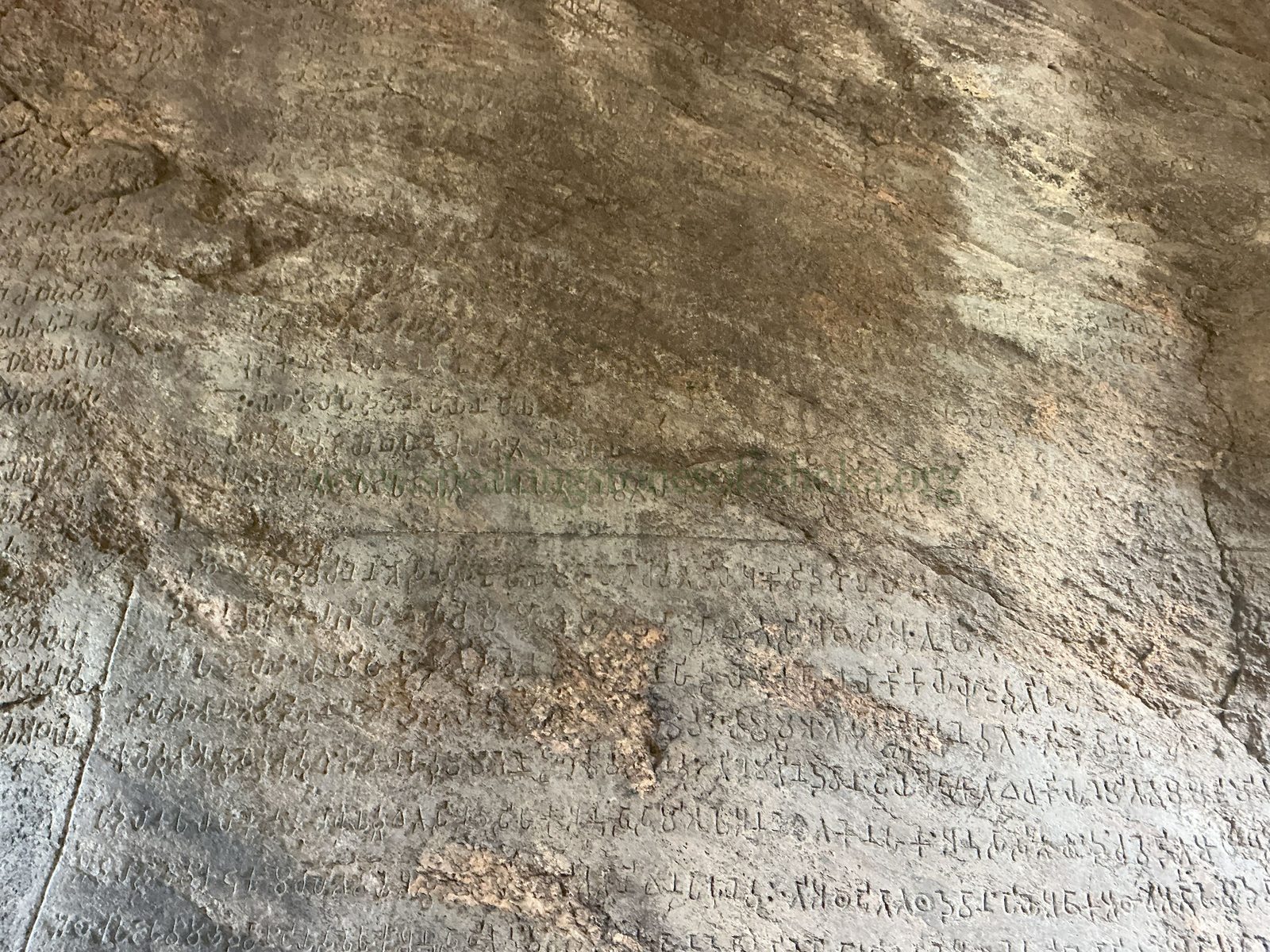
The Aswastama is situated on the northern face of the southernmost rock near its summit, the rock has been hewn and polished for a space of fifteen feet long by ten in height, and the inscription deeply cut thereon'
'Immediately above the inscription is a terrace sixteen feet by fourteen, on the right sule of which (as you face the inscription) is the fore half of an elephant, four feet high, of superior workmanship, the whok is hewn out of the solid rock'
While Prinsep was examining a lithograph of Kittoe's copies, he found that the greater part of the Dhauli inscription was identical with the Girnar edicts (JASB, 7 157) He further ascertained that the Dhauli rock omits edicts XI to XIII of the Girnar version, but compensates for them by two separate edicts (d., p219) These two he edited with a tentative translation (ul. p. 438 f), adding Kittoe's lithograph of the whole Dhauli inscription (id., plate 10) As may be seen on this plate, the inscription is arranged in three columns. The middle column contains edicts I to VI, and the right column edicts VII to X and XIV, and below them, within a border of straight lines, the second separate edict, while the first separate edict occupies the whole of the left column.
Cunningham showed that it would be more correct to exchange the two design nations 'first and second separate edict; the separate edict engraved in continuation of edict XIV ought to be called No I, and the one engraved separately on the left No II This order is confirmed by the Jaugada rock (No. VII, below) where I'rinsep's No. II is actually placed above No I But as all editors (besides Kern) have followed Prinsep's arrangement, a change of numbers would now lead to much confusion, and it will be sufficient to keep in mind that the separate edict No. I was engraved after No. II. The two separate edicts were re-edited and translated by Burnouf (Lotus, p. 671 ff.) and, from Cunningham's copies, by Kern (JRAS, 1880. 379 ff.). Senart's edition of them was based on estampages by Burgess The same applies to Bühler's editions of the Dhauli version. He published the whole of it twice: once in German (ZDMG, 39. 489 ff., and 41. 1 ff) and once in English (ASSI, 1. 114 ff.). His second edition is accompanied by photo-lithographs (plates 64-66).
3. Ashoka:The Search for India’s lost emperor - Charles Allen
Page: 158
What Kittoe termed the Aswastama rock inscription is better known today as the Dhauli Rock Edict, taking its name from the nearby village of Dhauli. These edicts had been chiselled across the face of a rock just below the summit of one of three low hills overlooking the River Daya: “The rock has been hewn and polished for a space.of fifteen feet long by ten in height, and the inscription cut thereon being divided into four tablets, the first of which appears to have been executed at a different period from the rest; the letters are much larger and not so well cut. The fourth tablet is encircled by a deep line, and is cut with more care than the others.’
Gallery
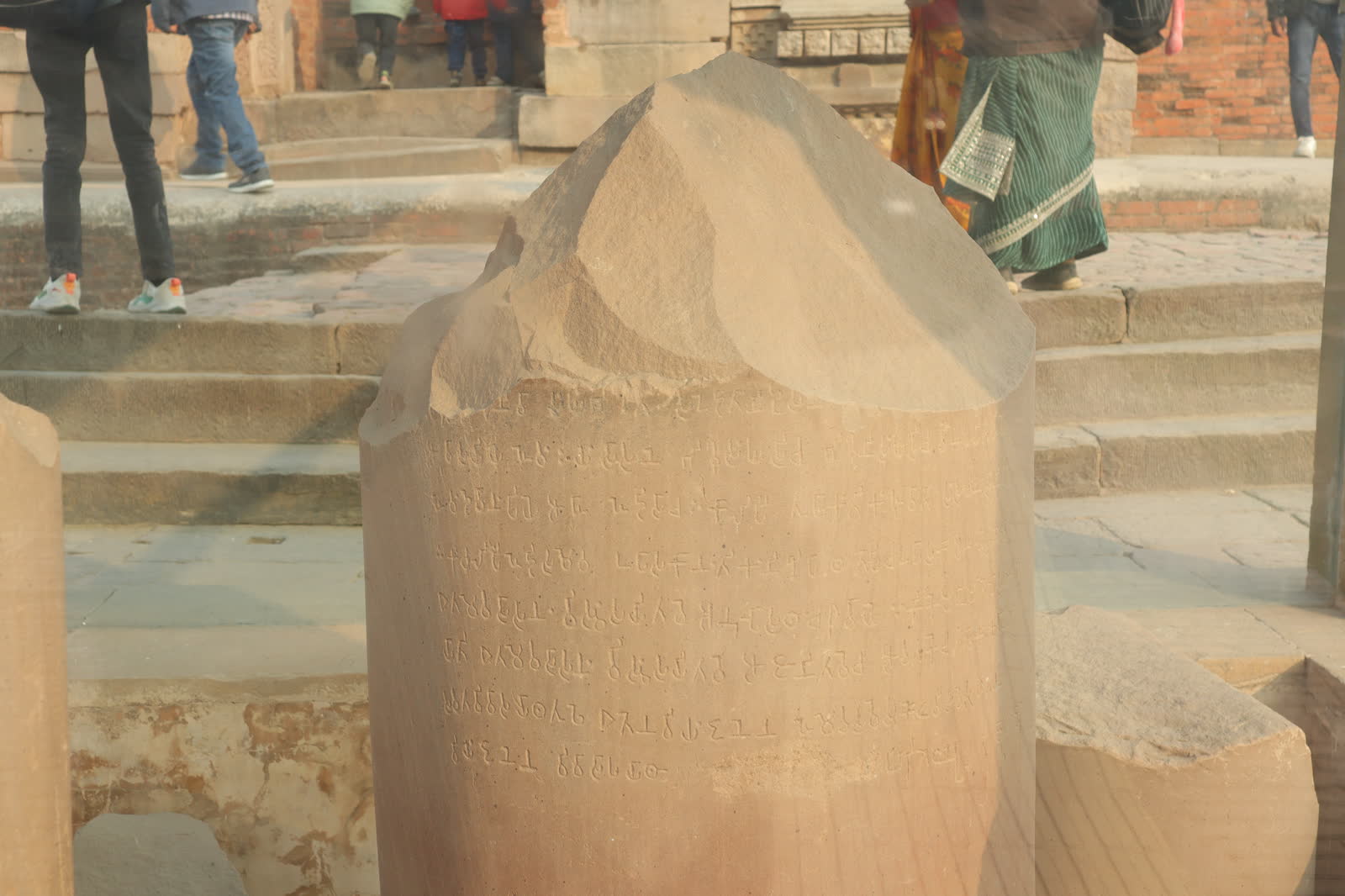
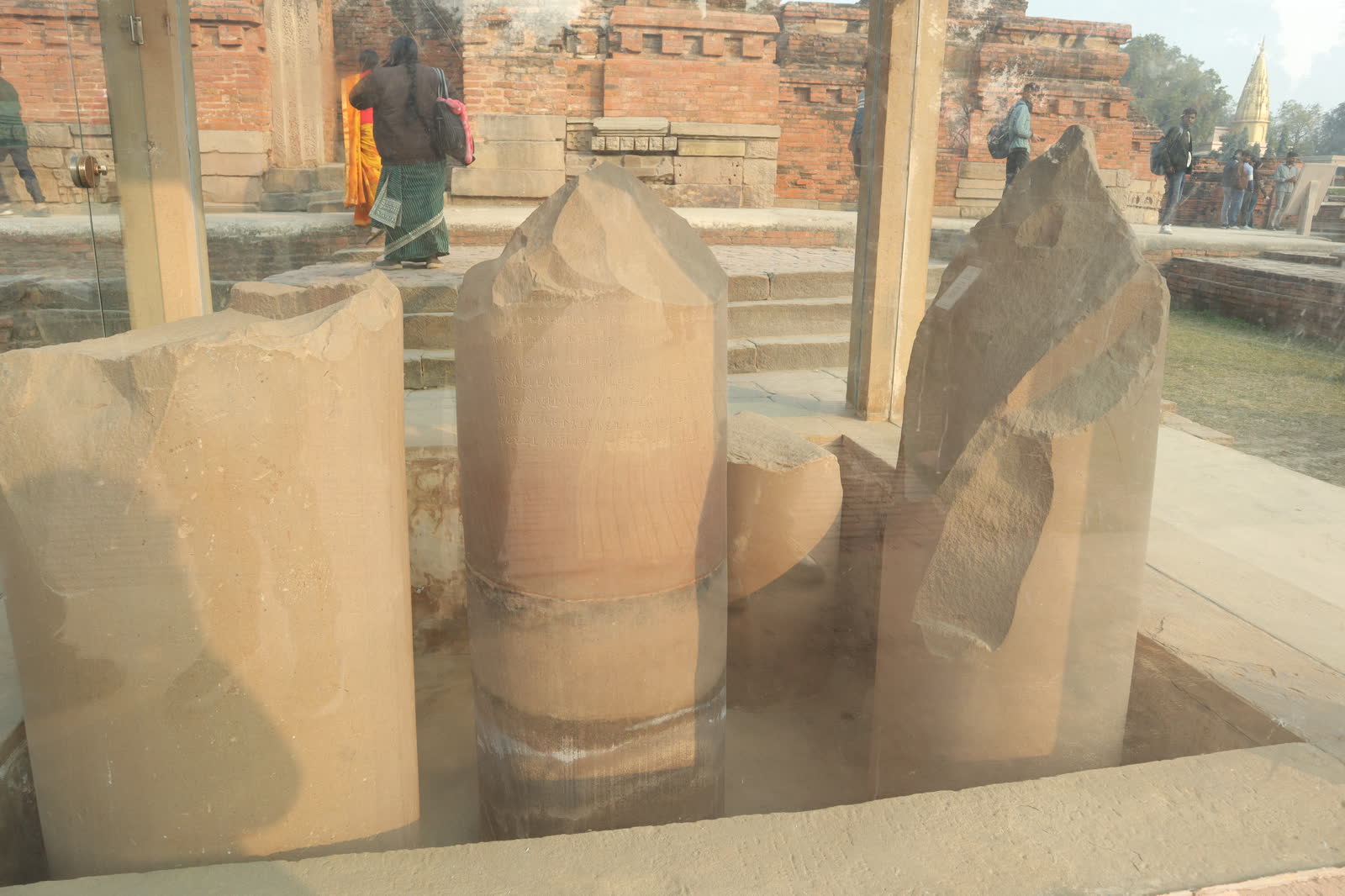
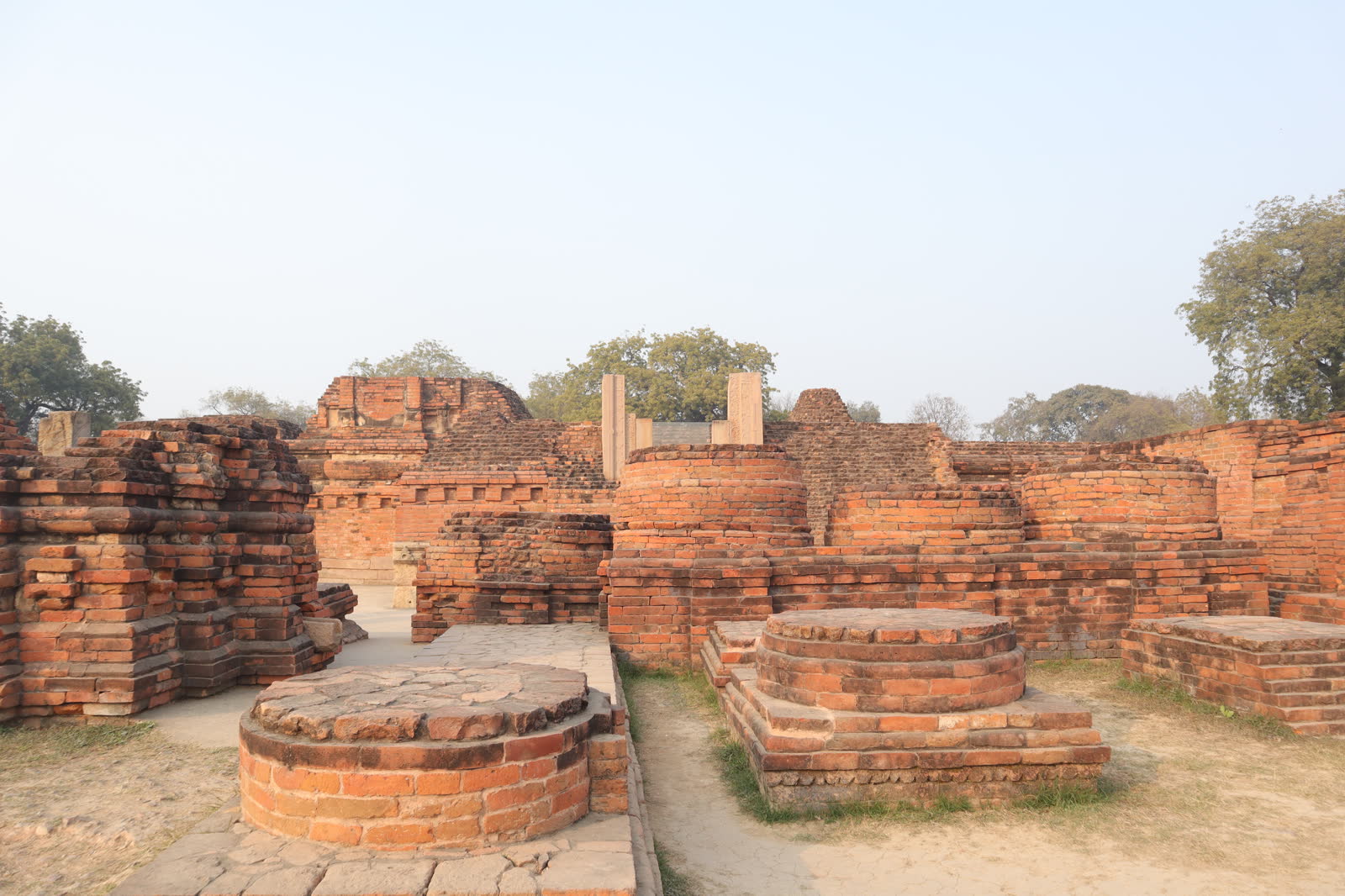
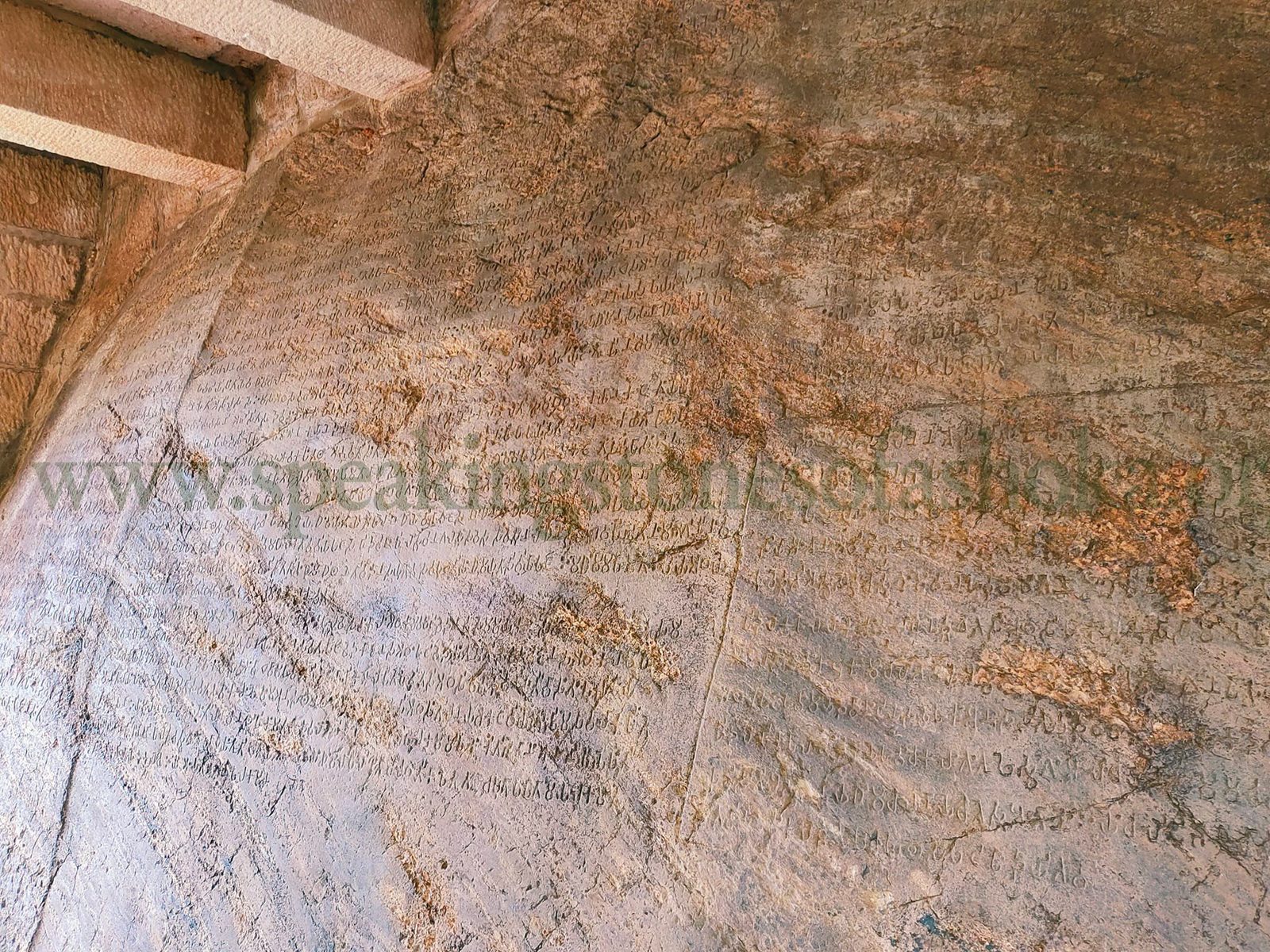
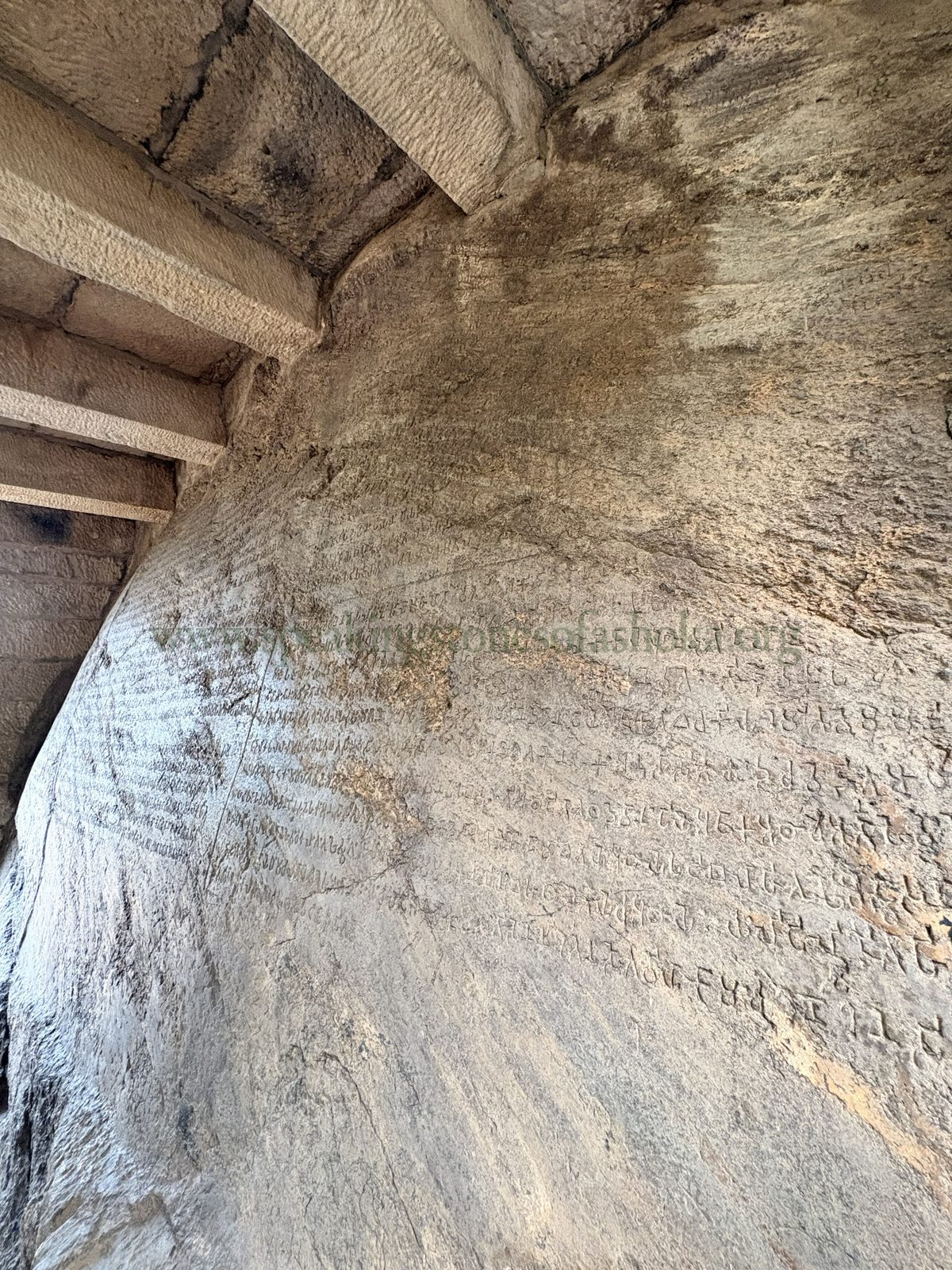
Inscriptions at this site
Major Rock Edict - III (Dhauli)
(A) King Devānaṁpriya Priyadarśin speaks thus. (B) (When I had been) anointed twelve years, the following was ordered by me. (C) [Everywhere] in my dominions the Yuktas, the Lajuka, and the Prādelśika shall set out on a complete tour (throughout their charges) every five years, j…
Major Rock Edict - IV (Dhauli)
(A) In times past, for many hundreds of years, there had ever been promoted the killing of animals and the hurting of living beings, discourtesy to relatives, (and) discourtesy to Śramaṇas and Brāhmaṇas. (B) But now, in consequence of the practice of morality on the part of king …
Major Rock Edict - V (Dhauli)
(A) King Devānaṁpriya Priyadarśin speaks thus. (B) It is difficult to perform virtuous deeds. (C) He [who starts performing] victorious deeds accomplishes something difficult. (D) Now, by me many virtuous deeds have been performed. (E) Therefore (among) my sons and grandsons, and…
Major Rock Edict - VI (Dhauli)
(A) King Devānaṁpriya Priyadarśin speaks thus. (B) In times past neither the disposal of affairs nor the submission of reports at all times did exist before. (C) But I have made (the following arrangement). (D) Reporters have to report to me the affairs of the people at any time …
Major Rock Edict - VII (Dhauli)
(A) King Devānaṁpriya Priyadarśin desires (that) all sects may reside everywhere. (B) For all these desire self-control and purity of mind. (C) And men possess various desires (and) various passions. (D) They will fulfil either the whole or (only) a portion (of their duties). (E)…
Major Rock Edict - VIII (Dhauli)
(A) In times past, kings used to set out on so-called pleasure-tours. (B) On these (tours) hunting and other such pleasures were (enjoyed). (C) But when king Devānaṁpriya Priyadarśin had been anointed ten years, he went out to Sambodhi. (D) Therefore tours of morality (were under…
Major Rock Edict - X (Dhauli)
(A) King Devānaṁpriya Priyadarśin does not think that either glory or fame [conveys much advantage, except whatever] glory or fame he desires (on account of his aim that) at the present time, and in the future, men may (be induced) by him to practise obedience to morality . . . .…
Major Rock Edict - XI (Dhauli)
(A) King Devānaṁpriya Priyadarśin speaks thus. (B) Men are practising various ceremonies during illness . . . . . . . . . at the marriage of a daughter, at the birth of a child, (and) when setting out on a journey; on these and other such (occasions) men [are practising] many cer…
Major Rock Edict - XIV (Dhauli)
(A) These rescripts on morality [have been caused] to be written by king Devānaṁpriya Priyadarśin . . . . . . . . . or of middle (size), or at full length. (B) For the whole was not suitable everywhere. (C) For (my) dominions are wide, and much has been written, [and I] shall cau…